
House rejects measure that would bar GOED board members from having ownership interest in award recipients
Get AI-powered insights, summaries, and transcripts
Subscribe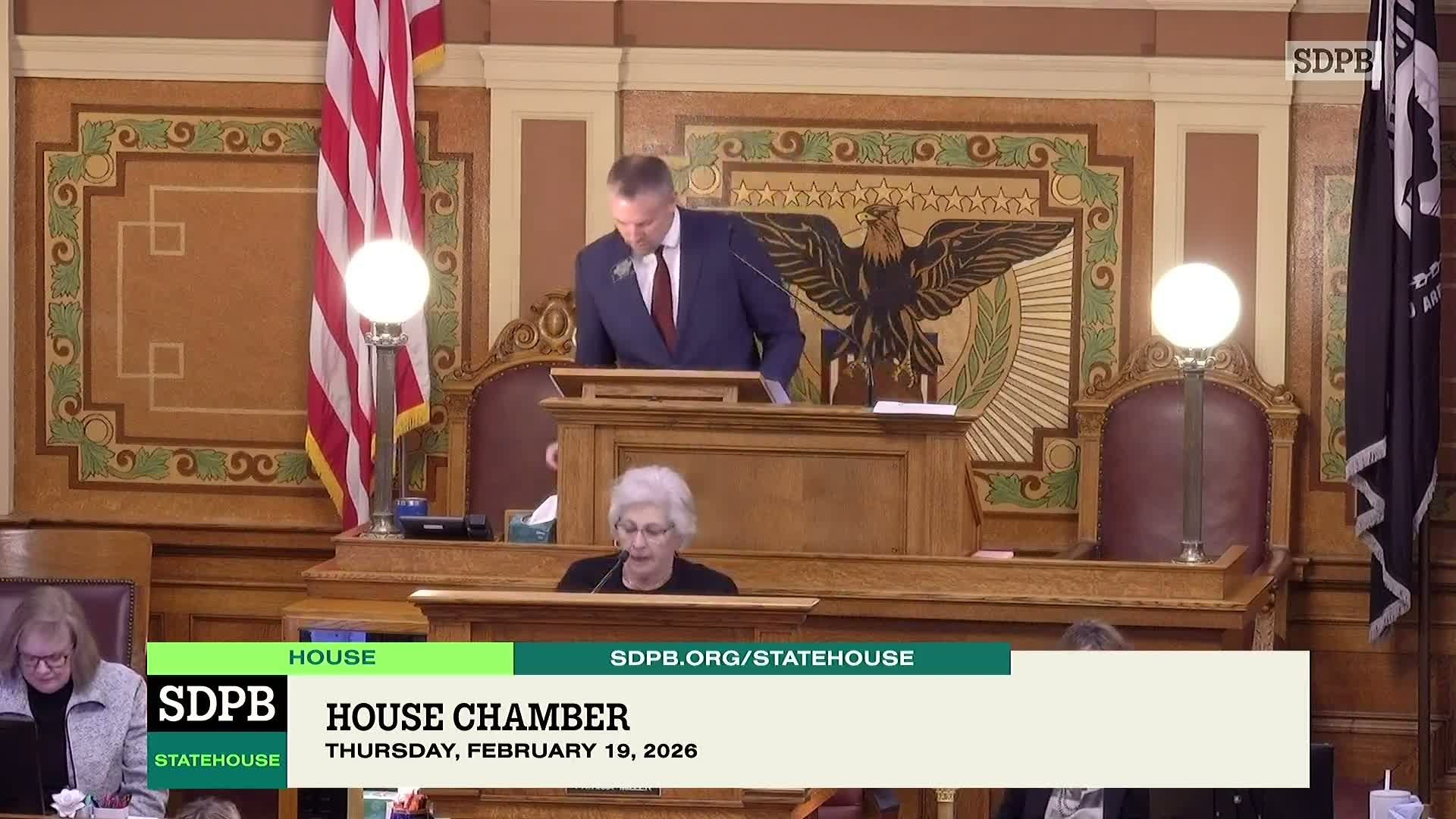
Summary
The House debated HB12‑22 (GOED conflict reform) at length but voted 29‑36 to reject the bill; supporters said it prevents appearance of impropriety while opponents said existing statute SDCL chapter 3‑23 and narrower solutions (annual disclosures) are preferable.
House Bill 12‑22, a proposal to prohibit members of the Governor’s Office of Economic Development (GOED) board from holding a direct ownership interest in entities receiving GOED awards, failed final passage on Feb. 19 after extended floor debate.
Sponsor Representative Lembs said the measure was intended to shore up public trust after recent spotlighted events and “avoid even the appearance of self‑dealing.” Lembs and other supporters argued a bright‑line rule would protect the integrity of public incentive decisions.
Critics, including Representatives Reich and Muckey, pointed to existing conflict laws codified in SDCL chapter 3‑23 and warned the bill’s broad ownership standard could deter highly qualified business leaders from volunteering on GOED. Representative Muckey said the more immediate problem was timely disclosures rather than unlawful conduct, noting the board chair recused in the prior case but that disclosure timing caused confusion.
An amendment (12‑22d) to narrow the definition of ownership interest was adopted on the floor, but objections persisted. Those opposing predicted the bill would force resignations, reduce the pool of candidates and create legal uncertainty over when a conflict arises; supporters said the public demands clearer rules. After closing remarks the clerk reported the vote as ayes 29, nays 36, excused 5 and declared the bill lost.
The debate repeatedly referenced SDCL chapter 3‑23 (conflict of interest and disclosure requirements for state boards) and discussed annual disclosure as an alternative policy solution.