Get Full Government Meeting Transcripts, Videos, & Alerts Forever!
Get email alerts on the Occupational Licensure topic
No spam. Unsubscribe anytime.
Committee adopts substitute and hears sponsors’ pitch to consolidate licenses, cut fees
Summary
Sponsors of substitute House Bill 59 told the House General Government Committee the bill aims to streamline occupational licensing, consolidate overlapping credentials (including radon-related permits) and reduce fees in roughly 20 licensing areas; members pressed sponsors for data tying fee cuts to workforce shortages and for complaint-counts from the medical board.
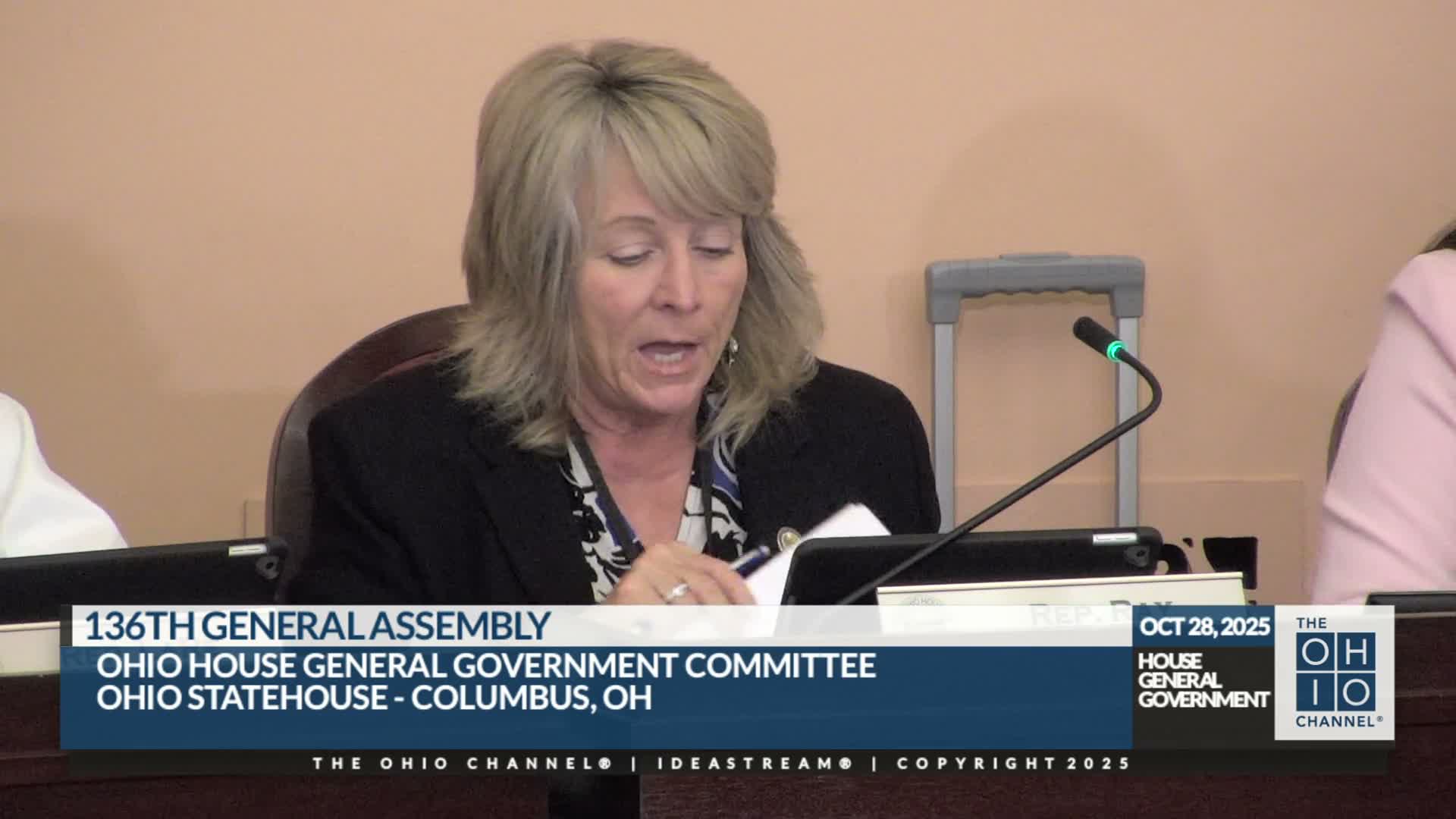
Chair Ray called House Bill 59 for its first hearing and the committee adopted a substitute as the working document without objection. Representative Fowler Arthur, a sponsor, said the substitute aligns with the Occupational Licensure Review Committee report and aims to cut administrative burdens and “reduce red tape and bureaucracy” while preserving consumer protection.
Fowler Arthur and other sponsors described several concrete changes in the substitute: consolidating multiple radon-related licenses into a single radon mitigation specialist credential and lowering that fee from $600 to $200; lowering some medical board fees from roughly $300 to about $200; and reducing certain Department of Natural Resources fees for wild animal hunting preserves (initial applications from $1,000 to $300 and renewals from $200 to $150).
Sponsors said the changes reflect comparisons with neighboring states and stakeholder feedback. They also described process changes intended to give the committee chair more discretion about whether a secondary agency report or an in-person hearing is necessary in future occupational licensure reviews.
During Q&A, Representative Russo questioned whether lower fees are appropriate given increased investigative and regulatory responsibilities placed on licensing boards in recent years. Russo asked for evidence linking a $100 reduction to recruitment or retention of health professionals; Fowler Arthur said the sponsors had discussed trends with boards and would follow up with specific complaint counts and other quantitative data. Sponsors told the committee they did not recall a significant increase in cases referred to hearing officers but offered to provide exact percentages on follow-up.
The hearing closed after members asked for additional data on complaint volumes, turnaround times, and the fiscal impact of fee reductions. The committee recorded adoption of the substitute as the working document; no final policy vote occurred at the hearing.
What happens next: sponsors and staff said they would provide requested data to the committee. The substitute remains the working document for further committee consideration.