Get Full Government Meeting Transcripts, Videos, & Alerts Forever!
Get email alerts on the Elections topic
No spam. Unsubscribe anytime.
House committee narrowly reports amended SB293 after heated debate on eliminating the four‑day ballot grace period
Summary
After sponsor testimony and extensive public opposition, the House General Government Committee adopted an amendment to Amended Senate Bill 293 and favorably reported the amended bill 9–4. Supporters, including Secretary of State Frank LaRose, said the changes align Ohio with most states and reduce administrative confusion; opponents warned the measure would discard legally cast ballots and burden seniors, rural voters and people with disabilities.
The House General Government Committee voted 9–4 to favorably report the amended version of Senate Bill 293 after a first hearing that included sponsor testimony, Secretary of State Frank LaRose's lengthy support, and multiple opponent witnesses from voting‑rights organizations.
Sponsors and proponents — including Senators Gabbirone and Brenner and Secretary LaRose — said the bill has three main components: require absentee ballots returned by mail to be received by county boards of elections on Election Day (with a UOCAVA/military exemption), strengthen processes for identifying and correcting mismatched voter records, and codify use of federal datasets (including the SAVE database and Social Security death records) to verify eligibility and remove deceased or noncitizen registrants. Senator Brenner told the committee the bill “will protect and improve the elections process in Ohio,” and emphasized that an exemption for overseas and military voters remains in the current language.
Secretary of State Frank LaRose told the committee that, excluding UOCAVA overseas ballots, "fewer than 8,000 ballots" arrived after Election Day in the most recent election and later gave the precise number "7,579," calling that "a very small number" (he quantified it as about "0.0129%" of ballots). LaRose argued clearer rules will change voter behavior and reduce the administrative burden on county boards that now examine unclear postmarks and smudged barcodes.
Opponents included county poll workers and voting advocates who said the change would disenfranchise voters whose ballots are delayed by mail, and warned it would disproportionately affect seniors, rural residents and people with disabilities who rely on vote‑by‑mail or drop boxes. The ACLU and Common Cause of Ohio presented county-level counts and examples where post‑election ballots changed local outcomes; the ACLU's testimony listed local races decided by margins of single digits and said thousands of ballots have been accepted in the four‑day window in recent elections. Witnesses said the amendment was fast‑tracked and local election officials had not been given adequate time to analyze the new language.
During committee questioning, members pressed the Secretary about whether the Fifth Circuit decision in Republican National Committee v. Wetzel (the case cited by proponents) applies to Ohio (a Sixth Circuit state), whether the federal government has an existing statute prohibiting post‑election acceptance, and whether there is evidence that late ballots represent fraud. LaRose said his primary rationale was administrative clarity and alignment with other states, and that he could not and would not claim that the late ballots represented fraud.
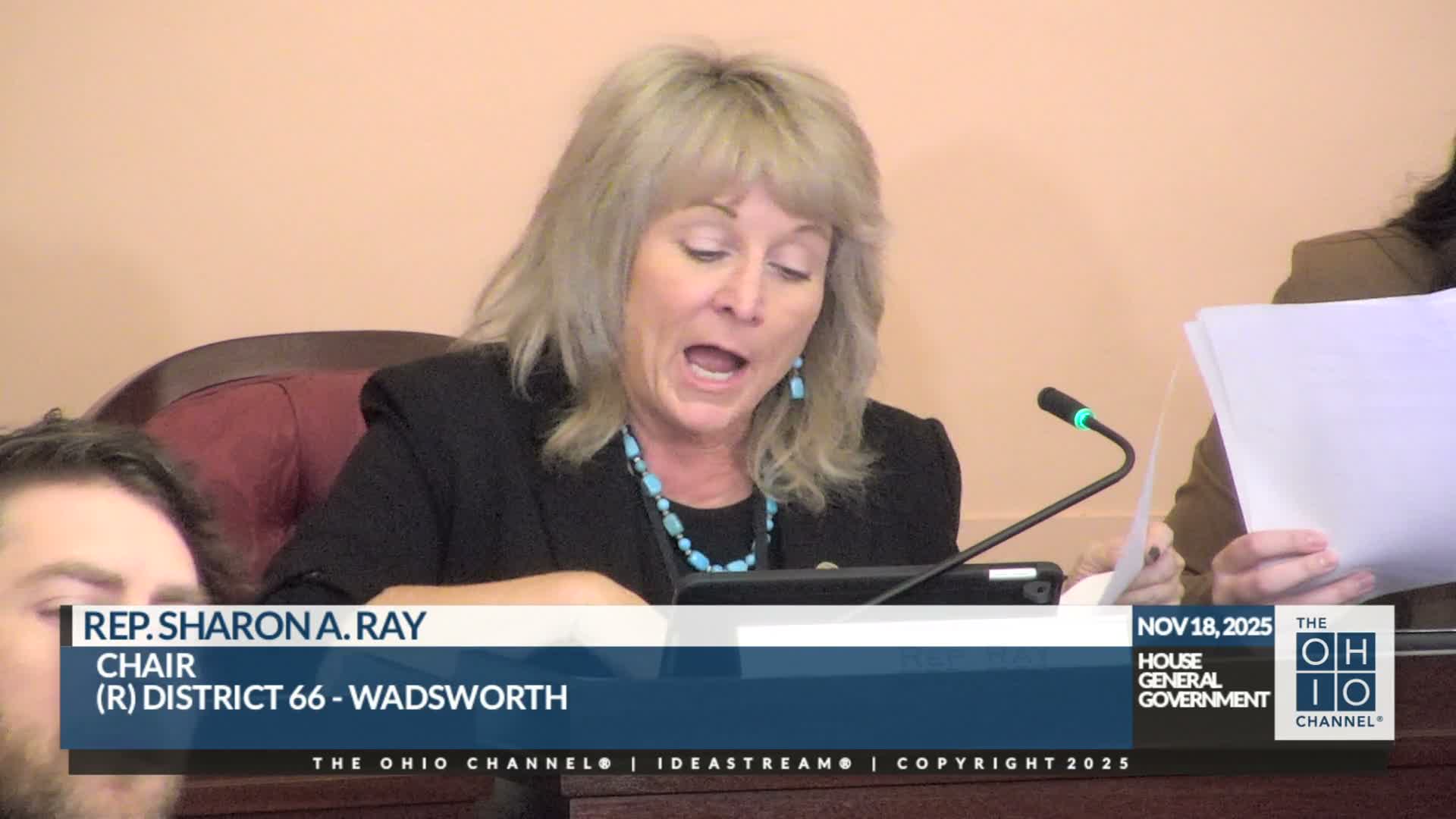
Representative Brent and others objected to the timing of the amendment, noting it was circulated to members just hours before the hearing. After additional public testimony and debate, Vice Chair LaRae moved to favorably report the amended SB293; the committee approved the motion by roll call, 9 affirmative and 4 negative votes. The committee requested that LSC harmonize the amendment into a sub‑bill and left the roll open for one hour after adjournment.
Next steps: the amended SB293 will be harmonized by legislative staff and, if forwarded, proceed to further floor consideration.