Get Full Government Meeting Transcripts, Videos, & Alerts Forever!
Get email alerts on the Closed Session Certification topic
No spam. Unsubscribe anytime.
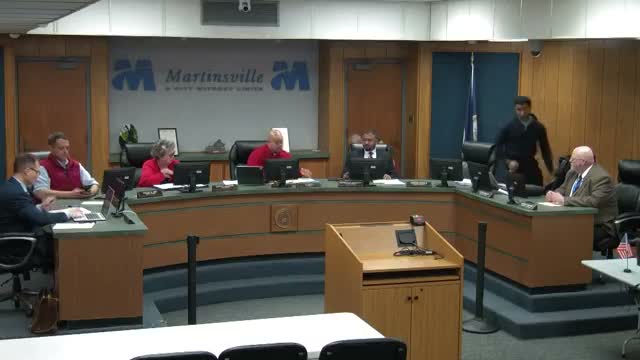
Martinsville City council holds closed session, later certifies meeting with split vote
Summary
During a special-called Martinsville City Council session, members moved into a closed session under the Virginia Freedom of Information Act to discuss real property, investment of public funds and legal advice. The council later certified the closed meeting with a recorded 4–1 vote after one member expressed reservations.
Martinsville City Council members met in a special-called session and voted to go into a closed session to discuss the acquisition or disposition of real property, potential investments of public funds and consultations with legal counsel on probable or actual litigation.
A council member moved to enter the closed session and the motion was seconded. The council took a roll-call vote to enter closed session; the presiding officer announced the motion carried unanimously (recorded as 5–0). A speaker read the legal basis into the record, citing the Virginia Freedom of Information Act and provisions under the Code of Virginia (Title 2.2, chapter 37, cited in the meeting as section 2.2‑3711) that permit closed meetings for bargaining on real property, deliberations over investments where public disclosure would harm the government’s bargaining position or financial interest, and privileged consultation with counsel regarding litigation.
After reconvening in open session, the council considered a certification resolution required by Virginia law that members must state whether only matters identified in the motion were discussed in closed session. A motion to adopt the certification was moved and seconded. During the roll-call for certification, one member said they were unsure whether every item discussed exactly matched the agenda and initially said they would abstain, prompting colleagues to ask that the concern be recorded. That member later indicated they would "go with no to be safe." The presiding official announced the certification outcome as 4–1 (the official record references both an abstention and a recorded "no" in the exchange).
No formal action or policy decisions were disclosed from the closed session. A speaker confirmed that "no action taken on any of the topics from closed session." The council then moved to adjourn the special session.
The council’s statements in the record emphasized compliance with the statutory criteria for closed meetings and the requirement to certify conformity with the Freedom of Information Act. The meeting transcript records some confusion about whether a member should abstain or record a no vote on the certification; the final announced tally was 4–1. The council did not provide additional public details about the specific properties, investments or legal matters discussed in the closed session.
The special-called session concluded with a motion to adjourn.