Get Full Government Meeting Transcripts, Videos, & Alerts Forever!
Get email alerts on the Age Assurance topic
No spam. Unsubscribe anytime.
Ohio Judiciary Committee Hears Contentious Testimony on HB 302, a Statewide Age-assurance Plan for Apps
Summary
Proponents including Google and developer groups told the House Judiciary Committee HB 302 would give app stores an 'age signal' to protect minors and reduce data sharing; opponents and some members warned the bill may grant liability protections and raise constitutional and enforcement questions.
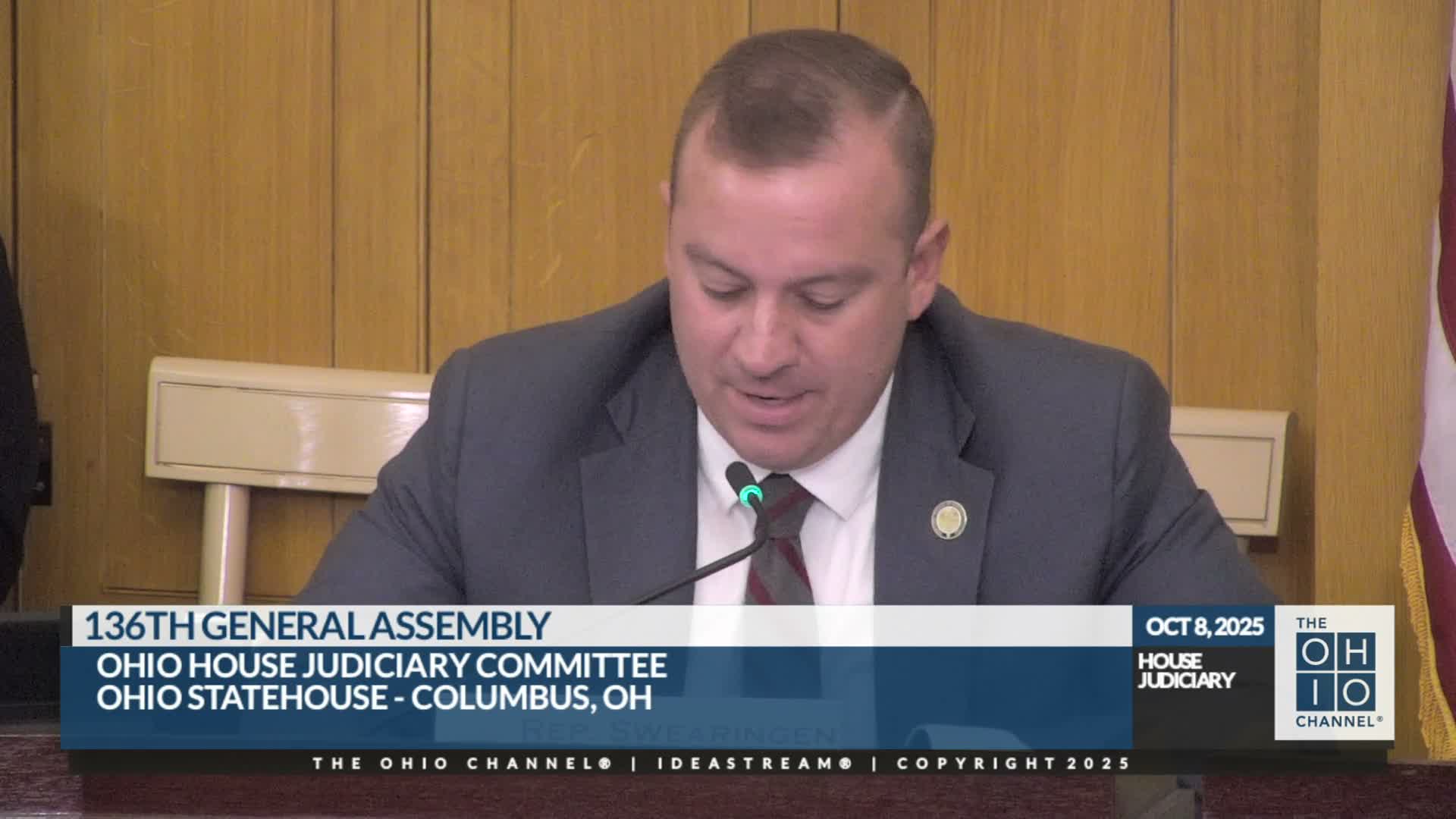
A divided House Judiciary Committee heard several hours of testimony on House Bill 302 on the use of age signals to protect children online, with witnesses offering sharply different accounts of how the proposal would work and whom it would affect.
Proponents, including Kate Charlotte, a Google public-policy director, said the bill is a targeted, privacy-preserving approach that would let app stores provide a simple indicator — a signal that a user is a minor — without transmitting a person’s precise age or identity. ‘‘HB 302 ... enables app stores to provide signal to relevant apps that a user is a minor without sharing any of their specific age or identity information,’’ Charlotte said, adding the bill would ban personalized advertising to minors and give parents centralized controls.
Developers and trade groups supported the bill’s narrower approach. Chris Grimm of the Developers Alliance said HB 302 "applies safeguards only to apps that provide different content, features, or interactions for users based on their age," and would avoid imposing heavy compliance costs on small, general-audience apps.
Opponents and skeptical committee members pressed two major concerns: whether the bill would improperly allocate legal liability and whether the statute could fail a First Amendment/content-neutrality test. Representative Josh Williams repeatedly told proponents he saw the bill as giving immunity to large platform providers while shifting litigation risk to small app developers; he pointed to statutory language he said “provides sole liability to the developer” and said that would leave small entities exposed. ‘‘The only part of this bill that is absolutely clear is that Google won’t be held liable,’’ Williams said in questioning.
Proponents responded that liability protections are intended to shield parties acting in good faith while putting compliance responsibility on those who operate or create apps. Google’s witness said the bill requires both app stores to provide the age signal and developers of covered apps to use it and implement proportionate safeguards.
Members also raised constitutional concerns. Representative Stewart asked how the bill would survive a legal challenge given prior state laws that were struck down for being content-distinguishing; proponents said HB 302 differentiates by whether apps provide a different experience to minors, not by content categories, and argued that approach is a permissible, narrowly tailored regulatory trigger.
The hearing included a range of community and faith leaders who supported HB 302 on child-safety grounds, including a mental-health specialist and local nonprofit leaders who said children are exposed to adult content and predators online. Witnesses urged practical safeguards — gating explicit content, enabling parental dashboards and disabling targeted ads to minors — while minimizing collection of sensitive data.
No committee vote was taken at the hearing’s end. Committee members asked proponents for additional drafting detail, constitutional analysis and implementation data as they weigh competing bills and federal guidance.
The committee’s next procedural steps were not announced during the hearing.