Get Full Government Meeting Transcripts, Videos, & Alerts Forever!
Get email alerts on the HB338 topic
No spam. Unsubscribe anytime.
'Andy's Law' sponsors seek tougher sentences, staffing and security changes after prison staff death
Summary
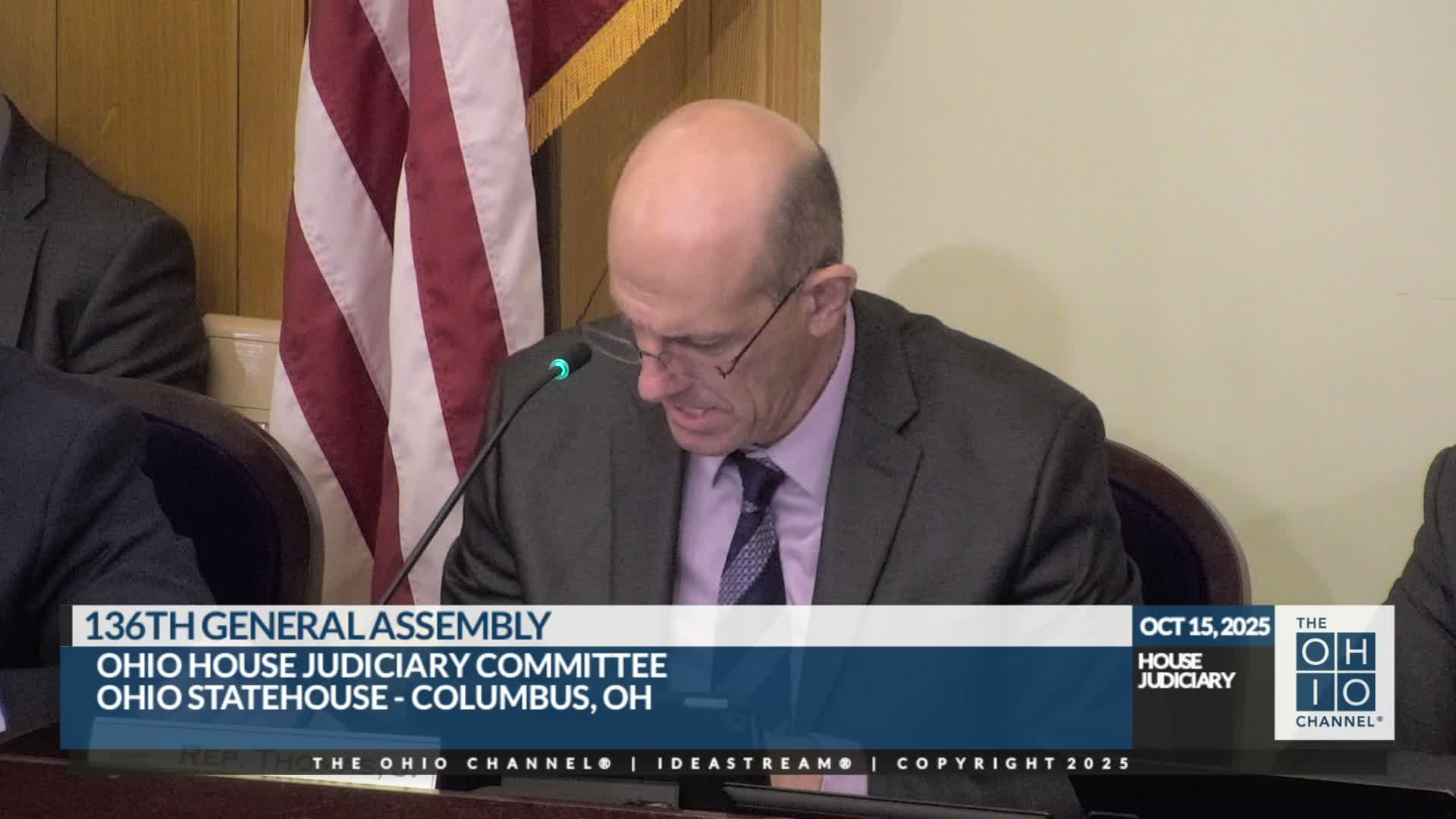
Sponsors of House Bill 338 told the Judiciary Committee the bill creates mandatory penalties and operational requirements to improve prison safety after the December 2024 death of Andrew Lansing, including life without parole for inmate murder of a correction employee and other sentencing enhancements.
Sponsors of House Bill 338, titled "Andy's Law," said the legislation is aimed at reducing violence inside Ohio prisons and protecting correctional staff following the December 2024 murder of Andrew Lansing.
Representatives Plummer and Mark Johnson outlined provisions that would impose mandatory sentences in certain cases: life without parole if an inmate murders a Department of Rehabilitation and Correction (DRC) or Department of Youth Services (DYS) employee; a mandatory consecutive seven-year sentence for a felonious assault on DRC/DYS staff; and a mandatory three-year sentence for assault of a DRC/DYS employee. Sponsors also proposed operational changes, including requiring K9 drug-sniffing units at level 3 and 4 prisons, shifting level 3 and 4 visitations to no-contact, imposing stricter investigation/inspection protocols and setting more detailed qualifications for the DRC director. The bill would also require the DRC to hire a consultant to assist in addressing the staffing crisis.
Committee members supported the bill’s goals but raised technical and policy questions. Representative Tims asked whether harsher mandatory sentences have demonstrably reduced prison violence elsewhere; sponsors said data are mixed for individual tactics and that the bill combines sentencing with operational changes to protect staff and improve retention. Representative Williams supported the bill but urged discussion about presumption of prison for elevated felonies and flagged that raising offenses to felony 3 could limit inmates' access to vocational programming; sponsors offered to negotiate technical fixes offline and consider ensuring consecutive sentencing where intended.
Sponsors and members repeatedly described staffing shortages, high overtime, drug introduction routes and a culture that contributors said needs reform. The committee concluded the first hearing; sponsors said they will provide additional materials if available and meet with members to refine language.