Get Full Government Meeting Transcripts, Videos, & Alerts Forever!
Get email alerts on the HB372 topic
No spam. Unsubscribe anytime.
Families and public‑safety groups press House Judiciary Committee to pass 'Larry Henderson Act'
Summary
At a packed Judiciary Committee hearing, family members of Deputy Larry Henderson, law‑enforcement groups and the Cuyahoga County prosecutor urged passage of HB 372 to elevate penalties for aggravated murder of first responders and to spare survivors repeated parole‑hearing trauma.
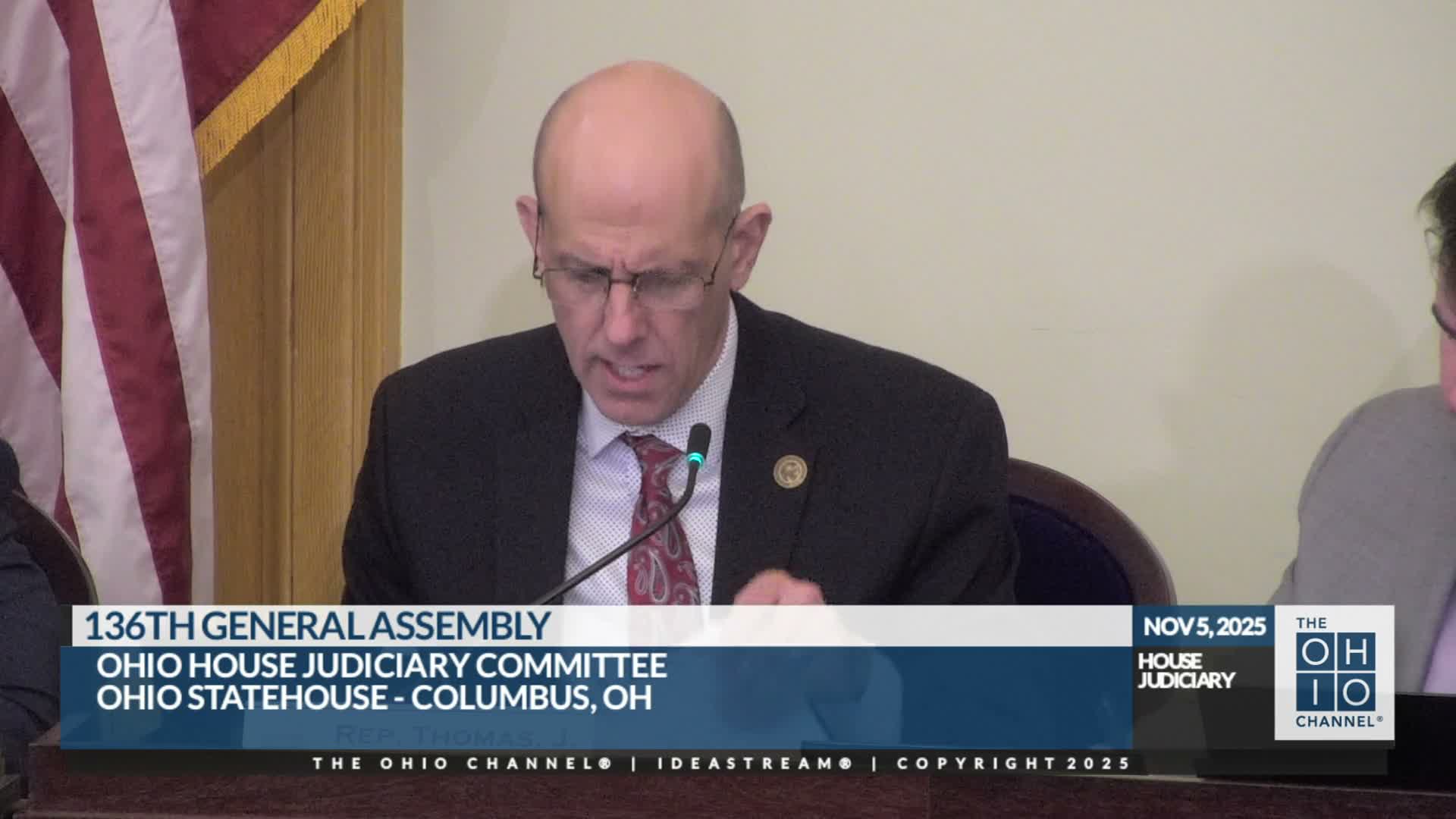
Chairman Thomas called House Bill 372, the "Larry Henderson Act," for a second hearing, and the committee heard lengthy proponent testimony from family members, law‑enforcement colleagues and elected prosecutors.
Lori Henderson, widow of Deputy Larry Henderson, described the family's grief and asked lawmakers to limit survivors' repeated exposure to parole proceedings: "justice is truly not served when the victim's families are condemned to a lifetime of reliving their loss." Lieutenant Timothy Nash of the Hamilton County Sheriff's Office and family members recounted Henderson's service and urged lawmakers to ensure penalties reflect the gravity of attacks on first responders.
Law‑enforcement organizations echoed that stance. Jay McDonald, president of the Fraternal Order of Police of Ohio, said the FOP "strongly supports House Bill 372" and argued that "the death penalty and life without the possibility of parole should be reserved for the most heinous acts" when victims are peace officers or first responders. John Harvey, president of the Ohio Association of Professional Firefighters, also urged passage, saying attacks on first responders are occurring "much too...frequently."
Cuyahoga County Prosecutor Michael O'Malley told the committee he supports HB 372 and raised a related procedural concern: he urged the House to consider Senate Bill 295 fast because a defendant in a recent case could be restored to competency within the statutory one‑year restoration window.
The hearing was primarily testimonial; witnesses emphasized survivor trauma, deterrence and law‑enforcement recruitment and retention impacts. No committee vote on the bill occurred during the session; written testimony was made available on committee iPads.