Get Full Government Meeting Transcripts, Videos, & Alerts Forever!
Get email alerts on the Criminal Justice Competency topic
No spam. Unsubscribe anytime.
Committee narrows Senate Bill 295 after debate over competency-restoration timelines
Summary
The House Judiciary Committee amended Senate Bill 295 to cut a proposed five-year competency-restoration retention period to three years and voted to report the bill favorably after witness testimony from the Ohio Office of the Public Defender raised due-process concerns.
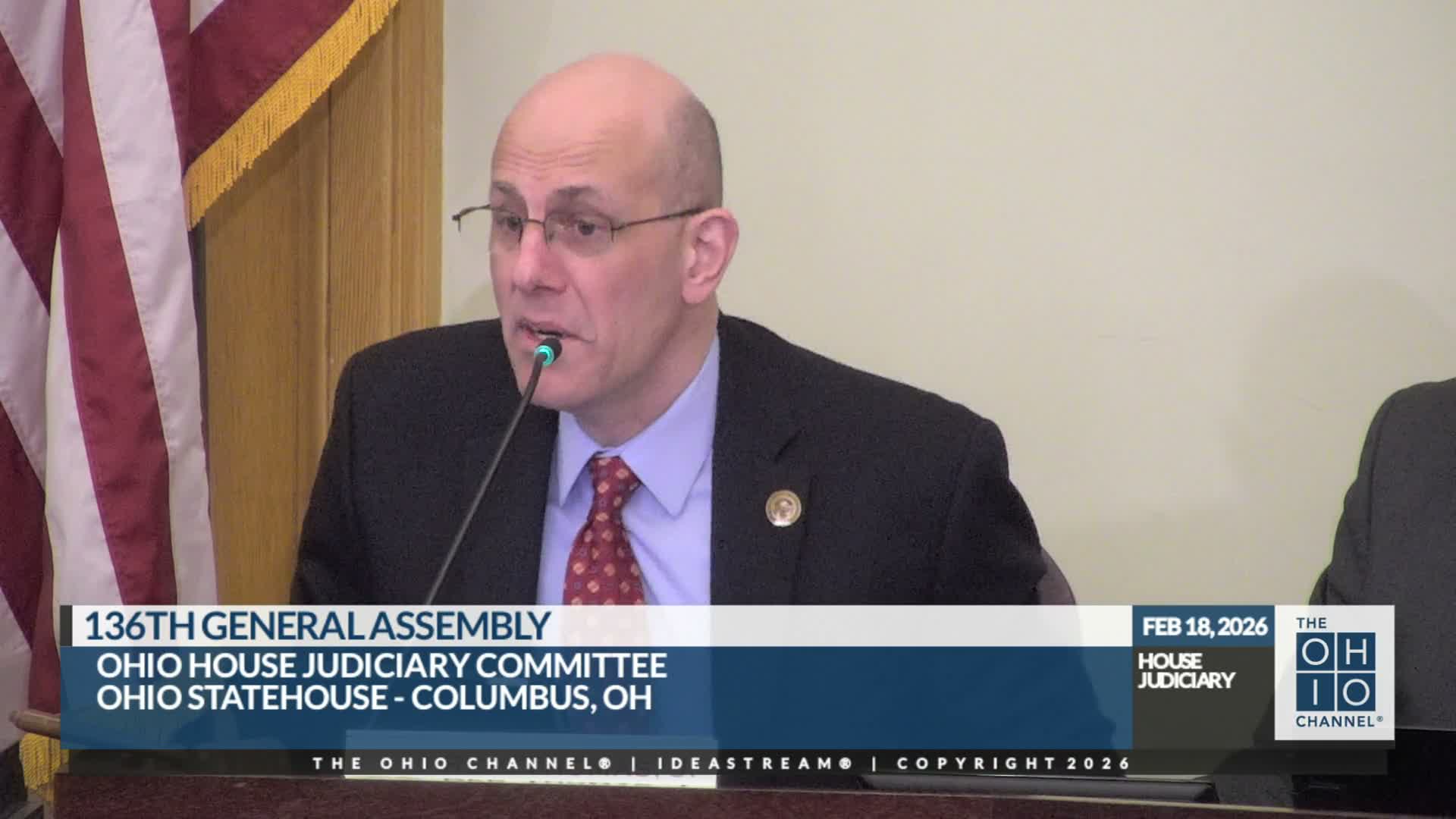
The Ohio House Judiciary Committee on Feb. 20 amended and favorably reported Senate Bill 295 after hours of testimony and questions about how long the state may retain jurisdiction over defendants found incompetent to stand trial.
Zach Miller of the Ohio Office of the Public Defender told the committee he supports portions of SB 295 that address reporting and tolling failures between hospitals and courts but opposed extending the competency-restoration timeline. "This bill would allow the government to hold a person who is experiencing a mental health condition for five years based solely on an indictment," Miller said, arguing that the proposal "erodes due process rights for incompetent defendants."
Members pressed witnesses on alternatives. Several committee members said they supported retaining the bill's hospital reporting and 14-day medication-reporting provisions but were uncomfortable with a five-year retention period. Representative Matthews offered amendment AM1674 to reduce the maximum retention period from five years to three years; Matthews described the change as "a compromise" negotiated with Senate sponsors. The chair accepted the amendment after no member objected.
Vice Chair Swearingen moved to favorably report the amended SB 295 to the Committee on Rules and Reference and recommend its passage. The clerk recorded roll-call support from the committee, and the chair announced the bill was favorably reported; the roll was left open until noon for any further entries.
Why it matters: SB 295 combines procedural fixes (including tolling and hospital reporting that Miller said would address communication breakdowns in the Hardy case) with a proposed extension of how long the state may hold defendants found incompetent. Supporters said the bill closes notification gaps; opponents said expanding retention threatens constitutional protections for people not convicted of crimes.
What comes next: The committee report sends the amended SB 295 to the Rules and Reference Committee for scheduling before the full House. The roll will remain open in the clerk's office until the announced deadline.