Get Full Government Meeting Transcripts, Videos, & Alerts Forever!
Get email alerts on the SB55 Marijuana OVI topic
No spam. Unsubscribe anytime.
Ohio bill would replace most marijuana 'per se' limits with inference-based tests for driving
Summary
Senate Bill 55 would remove most marijuana per se thresholds and establish an inference framework using active metabolites and oral-fluid testing to better connect recent marijuana use to impairment, sponsors say. The measure retains a whole-blood per se level for the most serious crashes.
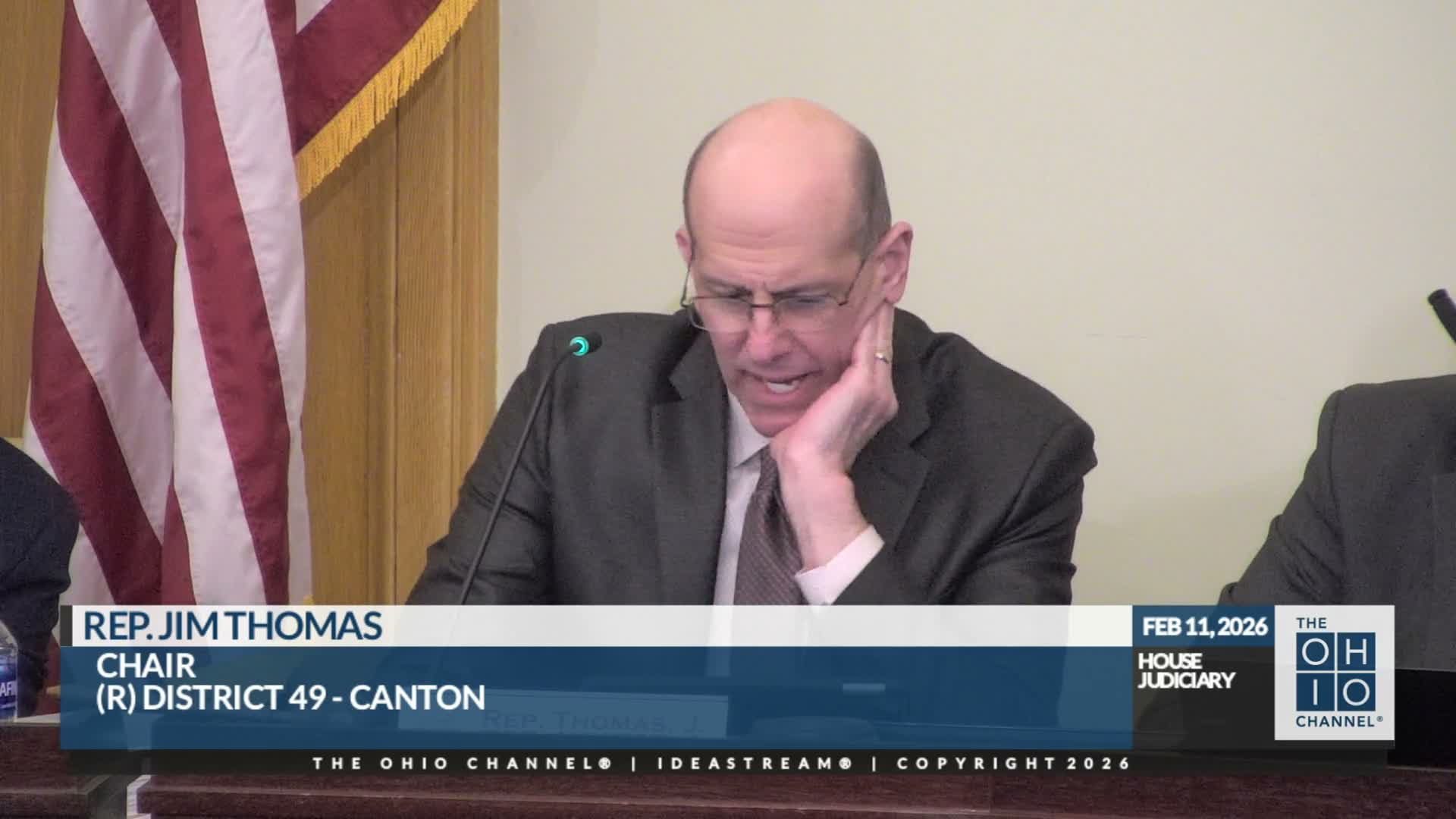
Senator Manning testified before the House Judiciary Committee that Senate Bill 55 would remove most marijuana 'per se' driving limits and replace them with an inference-based approach that aims to tie laboratory findings more closely to recent use and impairment. Manning said the bill retains a per se whole-blood level for the most serious collisions but changes routine testing to active metabolites and authorizes oral-fluid testing.
Manning said the bill would create inference thresholds intended to signal recent use: a 25-nanogram figure for urine, a 2–5 nanogram inference range for blood, and a five-nanogram oral-fluid threshold. He emphasized the change from per se to inference is meant to require prosecutors to show impairment by the totality of the circumstances — field sobriety observations, officer reports, and, where appropriate, expert testimony — rather than rely on long-resident, inactive metabolites that can persist for days or weeks.
Committee members pressed Manning on the scientific basis for the numeric thresholds. Manning said the numbers were informed by other states' standards and consultation with experts, and that the inference standard was intended to be fairer than treating historical metabolite levels as automatic evidence of impairment. He said whole-blood per se remains for severe crashes because blood testing is typically taken in more serious incidents and, according to the sponsors, is more closely correlated with impairment.
Supporters said the bill would allow oral-fluid testing, which they described as a more accurate indicator of recent consumption than urine because it detects more recent use. Manning said some agencies are piloting oral-fluid testing and that the bill anticipates wider deployment.
Opponents were not recorded at the committee hearing in person; the committee discussion focused on questions about how juries and judges should weigh lab results against a lack of observable impairment (for example, normal speech or no bloodshot eyes). Sponsors and questioners agreed that the inference standard would require prosecutors to present additional evidence — officer observations, field-sobriety tests, admissions, or expert analysis — to prove impairment beyond the laboratory number alone.
The hearing closed without a committee vote recorded in the transcript; the bill remained at the hearing stage for further consideration.