Get Full Government Meeting Transcripts, Videos, & Alerts Forever!
Get email alerts on the Community Pharmacy Protection Act topic
No spam. Unsubscribe anytime.
Ohio lawmakers hear broad support for Community Pharmacy Protection Act as pharmacists describe closures and opaque PBM practices
Summary
Witnesses including pharmacy owners, associations and a student pharmacist told the House Insurance Committee that House Bill 192 would add PBM transparency, require quarterly reporting, and set reimbursement tied to acquisition cost plus a minimum dispensing fee to prevent community pharmacy closures.
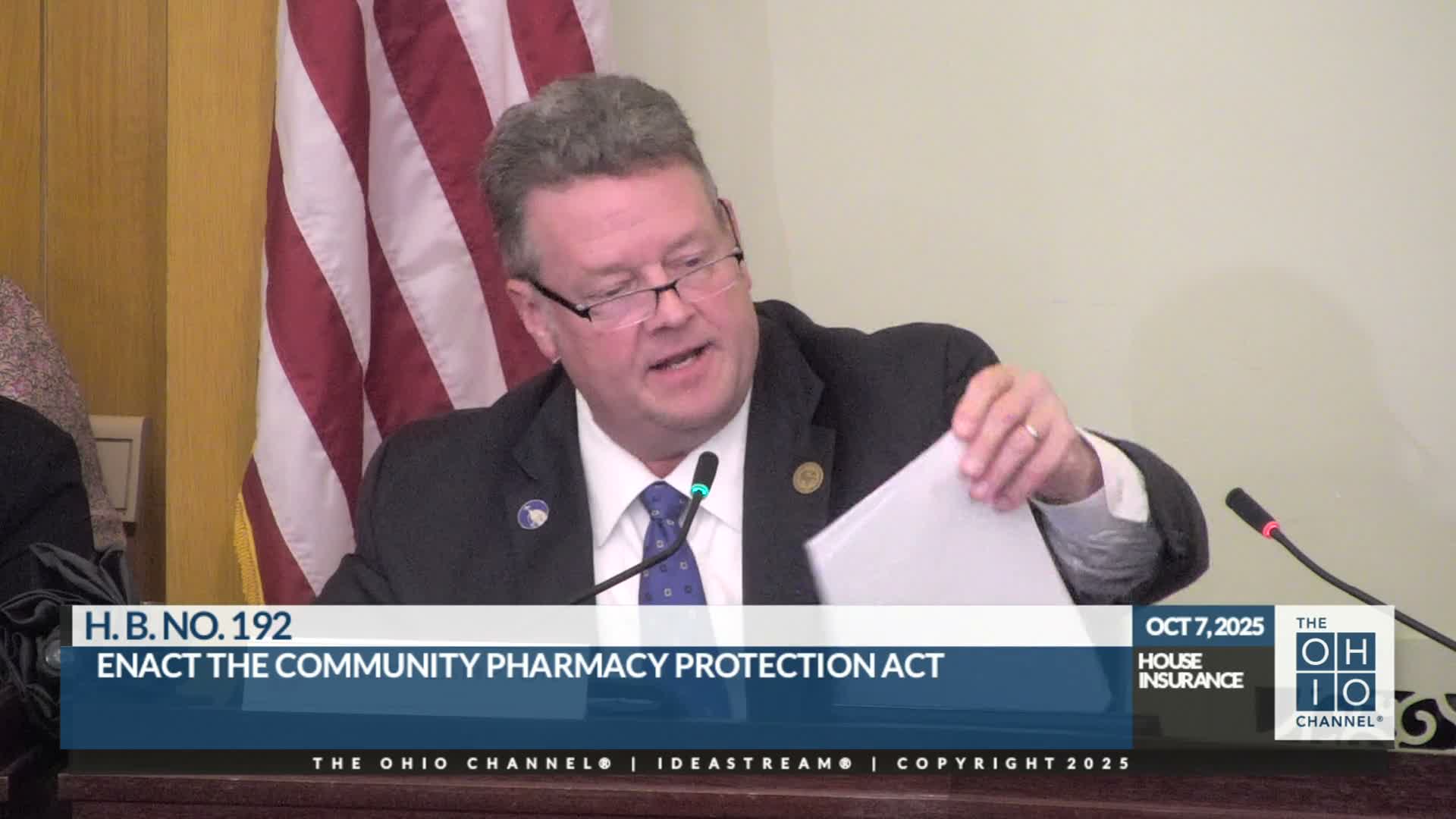
Columbus — Supporters of House Bill 192, the Community Pharmacy Protection Act, told the Ohio House Insurance Committee that the measure is needed to stop a wave of community pharmacy closures and to force transparency from pharmacy benefit managers.
David Burke, executive director of the Ohio Pharmacists Association, told the committee the bill would require PBMs to submit detailed, itemized monthly and quarterly reports to the superintendent of insurance and reimburse Ohio‑incorporated pharmacies at the acquisition cost of drugs plus a minimum service fee. Burke said three PBMs control about 80% of contracts and argued that standardizing a cost‑based dispensing fee could yield overall savings while preventing pharmacies from being paid below cost.
Amanda Fordyce, community pharmacy manager at Ohio Northern University HealthWise, told lawmakers her pharmacy absorbed a roughly 250% surge in volume after a chain closure and faced an on‑site PBM audit that sought a retroactive recoupment of about $3,000; she said the appeal was upheld but the administrative burden cut thin margins and threatens patient access in rural communities.
Pharmacist Dennis Blank described widespread below‑cost reimbursement and called the bill a way to restore accountability: “Pharmacies are dying because of below cost reimbursement,” he said, arguing the bill’s reporting and reimbursement provisions would prevent arbitrary clawbacks and stabilize independent and small‑chain pharmacies.
Parker George, a student pharmacist, added that ongoing pharmacy closures reduce training sites for future pharmacists and limit students’ career options in community practice.
Supporters repeatedly rejected the description of the bill’s reimbursement mechanism as a “pill tax,” saying copays and employer plan contract terms would not automatically change and that the proposal seeks to rein in PBM profit extraction rather than raise patient premiums.
Committee members pressed witnesses on several specifics: how a standardized cost formula would affect individual drug prices, whether Medicaid savings translate to the private market, and what dispensing fee level would be breakeven for pharmacies. Witnesses cited Medicaid examples where cost‑based approaches produced savings while increasing dispensing fees, and estimated that a breakeven dispensing fee could be in the roughly $10–$11 range depending on tiering and business size.
The committee accepted an amendment earlier in the hearing clarifying definitions for Ohio‑based and affiliated pharmacies, adding reporting fields and a reimbursement formula. No formal vote on the bill was recorded during the session; lawmakers asked witnesses to provide more granular data on pharmacy closures and geographic impacts.
The committee also logged written testimony from national and regional chain and retail pharmacy groups; those documents were made part of the record but were not read into the record during the hearing. The committee adjourned with no final action on the underlying substitute bill and indicated follow‑up conversations and data requests to stakeholders would continue.