Get Full Government Meeting Transcripts, Videos, & Alerts Forever!
Get email alerts on the Single Payer topic
No spam. Unsubscribe anytime.
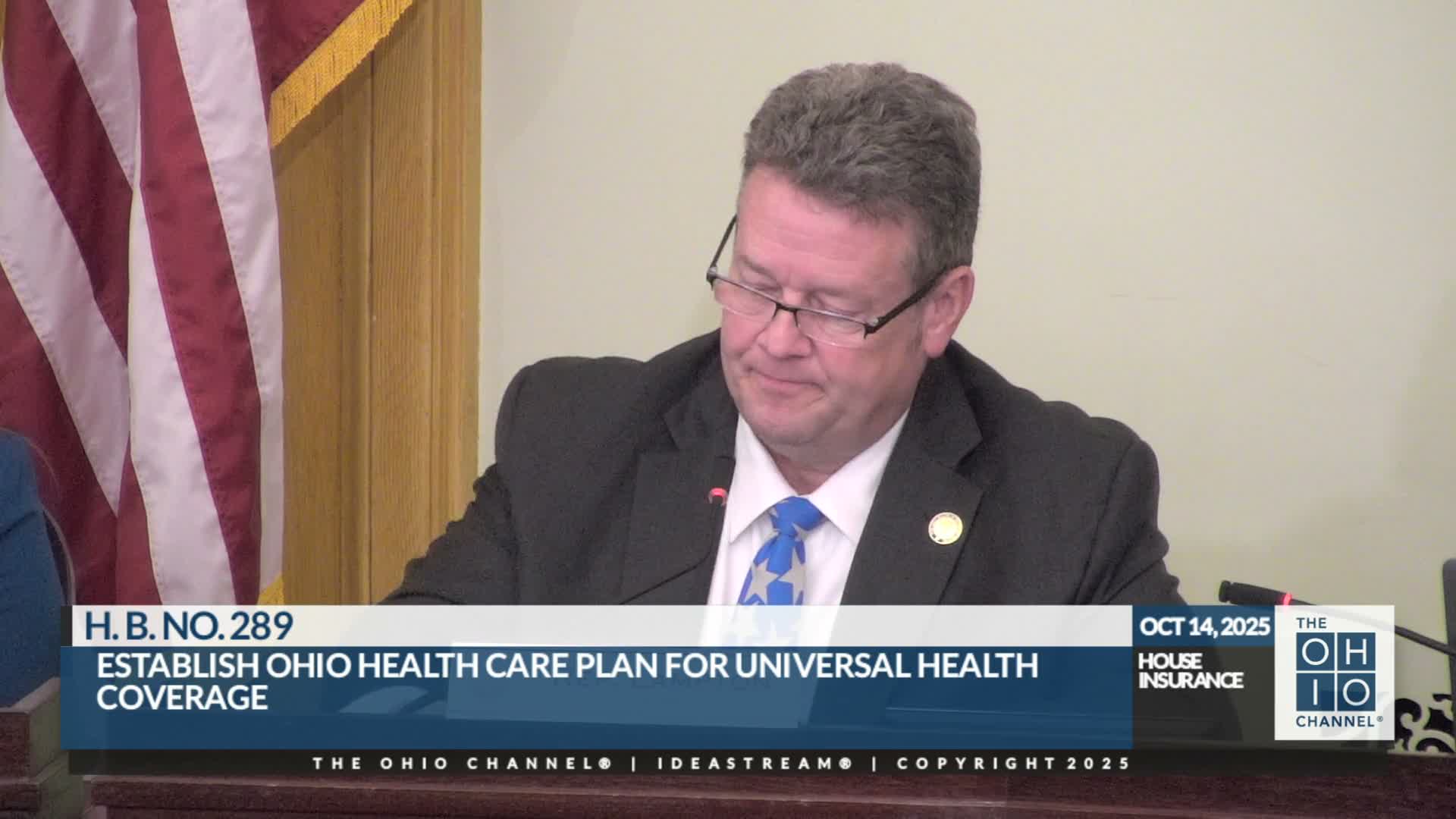
Sponsors pitch Ohio single-payer plan; lawmakers press for implementation details
Summary
Proponents of HB 289 presented a single-payer Ohio Health Care Plan, outlining comprehensive coverage and proposed funding sources; committee members raised questions about waivers, ERISA, transition logistics and tax impacts.
Representatives Michelle Grimm and Rader presented sponsor testimony on House Bill 289, a proposal to establish an Ohio Health Care Plan that proponents described as comprehensive coverage for all Ohioans.
Representative Grimm described the bill as covering medical, dental, vision, prescription and emergency care with no co-pays, deductibles or premiums. She framed the bill as a response to rising health-care costs and cited studies she said show substantial administrative waste in the current system.
Representative Rader laid out proposed funding and governance details: a 15-member Ohio Health Care Board, a cap on administrative costs at 5 percent, and several possible revenue sources including "up to a 3.85% payroll tax, groceries tax up to 3% and an end to end income tax on high income earners of around 5%." He said the plan could yield large administrative savings — the testimony cited an estimated $11,600,000,000 or more in savings — and described a two-year transition period with a $60,000-per-year, two-year transition payment for displaced workers in the insurance industry.
Committee members asked for clarification about interactions with federal programs and ERISA-covered employer plans, whether waivers (for Medicare, Medicaid, CHIP) were required and how network adequacy, third-party administration and subcontracting would be handled. Rader said the board would have flexibility to determine administrative structure and that the two-year transition would allow time to secure federal waivers where feasible.
No committee vote was taken; lawmakers said they were seeking more details on specifics including the interaction with federal law, the projected tax impacts for different income groups, and the nuts-and-bolts of administration.