Get Full Government Meeting Transcripts, Videos, & Alerts Forever!
Get email alerts on the Environmental Health topic
No spam. Unsubscribe anytime.
Conservation commission to research rodenticide use, invasive ornamentals and jumping-worm risks
Summary
Commission members asked staff to check whether town staff uses rodenticides and to circulate Newtown’s model policy; they also discussed state action on invasive ornamentals and the risk of jumping worms being introduced with fill.
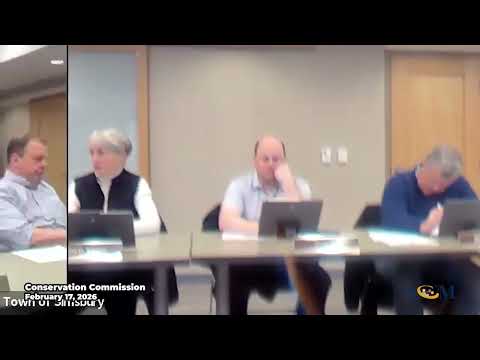
Members of the Simsbury Conservation Commission used part of the Feb. 17 meeting to raise broader ecological issues beyond the wetland application, focusing on rodenticide use on town property, invasive ornamental plants and invasive soil organisms.
Speaker 4 introduced a flyer and referenced Newtown’s recently adopted approach to limiting certain rodenticides. Commissioners agreed the first step is to determine whether Simsbury town staff uses rodenticides, where they are used and how often. Staff was asked to report back with current town practices and, if appropriate, circulate Newtown’s language before the next meeting so the commission can consider drafting local guidance or an educational campaign.
The commission also discussed state-level action that Speaker 1 described as a legislative ban on the sale of burning bush and Japanese barberry, with a stated three-year transition period for continued sales. Commissioners urged residents to avoid purchasing known invasive ornamentals and flagged imported soil and fill as a pathway for invasive jumping worms; Speaker 3 said even minimal importation can introduce worms that are difficult to eradicate.
Next steps: Staff will investigate current town practices on rodenticide use, circulate the Newtown policy language and return findings to the commission for possible next-step recommendations on restriction or education.