
Minnesota Department of Agriculture outlines program updates as farm mediations rise
Get AI-powered insights, summaries, and transcripts
Subscribe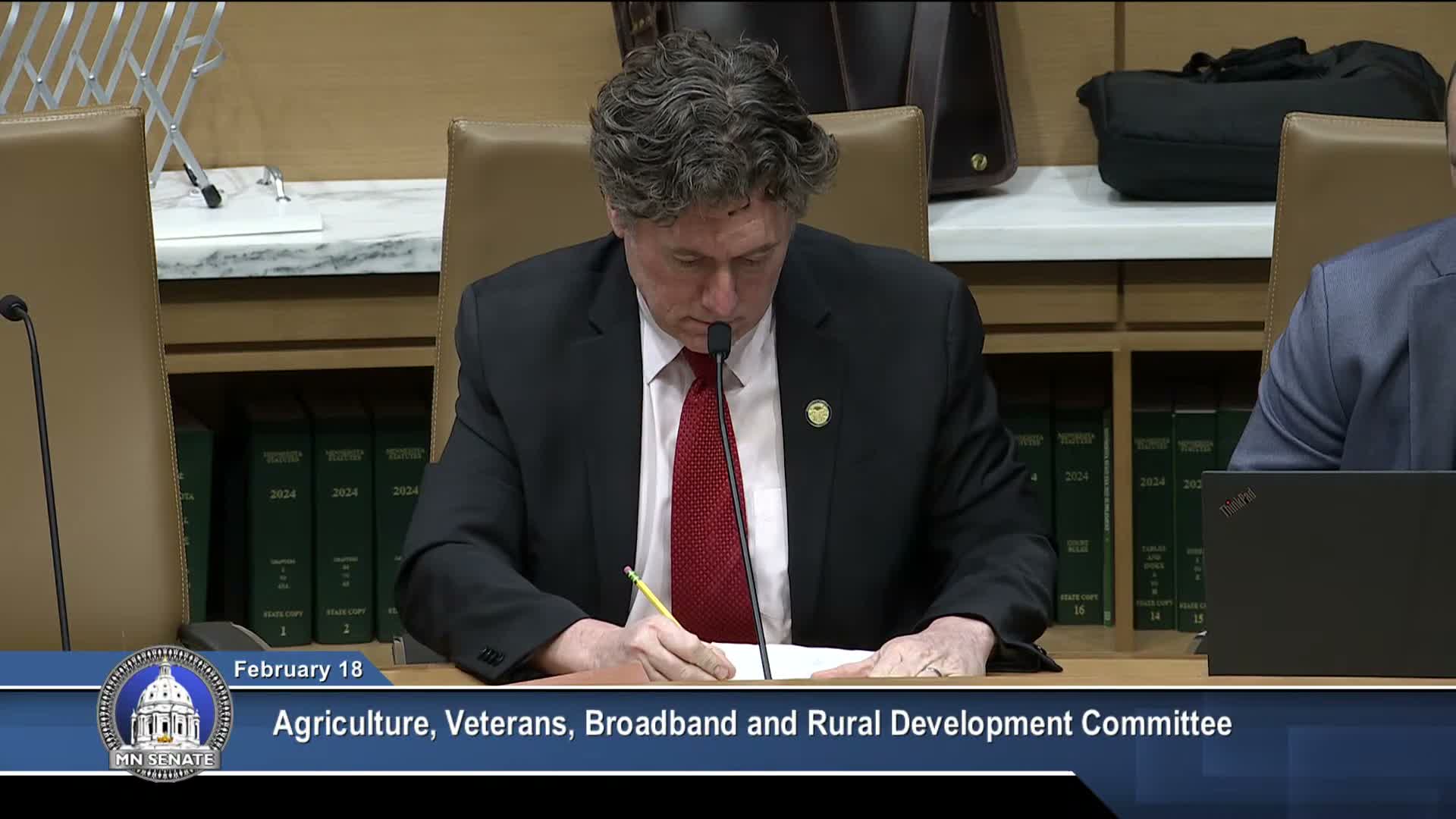
Summary
MDA Commissioner Tom Peterson told a Senate committee that Minnesota now has about 64,000 farms and reviewed department priorities — from anti‑fraud steps and grant oversight to avian influenza preparedness — while urging quick action on dairy payment language and noting pressure on indemnity funds.
Tom Peterson, commissioner of the Minnesota Department of Agriculture, told the Senate Committee on Agriculture, Veterans, Broadband and Rural Development on Feb. 18 that the state is seeing continued stress in agriculture and described department steps to respond.
Peterson said the U.S. Department of Agriculture’s latest figures lowered Minnesota’s farm count to about 64,000 and emphasized the department’s core responsibilities: food-supply protection, pest and disease response, inspection, and promotion of farm products. “We unfortunately have just today come out and we now have 64,000 farms,” Peterson said.
Why it matters: the decline in farms, rising mediation requests and disease risks are straining several state programs. Peterson flagged potential gaps in USDA-related funding after a Sept. 9 federal letter that briefly paused some awards; the pause was resolved after the department worked with the state’s congressional delegation, he said.
Peterson and Deputy Commissioner Andrea Vavoy described new internal controls and staffing to reduce fraud and improve grant oversight. Vavoy said the agency has hired a compliance coordinator and a grants administrator, and uses external review committees and additional site visits for many grants. “Any dollar of fraud, waste, or abuse that goes out the door from us is unacceptable and personally offensive to us,” she said.
The commissioners outlined several program updates the committee may consider in bills this session. On dairy support, Peterson urged lawmakers to act on a companion bill to align a state incentive with the federal Dairy Margin Coverage sign-up so payments can go out earlier. He noted roughly 1,560 permitted dairy farms in Minnesota and stressed that the state program covers dairy cows, not goats.
The department also described a new state Farm to Food Security program created as a state alternative to the federal Local Food Purchasing Assistance program; the program was funded at $700,000 per year of the biennium to buy Minnesota-grown food for distribution to food‑insecure residents. Vavoy said the request for proposals was expected to be released imminently.
Peterson reviewed the down payment assistance program for first-time farm buyers (established in 2023), noting grant amounts rose to $20,000 last year and that the program used a lottery with income and production priorities; the department has supported 112 farmers in fiscal years 2023–25 and has additional awards pending in FY26.
On risk and indemnities, Peterson reported a $10 million general‑fund appropriation for the grain indemnity account and said the fund held about $10.7 million due to accrued interest. The department has received claims and is pursuing validation and recovery, including interstate legal coordination. Peterson also warned that the elk and wolf depredation accounts face backlogs and shortfalls and that payments sometimes must be delayed until the new fiscal year.
Disease response and biosecurity drew sustained attention. Peterson said Minnesota has been monitoring high‑path avian influenza (H5N1), reporting continued detections in both commercial and backyard premises and ongoing coordination with the Board of Animal Health, the University of Minnesota and USDA. He told the committee the agency’s ag emergency account stood at roughly $2.5 million, with additional reimbursements expected. “That money helps me sleep at night,” Peterson said, describing the account as critical to response.
On lending and capital, the department explained the Rural Finance Authority’s role as the state’s ag lender and noted a governor-proposed $50 million bonding request for 2026; staff said loan requests have increased and that previously authorized funds (from 2023) may be exhausted by mid‑year absent new borrowing authority.
The department concluded by urging continued legislative support for the department’s grants, indemnity accounts and program staffing as mediations and requests for aid increase.
What’s next: agency officials said they will provide written legislative reports and answer follow‑up questions from members. The committee moved on to a broadband update after the department concluded.
Sources and attribution: Commissioner Tom Peterson and Deputy Commissioner Andrea Vavoy spoke to the committee; quotes and factual details are drawn from their testimony to the Senate Committee on Agriculture, Veterans, Broadband and Rural Development on Feb. 18, 2026.