Philadelphia officials debate $2.8 billion school facilities plan as parents, students plead to save neighborhood campuses
Loading...
Summary
City Council held a public hearing on the School District of PhiladelphiaFacilities Master Plan, a draft $2.8 billion, 10-year proposal that would modernize hundreds of schools and recommends closures, co-locations and grade-band changes. District leaders say funding is partly secured by $1 billion in bonds; $1.8 billion remains contingent on state and philanthropic support. Council members and public speakers pressed the district on data, equity, safety, transportation, and plans for displaced students.
Philadelphia City Council on Feb. 20 pressed School District officials for details on a draft $2.8 billion, 10-year Facilities Master Plan that the district says would modernize 159 campuses, maintain 122 others, create six co-locations and recommend an initial slate of school closures and repurposings.
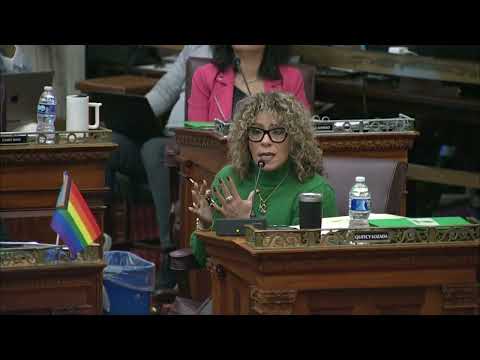
The Committee of the Whole hearing, convened by Council President Kenyatta Johnson and chaired on facilities questions by Council Member Isaiah Thomas, drew the school board president, the superintendent and senior district staff for several hours of testimony followed by more than two hours of public comment. Board President Reginald Streeter and Superintendent Tony Watlington described a planning process that combined on-site condition reviews, a neighborhood vulnerability index, utilization analysis and nearly 14,000 survey responses from residents.
The district told council it plans to finance roughly $1 billion through district borrowing, contingent on board approval, and to seek the remaining roughly $1.8 billion from state and philanthropic sources. Watlington said the school districthas its best investment-grade credit rating historically and anticipates debt-service within typical municipal standards; the district said it would submit detailed debt-service and third-party cost studies for the record.
But council members repeatedly pressed district staff on the evidence behind specific recommendations: how recent building assessments were, whether the district performed a racial-equity analysis of closure impacts, how catchment changes would be drawn and what specific operational plans exist for co-located campuses. Several members said a previously published newspaper analysis showing about 68% of students in proposed-closure schools are Black raised equity alarms; district witnesses said the citydemographics make any widespread consolidation disproportionately affect Black and Latino students and that the plan seeks to redistribute resources to underinvested neighborhood high schools.
Claire Landau, the districtsenior adviser for strategy, provided a current draft list of near-term changes the district is recommending: several schools would begin phasing out in the 2026-27 school year (for example Tilden, Amy Northwest, Wagner, Harding and Stetson) while a set of schools are recommended for closure at later dates (the districtdraft list published in the hearing includes Blankenberg, Overbrook Elementary, Ludlow, Morris, Pennypacker, Welsh, Conwell, Robeson, Motivation, Parkway West, Lankenau and Parkway Northwest). District staff said some closed buildings could be repurposed for affordable or workforce housing and that 12 of the 20 draft-closure schools would be recommended for district repurposing while eight would be candidates to convey to the city for housing and workforce development.
Council members and witnesses sought clarity on a long list of operational details: who will staff and run the planned transition office for displaced families, whether SEPTA and other city agencies have been fully involved in transportation planning, how the district will ensure Individualized Education Program (IEP) services continue without interruption, and how colocations will preserve the integrity of specialized programs (magnet, criteria-based, and CTE).
District leaders repeatedly said they were listening and that the plan is still a draft. Watlington said the board of education will receive final recommendations on Feb. 26 and that board deliberation and public comment would follow; he also committed to providing a series of written follow-ups for council, including site valuation reports, the districtRFP process and third-party cost reviews.
Public comment was the most emotional portion of the hearing. Teachers, principals, parents, union representatives and students urged the council and board to pause or reject closures of named neighborhood schools. Several speakers said neighborhood-specific programs would be lost if campuses such as Lankenau (Lincoln Environmental Science), Conwell Middle Magnet, Blankenberg, Paul Robeson and Moffett were closed or repurposed; Lincoln students and parents described off-campus fieldwork, a trout-in-the-classroom program and career pathways that rely on green space and nearby partners and said those elements cannot be simply moved. The Philadelphia Federation of Teachers and its environmental director also testified that available facility data and the districtwork product were incomplete and asked the district to "show the work." Numerous speakers called for a slower, more transparent, data-driven process and suggested independent scenario modeling, clearer decision thresholds and a public timeline for any action.
What happens next: Watlington said the district will present final recommendations to the Board of Education on Feb. 26; the board will host public comment. District staff told council they will publish detailed supporting data and provide written answers to members' questions, including the receiving-school test-score tables, property valuation data for suggested conveyances and the third-party review documentation cited in the presentation.
No binding votes on the plan were taken at the hearing; any closures, colocations, conveyances or bond issuance would require separate approvals (board action, city capital review and/or appropriation, and bond authorization where applicable).