Get Full Government Meeting Transcripts, Videos, & Alerts Forever!
Get email alerts on the Public Notice topic
No spam. Unsubscribe anytime.
Press association and municipal leaders strike compromise on public‑notice law
Summary
Maine Press Association and Maine Municipal Association presented compromise language to LD 2042 that would allow municipalities to post notices in an official online repository when weekly print schedules prevent timely publication, followed by a print notice; committee approved the amendment 12–0 with one absence and asked stakeholders to continue discussions about including additional entities.
Stakeholders from the Maine Press Association and the Maine Municipal Association told the committee that changes in weekly newspaper print schedules have created unintended timing problems for municipal public notices. Mark Stoddard (Maine Press Association) and Rebecca Lambert (Maine Municipal Association) described a compromise amendment to LD 2042 that would allow an earlier posting to an official electronic repository — which currently exists under statute — to establish effective notice, with the requirement that a print notice follow when the next print cycle permits.
Stoddard said the issue arose in towns whose weekly newspapers publish every other week and can leave public hearings out of statutory timing windows. The proposed approach aims to preserve the public’s ability to see notices in print while preventing unnecessary delays in holding hearings. Lambert said the amendment was intended to help towns such as Farmington that had difficulty syncing hearing schedules with paper print runs.
Committee members asked about costs (municipal concerns around newspaper fees) and whether other public entities such as water and sewer districts or quasi‑municipal authorities should be covered. The current statute prohibits charging an additional fee for placing the same notice on the newspaper’s website; the amendment does not change that provision, Stoddard said.
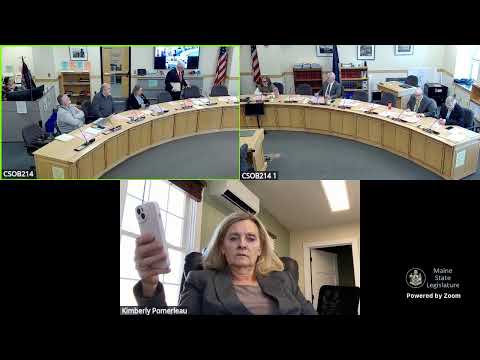
Representative Copeland moved the amendment as presented; it was seconded and the committee voted to adopt it, recording 12 members in favor and one absence. Members told the press and municipal associations that further discussions — including whether to expand the change beyond municipalities to include water districts, sewer districts and other local public entities — should continue and return to the committee for possible language review.
Action: the committee adopted the stakeholder amendment to LD 2042 and will continue stakeholder engagement on scope and language.