
Maine lawmakers debate fund to pay for home security systems after spike in threats
Get AI-powered insights, summaries, and transcripts
Subscribe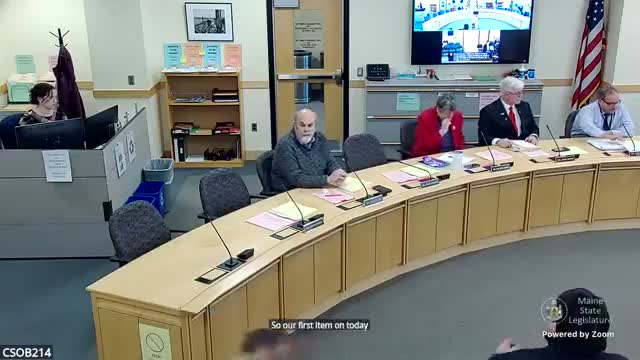
Summary
Sen. Theresa Perce and Senate President Maddie Daughtry told a joint committee that threats against Maine legislators have risen and proposed LD 695 to create a Legislative Residential Security Fund to pay for home security systems for current legislators. Committee members asked for a fiscal note and further details on eligibility, procurement and privacy safeguards.
Sen. Theresa Perce asked the Joint Standing Committee on State and Local Government on Feb. 18 to consider LD 695, a bill that would create a Legislative Residential Security Fund to pay for professionally installed and monitored home security systems for current members of the Legislature.
Perce said the fund would be administered by the Office of the Executive Director of the Legislature and overseen by the Legislative Council, which would select qualified security professionals through a competitive bidding process. “LD 6 95 proposes a meaningful effort toward this goal by creating a fund that legislators can apply for to install home security systems,” Perce told the committee.
The measure drew support from Senate President Maddie Daughtry, who described a recent increase in threats to legislators. “Threats against Maine lawmakers have more than doubled since 2023, increasing from just over 20 reported threats that year to more than 50 in 2024,” Daughtry said, citing reporting from Maine Capitol Police. She said threats have included swatting incidents, death threats and active stalking and argued the proposal is intended to preserve the state’s citizen legislature by reducing barriers to service.
Committee members focused questions on scope, cost and law‑enforcement coordination. Representative Will Toole asked whether the bill is a companion to proposed appropriations to expand trooper coverage in rural counties; Perce said she sees it as complementary, not competing, and agreed to review related LDs such as LD 461. Perce said the Legislative Council would run an RFP to find systems that fit different parts of the state and expected a fiscal note; she estimated roughly $5,000 could cover an installed system but said exact costs would depend on the RFP results.
Opponents and public commenters raised privacy and cost concerns. Gil Tierney, who opposed the bill during public testimony, said a camera does not stop an armed attack and warned that cloud‑hosted systems can put private household data on remote servers. “The camera is just gonna record whatever event might take place,” Tierney said, urging clearer thresholds for who qualifies for an installation and greater privacy safeguards.
Perce and Daughtry told the committee they favor guardrails: the Legislative Council would set policies, the program would use a competitive procurement process, and the council would limit ongoing subscription costs where possible. Daughtry highlighted that some systems are locally hosted to allow faster law‑enforcement access and reduce subscription burdens.
The committee closed the public hearing and requested work‑session materials: members asked for an anonymized breakdown of types of threats reported since 2023, a fiscal note, and examples of RFP guardrails and procurement language. Perce said she would provide the concept draft and supporting information at the work session.
The hearing record shows broad support from leadership and a mix of operational questions from committee members; the next step for LD 695 is a committee work session where Perce and staff will return with a fiscal note and more detailed eligibility and procurement language.