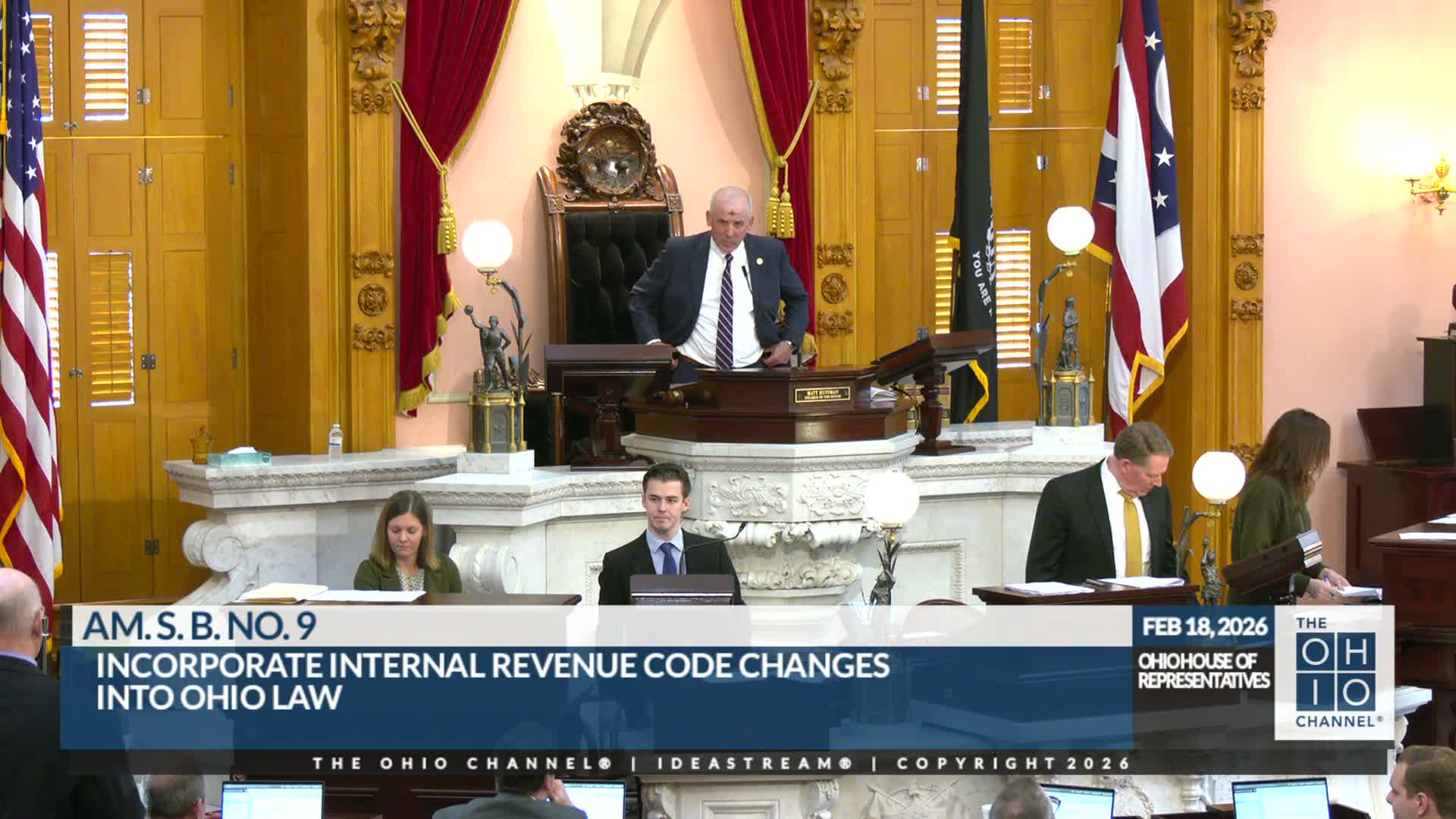
Ohio lawmakers pass tax-conformity measure after emergency-clause debate
Loading...
Summary
Lawmakers approved a tax-conformity measure aligning parts of the Ohio code with recent federal Internal Revenue Code changes. An attempt to include an emergency clause failed, but the bill passed final passage after debate over estimated revenue costs and distributional effects.
The Ohio House voted Feb. 18 to adopt a tax-conformity measure (substitute Senate Bill 9) that incorporates numerous Internal Revenue Code changes into state law. Sponsors argued conformity reduces compliance costs, promotes predictability for taxpayers and could save millions in administrative burden.
Representative Romer, the sponsor on the floor, said the bill “incorporates multiple changes from PL 119-21” and highlighted provisions such as restoring full expensing for machinery and equipment and adjustments to research-and-development expensing. He urged passage with an emergency clause to implement changes quickly.
Opponents raised fiscal and distributional concerns. Representative Troy and Representative Glassburn cited Department of Taxation estimates that the measure would reduce state revenue by about $93 million over two years and $270 million over ten years, and argued some provisions — notably an expanded exclusion for qualified small-business stock — would primarily benefit high-income households.
The House considered and rejected an emergency clause by roll call (63-33), meaning the measure would not take effect immediately as an emergency measure. The chamber then proceeded to final passage; the roll call for final passage recorded 84 affirmative votes and 11 negatives, and the bill was passed and entitled.
Lawmakers emphasized a mix of small-business relief and conformity-driven simplification, while critics said the state should decouple from certain federal changes to protect revenue for other priorities.
What happens next: With the emergency clause rejected, the statute’s effective date will depend on the enrolled bill language and any subsequent gubernatorial action. Fiscal analyses by the Department of Taxation and outside groups cited on the floor suggest longer-term budget impacts that will be tracked during the budget process.