Get Full Government Meeting Transcripts, Videos, & Alerts Forever!
Get email alerts on the Criminal Justice topic
No spam. Unsubscribe anytime.
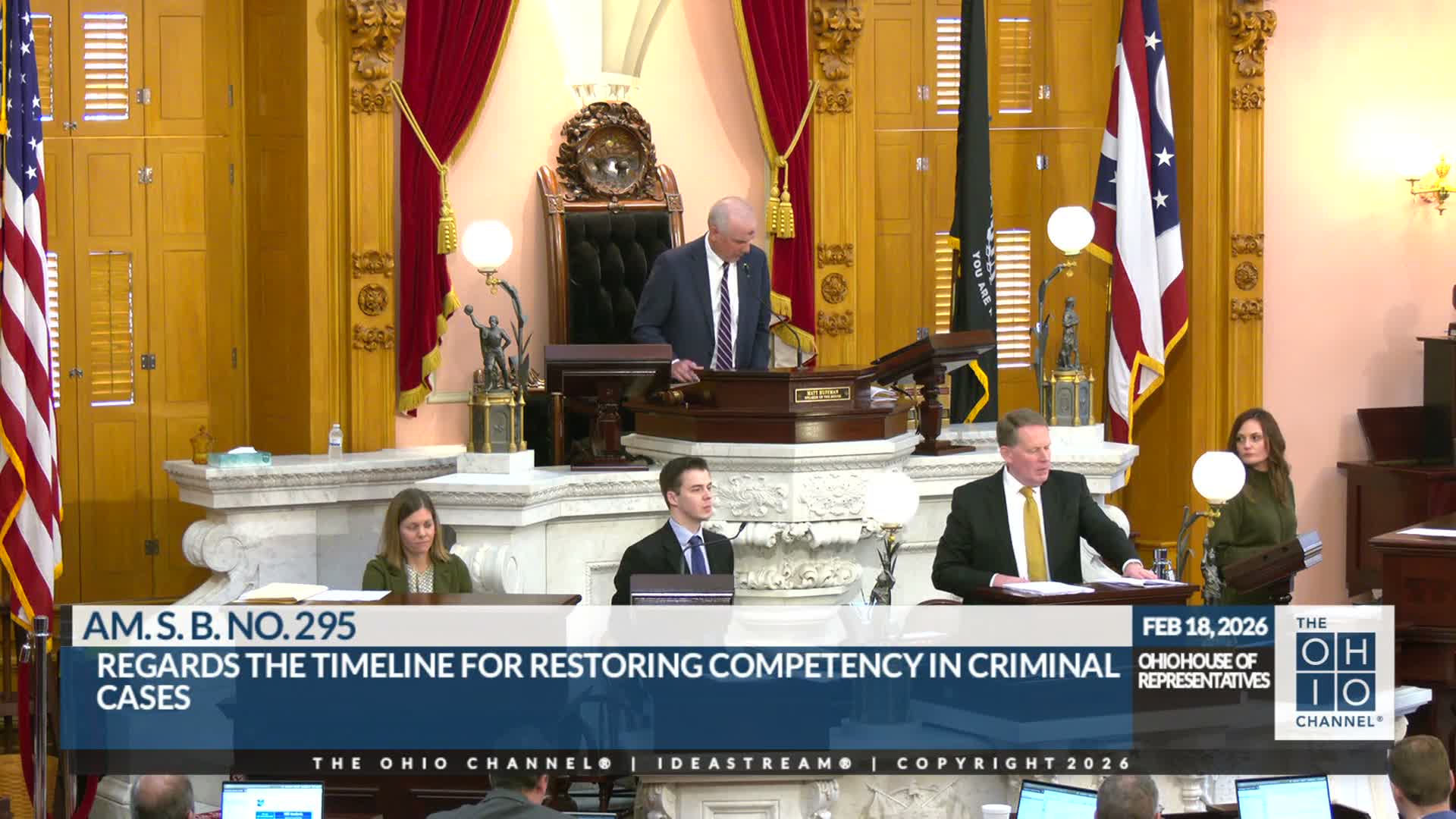
Ohio House approves longer competency-restoration window after deadline looms in high-profile murder case
Summary
The House passed amended Senate Bill 295 as an emergency measure to extend competency-restoration timelines from one year to three for the most serious offenses and to require prompt notification when a defendant refuses treatment; supporters cited an approaching February 20 deadline in a current homicide case, while opponents warned of due-process risks.
The Ohio House on Feb. 18 passed amended Senate Bill 295 as an emergency measure, expanding the time allowed to restore defendants to competency in the most serious criminal cases and adding notification and tolling provisions.
Supporters, including Representative Jim Thomas, said the change was urgent because “the 1-year restoration period as toll now expires this week on February 20” in a pending case and that the bill “would permit a 3 year period for competency restoration.” Representative Synenberg described the bill as fixing a gap in current law after a defendant accused in the killing of a Cleveland police officer refused treatment and the court learned late that medication had been refused.
Under the enacted changes, mental health hospitals must notify the court within 14 days if a defendant refuses to comply with a treatment plan, courts will be able to toll — that is, pause — the statutory restoration clock during periods of noncompliance, and the timeline for competency restoration for the most serious offenses (including aggravated murder and offenses carrying death or life-imprisonment exposure) increases from one year to three years. Sponsors also said the bill would apply retroactively for ongoing competency-restoration cases.
Opponents argued the measure raises constitutional and civil-liberties concerns. Representative Timms said, “This bill is an attempt to rectify an enormous tragedy... I am opposed to this bill,” warning the retroactive extension and expanded detention risk infringing on due-process rights and could lead to prolonged inpatient commitments without adequate treatment.
The House first approved the emergency clause by roll call (85-2), meeting the constitutional threshold for emergency legislation, and later passed the bill as an emergency measure with an 86-2 vote. House officials announced the bill was enacted and entitled on the floor after the vote.
What happens next: Because the House passed the measure as an emergency act, its effective date and any retroactivity will be determined by the statute text and subsequent enrollment and certification steps. The record on the floor shows lawmakers sought to balance timeliness for victims and families with procedural safeguards for defendants, but debate signaled ongoing concerns among some members about civil-liberties implications.