
Senate committee hears sponsor testimony on bill to ban oil-and-gas brine on roads
Get AI-powered insights, summaries, and transcripts
Sign Up Free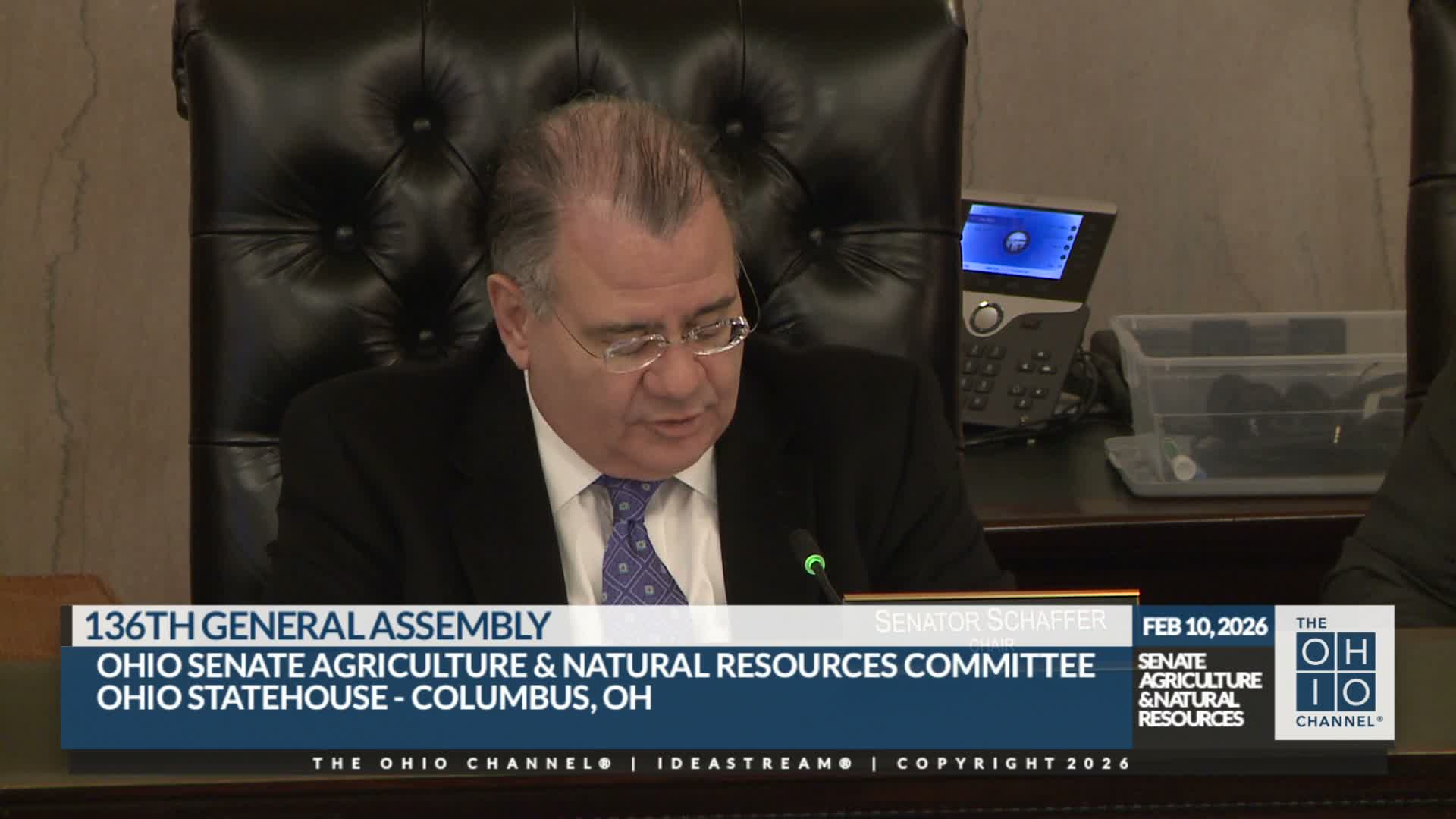
Summary
Senators Paula Hicks Hudson and Kenneth Smith testified in favor of Senate Bill 3 29 at a first hearing before the Senate Agriculture and Natural Resources Committee, citing state studies they say show radium levels in oil-and-gas brine far above the 60 picocuries-per-liter threshold; no vote was taken.
The Senate Agriculture and Natural Resources Committee held a first hearing on Senate Bill 3 29, with sponsors Sen. Paula Hicks Hudson and Sen. Kenneth Smith urging lawmakers to ban the surface application of oil-and-gas wastewater brine on public roads, saying state testing shows the material can contain high levels of radioactive radium.
"We should expressly prohibit the surface application of brine from oil and gas wells on roads," Paula Hicks Hudson said in sponsor testimony, citing concerns about contamination of the Great Lakes and other Ohio waterways and the public-health implications of radioactive runoff.
Sen. Kenneth Smith reviewed several studies the sponsors said motivated the bill, including testing by the Ohio Department of Natural Resources and a 2022 Ohio Department of Health review. Smith said the state testing found many samples with radioactivity far above the 60 picocuries-per-liter threshold used for environmental discharge limits, and he cited an example of a sample "as high as 9,602 per liter." He also said the Ohio Department of Transportation and the Ohio Turnpike Commission discontinued use of a brine-derived product known in testimony as AquaSalina.
Sponsors framed the proposal as a public-safety and environmental measure, pointing to what they described as gaps in disclosure when oil-and-gas companies treat brine chemistry as proprietary. "Ohioans are being exposed to substances whose risk is not fully known and whose presence cannot be verified by them," Hicks Hudson said.
Committee members asked clarifying questions. Chair Schafer raised a common comparison to naturally occurring radioactivity, such as from bananas, and Smith responded: "bananas do not give you bone cancer," arguing the volume and chemical behavior of radium in brine — which can mimic calcium and accumulate in bone — create a different risk profile than trace amounts in food.
When asked whether the sponsors could provide documentation showing agencies ceased using brine-derived products, the sponsors offered to locate and send any relevant memos or records to the committee. No vote was taken during the hearing; the bill received a first hearing and the committee adjourned.
The committee convened, took public record rolls and approved minutes; sponsor testimony and subsequent questioning were the primary activities of the session. The sponsors said they would provide additional documentation to the committee on agency actions and testing upon request.