
Senate committee hears bill to let community-based facilities help inmates get state IDs
Get AI-powered insights, summaries, and transcripts
Subscribe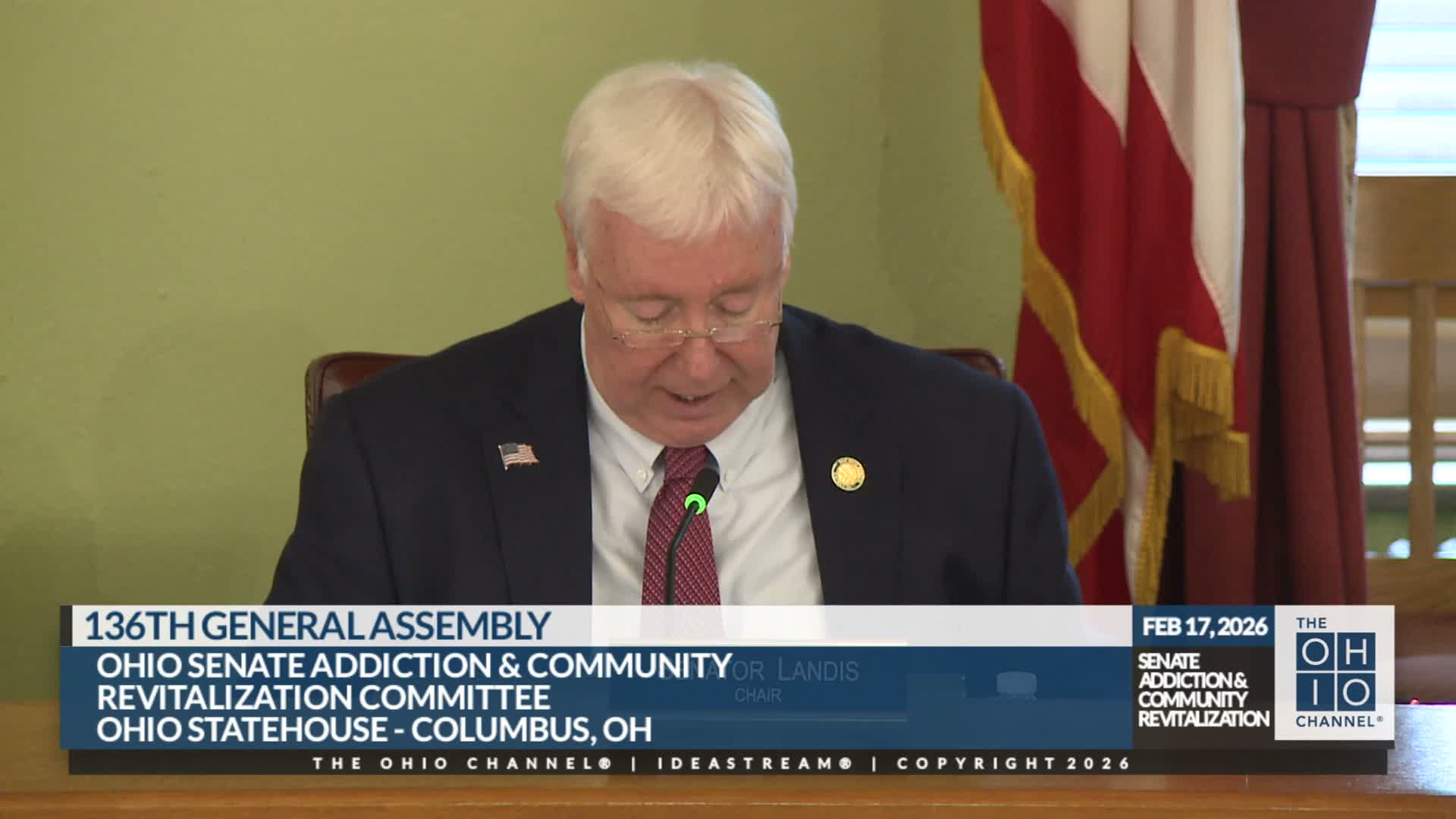
Summary
At a first hearing on House Bill 393, sponsors Representatives Klick and Darnell Brewer told the Senate Addiction and Community Revitalization Committee the bill would let community-based correctional facilities assist people in obtaining state identification before release, aiming to reduce barriers to housing, benefits and employment. Committee members requested participation estimates and measures of success.
At a first hearing before the Senate Addiction and Community Revitalization Committee, Representatives Klick and Darnell Brewer urged support for House Bill 393, which would authorize community-based correctional facilities to help incarcerated individuals obtain state-issued identification before they are released.
Representative Klick, sponsor of HB 393, said the bill "aims to remove significant and often overlooked barriers that individuals face when reentering our communities from the criminal justice system." He told the committee the change would extend services already provided by the Department of Rehabilitation and Correction (DRC) and the Department of Youth Services (DYS) to people in community-based correctional facilities after those facilities told him they were excluded from existing language.
Klick described practical obstacles that can block reentry. He recounted conversations with facility staff who said many people lack birth certificates and, in some cases, do not know the county or state where they were born. "They just need help facilitating getting their state, not their driver's license, but their state ID," he said, arguing that a valid ID increases employability and access to services and can reduce recidivism.
Cosponsor Representative Darnell Brewer told the committee the bill would "simply expand DYS and DRC's existing ID program by incorporating individuals who are completing a program at a community-based correctional facility." Brewer said lack of a state ID often prevents justice-involved people from accessing SNAP, housing, health care, bank accounts, employment and the ability to vote. "Without it, you're invisible to the system that is supposed to help you rebuild your life," he said.
Committee members asked for additional operational detail. Chair Landis asked how many participants the program might serve; Klick replied, "To be honest, I don't know that number, but I'd be happy to look it up for you," and agreed to provide that estimate to the committee. Members also asked whether there are measures or audits to track success and acceptance of the IDs in the community. Klick said proponent testimony from directors of community-based correctional facilities would be scheduled to address operational questions and that staff could research and provide data ahead of a future hearing. He also clarified that the bill's text only adds community-based correctional facilities to the existing language for DRC and DYS.
Klick noted the bill has had support in the House: HB 393 passed unanimously out of the House Community Revitalization Committee and unanimously off the House floor. The Senate committee took no vote on the bill at this first hearing. The committee approved previous meeting minutes by unanimous consent earlier in the session.
The committee concluded the first hearing on HB 393 and adjourned. Sponsors said they will supply requested participation estimates and proponent witnesses from community-based correctional facilities are expected to appear at a later meeting to answer operational questions.