Lifetime Citizen Portal Access — AI Briefings, Alerts & Unlimited Follows
Senate panel hears widespread testimony urging ban on spreading oil-and-gas brine on roads
Loading...
Summary
Supporters told the Senate Agriculture and Natural Resources Committee that conventional oil-and-gas well brine used as a road deicer or dust suppressant contains elevated radium and other contaminants and urged passage of SB 329 to prohibit spreading it on public roads; the bill was set for a second hearing on 03/29.
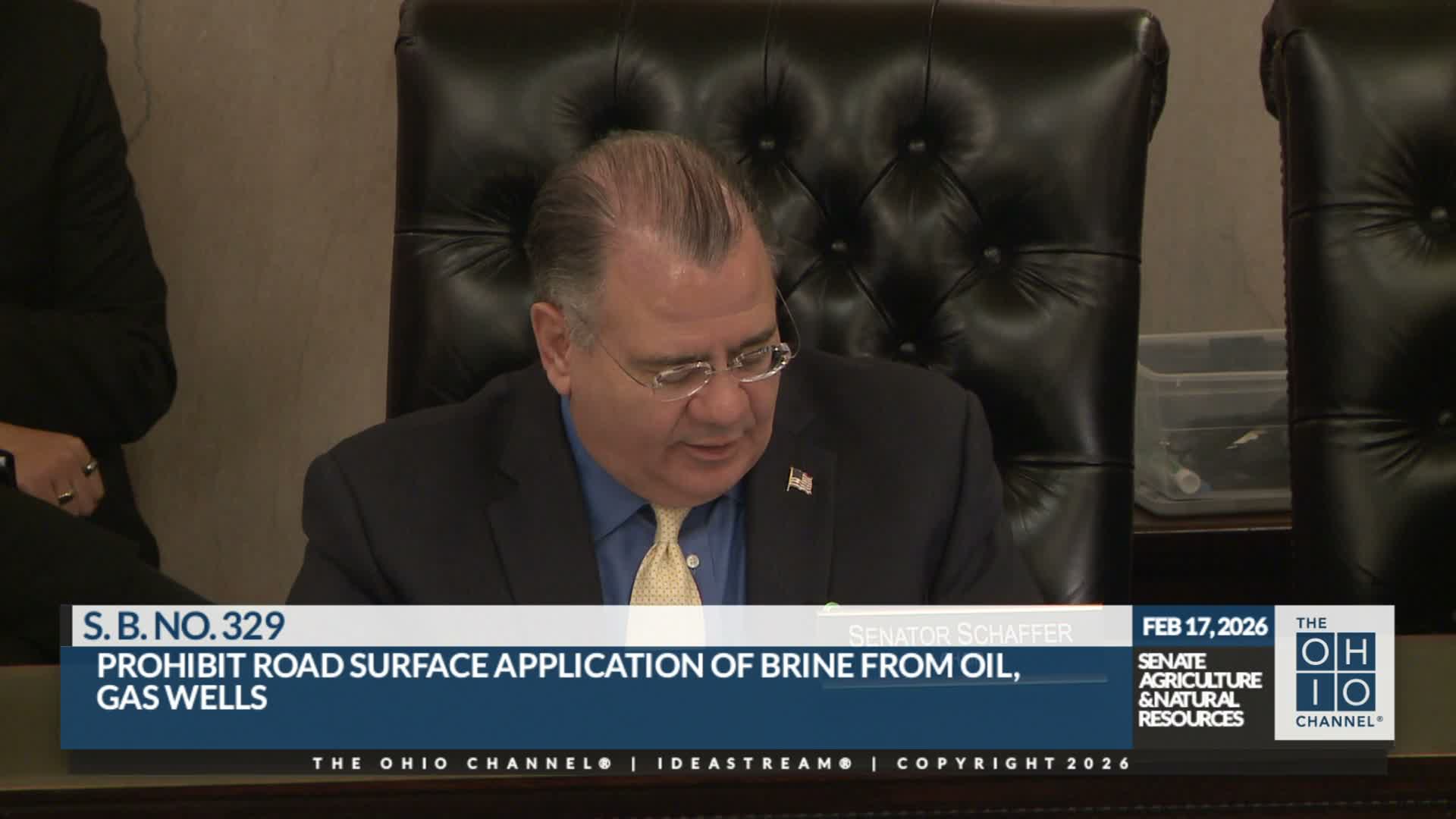
The Senate Agriculture and Natural Resources Committee heard hours of proponent testimony on SB 329, a bill that would prohibit spreading conventional oil-and-gas well brine on roadways, after witnesses and experts told the committee that the material contains elevated levels of radium and other hazardous contaminants.
Anton Krieger, executive director of Buckeye Environmental Network, opened proponent testimony by citing a 2017–2018 Ohio Department of Natural Resources (ODNR) study that, he said, found radium-226 and radium-228 concentrations in conventional well brine above administrative effluent limits. "Every single conventional well sampled from the study has exceeded the Ohio Administrative Code's effluent concentration of 60 picocuries per liter for either radium-226 or radium-228," Krieger said, urging the committee to update ORC 1509.226 to stop spreading waste on local roads.
Multiple witnesses described exposure pathways and health concerns. Retired firefighter and HAZMAT specialist Severio Cajano explained the difference between alpha, beta and gamma radiation, and said radium trapped in the body is "incorporated into the bones" and emits radiation for many generations. "The spreader of these brines themselves are at great risk," Cajano said.
Journalist Justin Noble summarized measurement data he collected and cited ODNR figures, saying the average radium reading in brine he referenced was about 1,264 picocuries per liter and that a product tested at a retail store measured 1,663 picocuries per liter. Noble contrasted those numbers with regulatory reference points, noting a commonly cited threshold of 60 picocuries per liter used in some regulatory contexts and reminding the committee that benzene and other heavy metals have also been detected in brine.
Several witnesses offered local and personal perspectives. Tom McKnight, a former brine hauler who said he later was diagnosed with thymoma, described workplace handling that lacked protective equipment and urged the committee to act. Becca Pollard of Buckeye Environmental Network and other parents said municipal use of brine threatens children playing outdoors and urged adoption of the ban. Environmental and community groups described alternatives, and at least one speaker representing private industry suggested soybean-oil–based products as an alternative deicer.
Committee members asked technical questions about the ODNR study, long-term migration of radionuclides into soil and water, and whether local governments that currently purchase brine are being short-sighted about long-term maintenance costs. Witnesses pointed to academic work (including studies by Penn State researchers cited in testimony) and agency advisories from the Ohio Department of Health and ODNR as supporting evidence. Anton Krieger and others offered to connect the committee with geologists and scientists who had participated in the studies.
Chair Schafer acknowledged more than 50 written testimonies on the committee iPads and set SB 329 for a second hearing on March 29. No formal committee vote on the bill occurred at this hearing.
Next steps: the bill is scheduled for a follow-up (second) hearing on 03/29, when the committee may receive additional testimony or consider amendments.