Get Full Government Meeting Transcripts, Videos, & Alerts Forever!
Get email alerts on the Municipal Income Tax topic
No spam. Unsubscribe anytime.
Bill would require voter approval for changes to municipal income‑tax reciprocity credits
Summary
Sponsors told the committee House Bill 503 would require voter approval to create, change or repeal municipal reciprocity credits, allow citizen petitions (10% of last gubernatorial-election voters threshold), prohibit combining reciprocity questions with tax‑rate questions on the same ballot, and void certain recent ordinances enacted without voter approval.
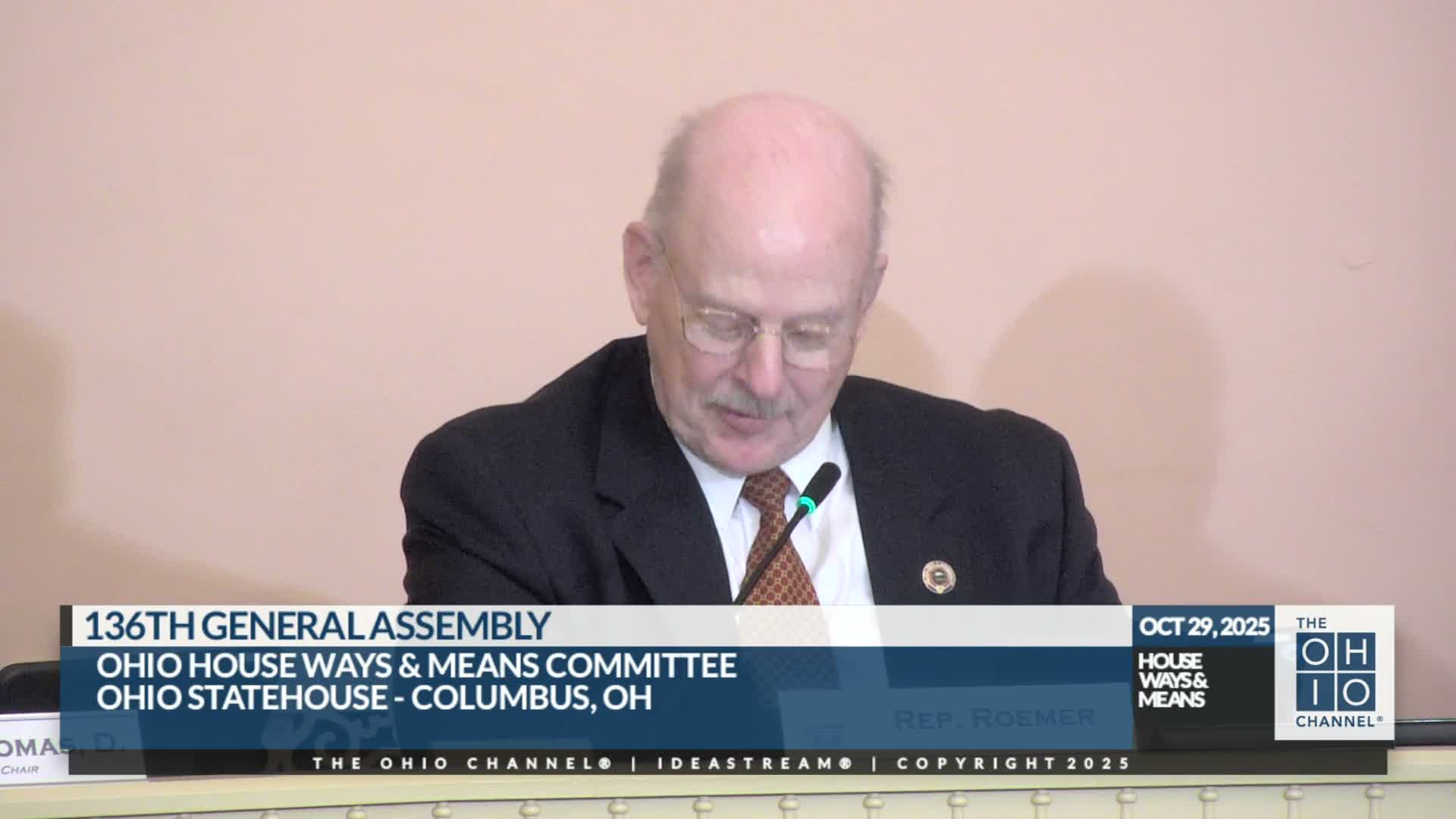
Representatives Workman and Romer presented House Bill 503 to the committee, arguing Ohio's municipal income‑tax reciprocity system is a patchwork that can leave commuters paying income tax in both the city where they work and the city where they live.
"House bill 5 0 3 requires voter approval to authorize, modify, or repeal a municipal income tax reciprocity credit," Romer said, outlining provisions that would allow citizens to initiate a petition (the sponsors said the threshold would be 10% of the signatures of those who voted in the last gubernatorial election), prohibit municipalities from placing a reciprocity‑credit question on the same ballot as a tax‑rate question, and void ordinances enacted after Aug. 1, 2025 that changed reciprocity without voter approval.
Sponsors said the proposal aims to restore local accountability and prevent municipalities from using reciprocity adjustments as a “carrot” to secure tax‑rate increases. Committee members raised concerns about home‑rule authority, who could initiate petitions (residents of the municipality where they live), and whether alternative approaches — such as differential resident/nonresident rates used in some cities — might address inequities. Representative Troy and others provided historical context on reciprocity changes and past attempts to limit taxing authority, while sponsors said the bill is designed to preserve home rule by giving voters the final say.
The hearing included discussion of how municipal income taxes are used by cities (schools and local services were noted) and the possible fiscal consequences of greater voter control. No formal vote occurred; sponsors said they would work with committee members and stakeholders to refine the measure.