Get Full Government Meeting Transcripts, Videos, & Alerts Forever!
Get email alerts on the Family Policy topic
No spam. Unsubscribe anytime.
Ohio lawmaker presents 'Family First' package proposing baby, fertility and marriage tax incentives
Summary
Representative Williams presented HB 340, HB 341 and HB 342 to allow optional employer‑provided $1,000 baby bonuses, employer tax credits to cover assisted reproduction, and a $1,000 marriage bonus as part of a "Family First" agenda; sponsors and members debated moral framing and fiscal cost, and the committee took the bills under advisement.
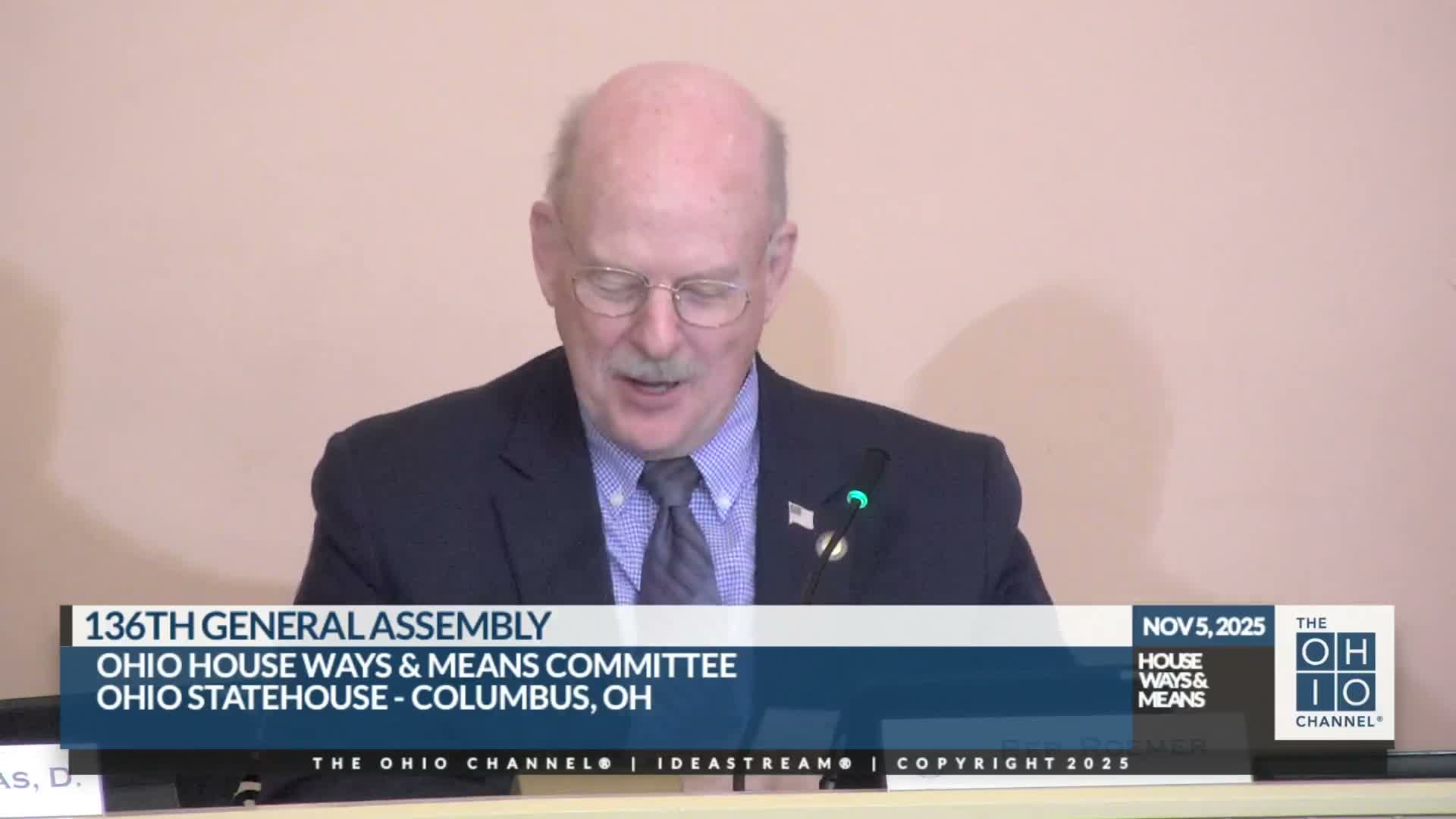
Representative Williams told the House Ways and Means Committee she introduced three bills constituting a "Family First" agenda to use targeted tax incentives to encourage births and family formation.
"Population decline is one of the greatest issues facing Ohio," Williams said in sponsor testimony, opening HB 340 (the Baby Bonus Act). HB 340 would allow employers to award a tax‑deductible baby bonus when an employee or an employee's spouse gives birth or adopts. Williams testified the bonus must be at least $1,000 per parent or couple and that an employer could claim up to $1,000 per parent or couple, with a stated maximum employer credit of $50,000 per calendar year. Williams said offering the bonus would be optional for employers.
Williams framed HB 341 as a companion measure to encourage employers to choose health plans that cover assisted reproduction. In testimony she said "companies with fewer than 50 full‑time employees can receive up to $50,000 worth of a tax credit" for offering that coverage; she told the committee she had not found another state that has a tax credit targeted specifically at fertility treatments. On HB 342 Williams described a tax‑deductible marriage bonus of up to $1,000 per couple with a $50,000 maximum credit per employer per year.
Committee members pressed the sponsor on implementation and cost. Several members asked which state tax liabilities would be reduced by the credits; Williams said she preferred a broadly applicable approach but that the program would depend on whether an employer had sufficient tax liability to claim the credit. Committee staff pointed members to the fiscal analysis attached to the bills; a staff comment in the hearing noted a fiscal note indicating potential costs "in the tens of millions per year potentially beginning in FY27." The sponsor told the committee that one analysis of the single $1,000 bonus estimated a fiscal effect that could vary substantially depending on employer uptake.
Members also questioned whether the tax code is the right tool to influence family formation, and whether new credits would compete with existing child‑care investments. Williams defended the approach, saying the tax code already contains marriage‑related incentives and arguing targeted credits could reduce long‑term reliance on subsidies. Some members urged careful transition planning and fiscal caps before broad adoption.
The committee closed the first hearings on the three bills after questions and indicated staff and sponsors would work together on fiscal details and possible draft language, including options such as carryforward periods and application limits for small businesses.