Get Full Government Meeting Transcripts, Videos, & Alerts Forever!
Get email alerts on the Tax Transparency topic
No spam. Unsubscribe anytime.
Committee hears bill to show property tax rates as percentages on bills and ballots (HB 391)
Summary
Sponsors told the committee HB 391 would require county auditors and treasurers to display property tax rates as percentages (in addition to mills) to improve transparency for voters; members asked whether percentages should reference true value, taxable value (35% rule) or appraised value.
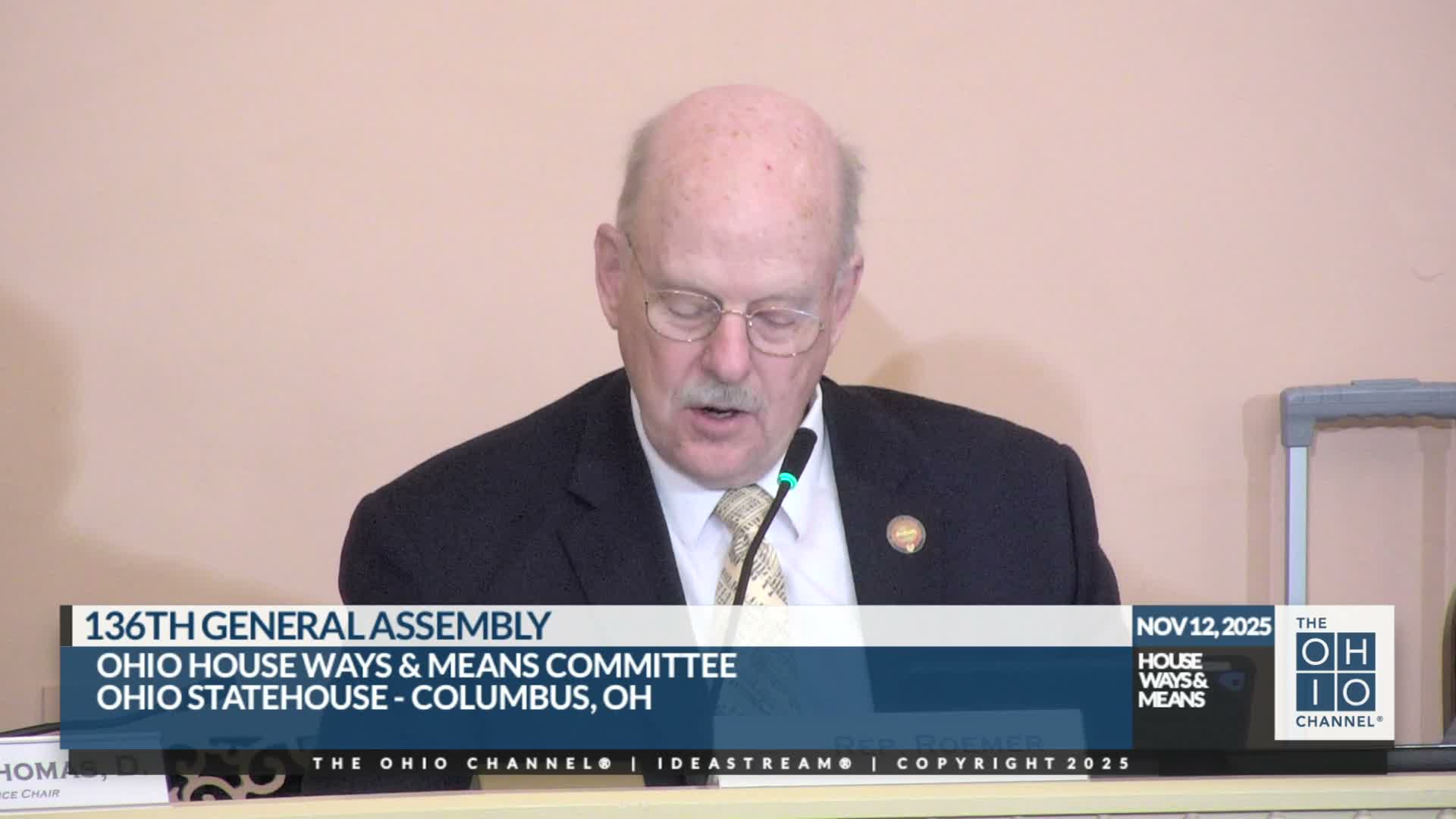
Members of the Ohio House Ways and Means Committee heard sponsor testimony for House Bill 391, a transparency measure that would require property tax rates to be displayed not only in mills but also as a percentage of value on tax bills and ballot language.
Representative Workman, the sponsor, told the committee that millage is an arcane and frequently misunderstood concept and that showing a percentage will let taxpayers more easily compare levies and see "how much of their home's true value is being taxed." He said county auditors already compute effective tax rates internally and that the bill would simply make that information visible to voters.
Representative Daniels said the change is an incremental but important step toward voter comprehension and pointed to polling that shows many property owners cannot define what a mill means. Committee members questioned the technical implementation — specifically whether the percentage should be shown as a share of "true value," the 35% "taxable value," or the auditor's appraised value. Vice Chair Thomas and others suggested that using the auditor appraised value or keeping current language might avoid forcing taxpayers to perform additional calculations.
Sponsors said they were open to technical refinements and to working with auditors and committee members on the statutory language so that the percentage shown aligns with the public's ability to understand the impact of levies. The committee took no vote at the first hearing. The bill remains in the committee for further drafting and technical review.