Get Full Government Meeting Transcripts, Videos, & Alerts Forever!
Get email alerts on the Payments In Lieu topic
No spam. Unsubscribe anytime.
Nature Conservancy warns Ohio bill targeting large landowners could harm conservation and overstates revenue estimates
Summary
The Nature Conservancy opposed House Bill 540 before the House Ways and Means Committee, arguing the bill misstates its landholdings and potential tax liability, that much of its land would qualify for CAUV (agricultural/woodland) valuation at low per‑acre tax rates, and that state-level legislative targeting of nonprofits risks adverse consequences for donor‑restricted funds and conservation work.
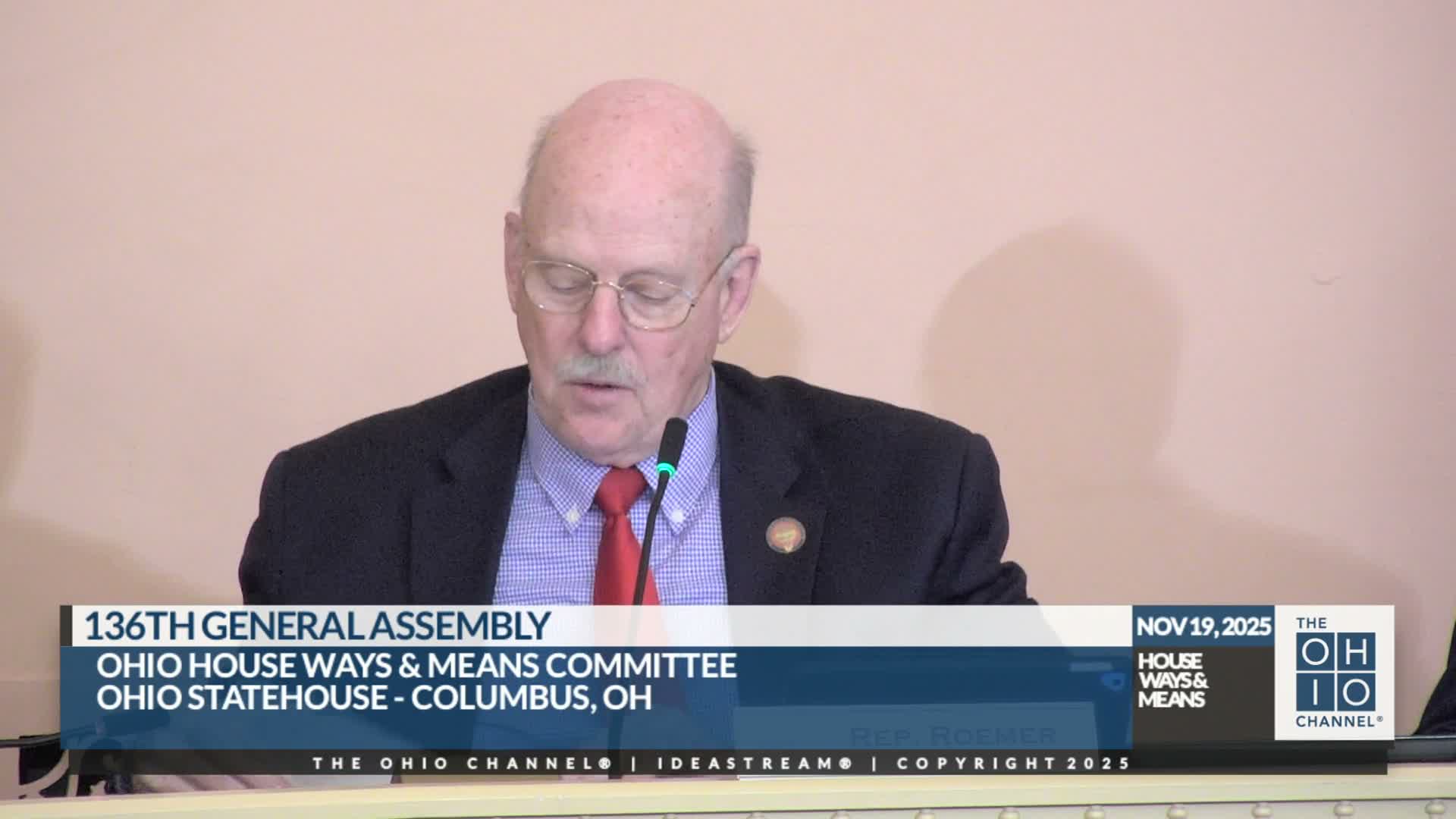
Bill Stanley, Ohio director of The Nature Conservancy (TNC), told the House Ways and Means Committee that HB 540 — which would require payments in lieu of taxes from certain conservation organizations in counties where they hold large acreage — is the wrong approach and risks unintended consequences.
Stanley disputed testimony that TNC owns 20% of Adams County, saying the organization’s ownership in Adams County is "less than 5%" and that earlier sponsor estimates overstated the acreage. He noted TNC makes voluntary payments: "TNC provided a total of $17,111 in annual voluntary payments to seven Adams County townships in 2024," and said the organization also launched a local community fund that awarded $100,000 in grants in 2025. Stanley said these voluntary and in‑kind contributions exceed many opponents’ assumptions about local fiscal impacts.
Stanley also urged the committee to consider existing tax valuation rules: much conserved land is likely to qualify for Current Agricultural Use Valuation (CAUV) or similar forestry classifications that produce very low per‑acre tax liabilities. Using publicly available CAUV rates, he said, TNC’s hypothetical tax bill on qualifying acreage would be far lower than sponsor estimates and that prior auditor figures did not account for CAUV treatment.
On principle, Stanley warned that making targeted statutory changes to tax-exempt status would risk undermining long-standing nonprofit exemptions and could force nonprofit stewards to violate donor restrictions if they tried to reallocate restricted funds in response. He asked the committee to prefer local negotiations and voluntary PILOT arrangements over a one-size-fits-all statutory approach.
Committee members pressed on whether voluntary payments to local governments were intended to reduce others’ tax burdens and on the statewide implications of changing exemptions for all counties because of issues in a single county. Stanley said TNC is open to local meetings and pilots but urged caution about broad legislative intervention.
The committee took testimony from TNC’s local manager Mike Hall on forest stewardship plans, timber management practices and parcel-level CAUV eligibility. Written opponent testimony from the Ohio Environmental Council Action Fund and the National Wildlife Federation was noted before the committee adjourned.