Get Full Government Meeting Transcripts, Videos, & Alerts Forever!
Get email alerts on the Property Tax Relief topic
No spam. Unsubscribe anytime.
Ohio lawmakers hear first testimony on temporary $300 homeowner credit (HB 266)
Summary
Sponsors told the House Ways and Means Committee HB 266 would give a $300 annual tax credit to homeowners who have lived in their property at least one year, for five years, as temporary relief from rising property taxes; sponsors said fiscal cost estimates from LSC were pending.
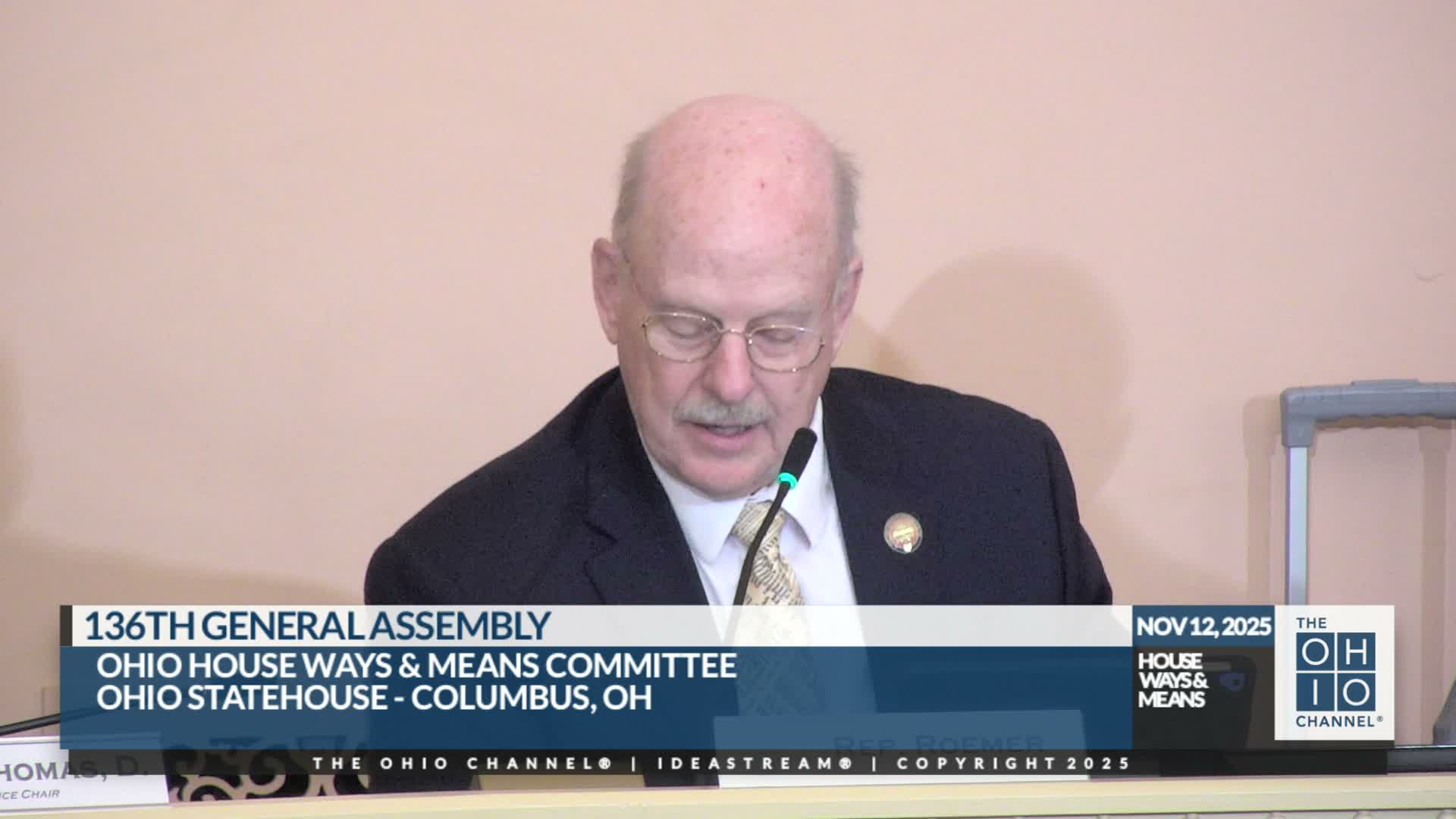
House Ways and Means Committee members on Tuesday heard sponsor testimony for House Bill 266, a proposal to provide homeowners a temporary $300 annual property tax credit.
Representative Lorenz, one of the bill’s sponsors, told the committee the credit would be available to homeowners who have lived in the property for at least one year and would be paid annually for five years. "This is only a temporary measure, that will help ease the financial strain on our homeowners," Lorenz said, describing the proposal as a bridge while broader reforms to the state's property tax system are pursued.
Representative Gross, the joint sponsor, urged urgency and described constituent examples. Gross recounted a 97-year-old constituent who has lived in the same district for 70 years and asked, "What will $300 do?" She answered her own question, saying the credit would translate to meaningful monthly savings for some seniors and low-income homeowners.
Committee members focused questions on the bill’s cost and targeting. Representative Richardson asked whether the legislature had an LSC fiscal estimate; sponsors replied that the Legislative Service Commission’s analysis was delayed and they would provide cost data as soon as possible. Vice Chair Thomas offered a rough back-of-the-envelope estimate during questioning, saying there are "roughly 3,500,000 owner-occupied homes" nationwide and that a universal application of $300 would approach "a little over $1,000,000,000," but sponsors stressed the program is a state-reimbursed credit and that actual fiscal exposure depends on eligibility rules and design.
Ranking Member Troy pressed whether the credit would be means-tested, arguing that a universal $300 payment would reach many households who may not need the help; sponsors responded they were open to amendments to target relief to those most in need.
The hearing concluded without a vote; sponsors said they would supply the committee with the LSC fiscal note and remain open to technical and targeting changes. The committee did not take final action on HB 266 at the hearing.