
Sponsor outlines 'CAPS Act' to phase in property tax spikes; committee questions permissive design
Get AI-powered insights, summaries, and transcripts
Subscribe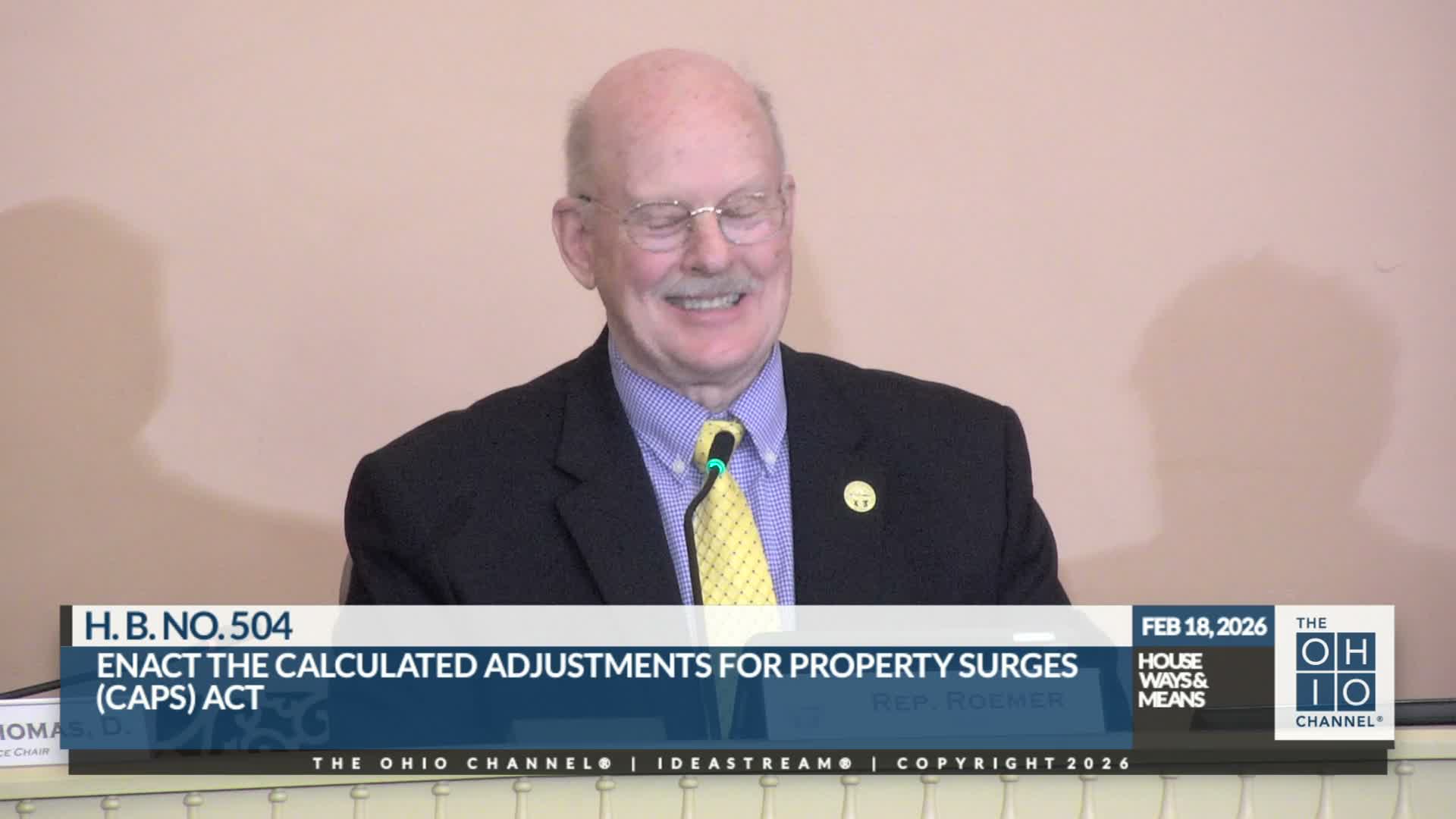
Summary
Representative King presented the Calculated Adjustments for Property Surges (CAPS) Act, proposing an optional three-year phase-in of sharp property valuation increases with a tax credit to smooth taxpayer impacts; members questioned whether municipalities could game requests and whether county budget commissions could serve a similar role.
Representative King provided sponsor testimony on House Bill 504, the Calculated Adjustments for Property Surges (CAPS) Act, describing it as an optional local tool to protect homeowners and communities from sudden spike-related tax burdens. King said the measure phases in large valuation-driven tax increases over three years (one-third in year one, two-thirds in year two, full increase in year three) and pairs the phase-in with a tax credit to cover the difference while preserving assessed value and local revenue over time.
King emphasized the bill is permissive — local governments would opt in by resolution — and framed the legislation as a smoothing mechanism, not a tax freeze. He described the measure as designed to provide predictability for seniors and working families who are vulnerable to sharp spikes in property valuations.
Ranking Member Troy asked whether municipalities could respond to the phase-in limit by requesting larger increases on the ballot so they would effectively receive the same revenue sooner. King responded that the bill is permissive, communities decide whether to use the tool, and draft language in discussion used a 15% spike example phased in as 5%, then 10%, then the full 15%. King added that adoption would be by local resolution and noted county budget commissions remain part of local fiscal oversight.
With questions answered, the committee concluded consideration of the CAPS Act for the day and adjourned.