House bill would end ‘continuous’ levies and require fixed renewals; sponsors cite accountability, critics warn of local revenue shocks
Loading...
Summary
Sponsors of House Bill 420 told the Ways and Means Committee they want to end indefinite ‘continuous’ levies and require fixed renewals (typically up to 10 years) to force regular voter review; members asked for protections for bond levies, joint vocational districts and rollback treatment.
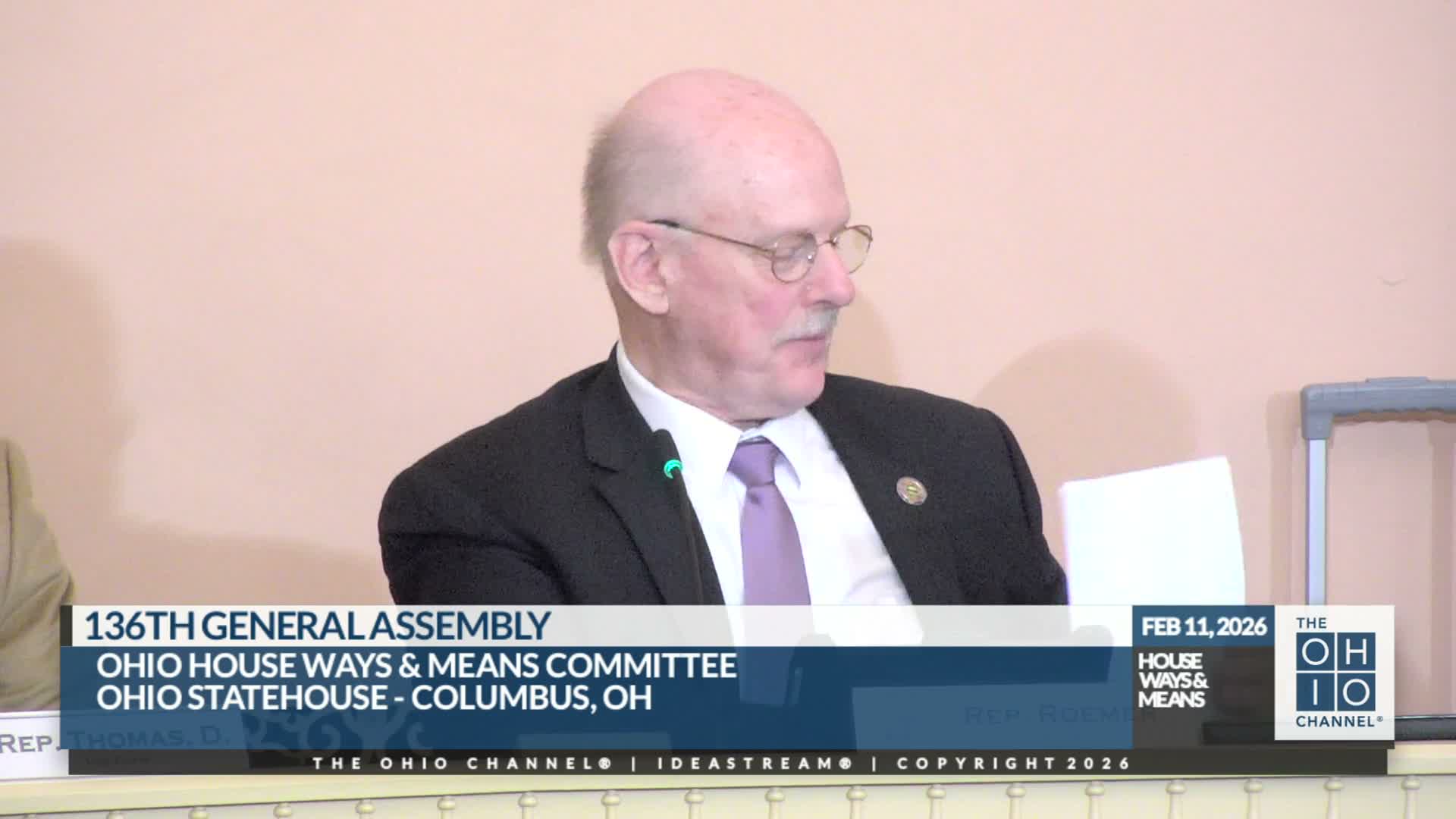
Representatives Klick and Bernie Willis presented House Bill 420, the first act in a ‘‘Taxpayer Freedom Trilogy,’’ proposing to end continuous property tax levies and require fixed‑term renewals so voters periodically reauthorize local taxing measures.
Klick said continuous levies can persist for decades without periodic voter review and argued replacing them with fixed terms restores accountability: ‘‘Each generation deserves the right to be able to say this is what my taxes are going for.’’ Willis, a joint sponsor, said the intent is to let taxpayers reassess whether a levy continues to deliver value to the community.
Committee members raised fiscal and practical questions. Representative Lear asked whether certain long bond levies (example cited: 15‑year bond) would be eliminated; sponsors and other members clarified that the bill targets continuous operating levies, not amortized bond levies tied to debt service. Ranking member Troy and others warned that removing continuous status could affect rollback calculations and state reimbursement rules that provide tax relief for owner‑occupied properties; sponsors said they will work on amendments to protect existing rollback and bond treatment where necessary.
Several members urged sensitivity to local revenue impacts for schools and joint vocational districts and requested analysis of how changing levy status would interact with existing state law. Sponsors said they were open to amendments and framed HB 420 as ‘‘Act 1’’ of a larger effort to increase transparency and periodic legislative review of tax‑funded programs.
The committee took no vote; HB 420 received a first hearing and will return for further consideration and possible amendments.