Get Full Government Meeting Transcripts, Videos, & Alerts Forever!
Get email alerts on the Unclaimed Funds topic
No spam. Unsubscribe anytime.
Ohio bill would modernize unclaimed‑funds process, lower paperwork barriers for small claims
Summary
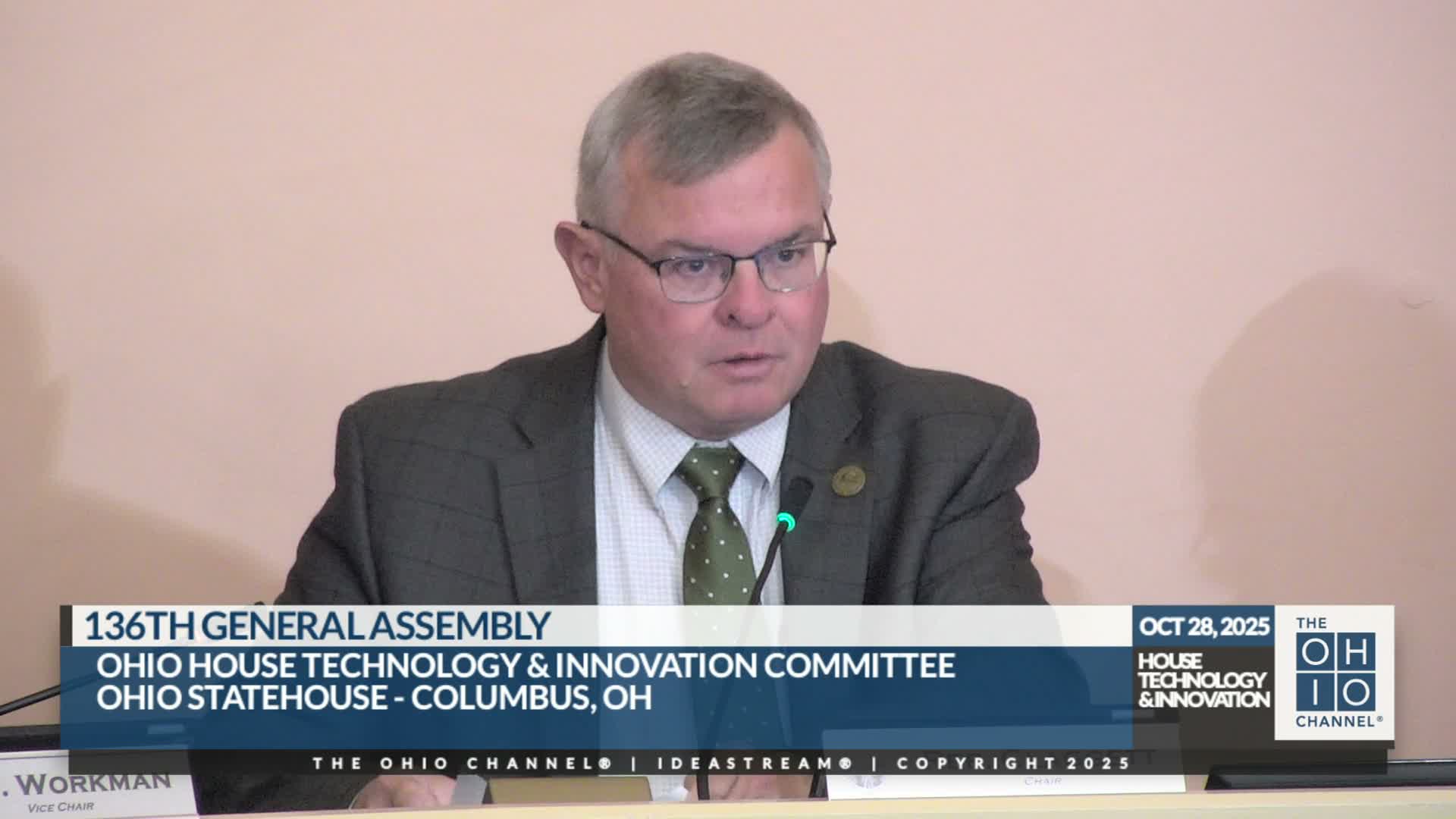
Sponsors told the House Technology and Innovation Committee that House Bill 480 would modernize Ohio’s unclaimed‑funds system, add electronic filing and cryptocurrency, raise the reporting threshold from $10 to $25, and create a fast‑track for claims under $1,000 to reduce probate and notarization burdens.
House sponsors told the House Technology and Innovation Committee that House Bill 480 aims to modernize Ohio’s unclaimed‑funds law to make it easier for residents to reclaim small amounts of money.
Representative Davila, the bill’s sponsor, said the state currently holds "over $4,000,000,000 in unclaimed funds representing money and assets that belong to Ohioans," and argued that complex paperwork and notarization requirements discourage people — particularly seniors and low‑income Ohioans — from filing small claims. "For many individuals, the process of claiming these funds is so complicated and burdensome that it discourages them from even trying," Davila stated during sponsor testimony.
Co‑sponsor Representative Romer outlined specific statutory changes the bill would make: raising the business reporting threshold from $10 to $25, establishing a fast‑track process for claims under $1,000 that would eliminate a notarization requirement and reduce proof‑of‑ownership documentation, encouraging electronic filing, and explicitly adding cryptocurrency to the types of assets covered. Romer said the bill would also allow low‑value claims for deceased owners (under $1,000) to be processed without probate in many cases to avoid probate costs that exceed claim values.
Committee members asked how the bill would interact with other proposals and recent budget actions. The chair and sponsors noted at least two additional bills addressing similar topics and agreed to circulate a comparison document to the committee. Members also queried whether changing retention or transfer periods (references were made to 5‑ and 10‑year timeframes and funds that had been shifted into other accounts) would have budgetary effects; sponsors said they expected minimal impact but would review alignment and report back.
The sponsors and the committee identified follow‑up steps: sponsors will provide a written comparison of overlapping bills, staff will review any potential budget alignment related to funds previously shifted to other accounts, and an interested‑party meeting was scheduled for 04/26 to continue stakeholder discussion. The committee concluded the bill’s first hearing without a formal vote.
The committee’s next procedural step is receipt of the comparison document and staff budget alignment analysis; no committee votes or amendments were recorded during the hearing.