
Blythewood BAR denies demolition request for 300 Main Street after residents’ appeals and executive session
Get AI-powered insights, summaries, and transcripts
Subscribe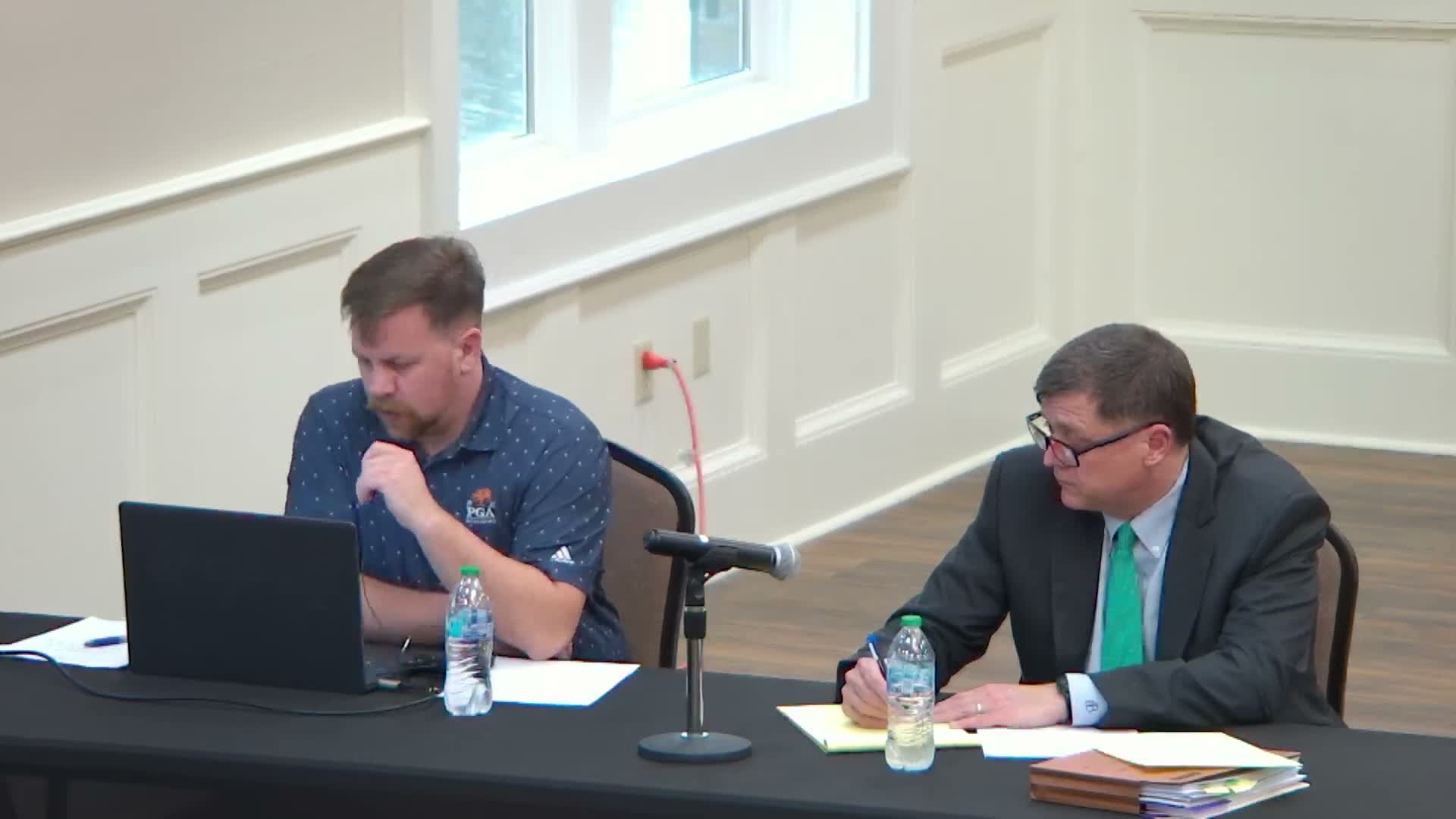
Summary
Following extensive public comment and an applicant presentation about structural problems, the Town of Blythewood Board of Architectural Review denied a Certificate of Appropriateness for demolition of 300 Main Street and entered findings prepared by the town attorney.
The Town of Blythewood Board of Architectural Review voted on Feb. 10 to deny a Certificate of Appropriateness (COA) for demolition of the historic building at 300 Main Street after lengthy public comment and an executive session for legal advice.
Staff introduced the item as a demolition COA request for 300 Main Street (tax map R15213-02-13) and cited the BAR’s authority under the Blythewood Zoning Ordinance. Dozens of residents and local historians urged the board to preserve the building, recounting its role as the Langford Brothers/Wilson store and community gathering place.
Martha McCoy, president of the Historical Society and Museum in Blythewood, summarized the building’s early-20th-century history and asked the BAR to protect the structure. "I'm the president of the Historical Society and Museum in Blythewood," she said as she outlined the site's timeline and local uses. Multiple speakers, including Anne Langford Maddox (whose reflections were read into the record), said the structure served as a post office, drugstore and community hub for generations.
Applicant Matthew Graham, who said he purchased the property in December and co-owns it with Kimberly Bonilla, told the board he had intended to renovate the roughly 4,000-square-foot building but discovered unexpected structural failures in the crawl space and subfloor. He characterized the situation as a financial bind: "It would be six figures cheaper to knock it down than it would be to repair that foundation," he said, and added, "Life safety trumps history." Graham proposed alternatives — including jacking the building to rebuild the foundation or adding a small drive-through coffee operation behind the building to help offset costs — and offered to participate in a town-arranged site review with the third-party plan-review contractor.
Board members pressed the applicant on due diligence and inspection timing; advisers noted the town uses a third-party review contractor (RCRCI of South Carolina) and recommended an on-site meeting among the contractor, applicant and town staff to reconcile interpretations of code and condition. Staff committed to arranging that review and to obtain the applicant's inspection photos and report.
After a short executive session to receive legal advice, a motion was made by Sandra York to deny the COA for demolition and to enter findings prepared by the town attorney; the motion was seconded and carried by voice vote.
The denial preserves the building under the BAR’s jurisdiction; staff and the applicant discussed arranging an on-site review to explore potential paths forward for renovation that would address both building-code compliance and the applicant’s budget concerns. The BAR did not adopt a demolition plan or direct a specific funding source; the board entered attorney-prepared findings supporting the denial.