Get Full Government Meeting Transcripts, Videos, & Alerts Forever!
Get email alerts on the Taxes topic
No spam. Unsubscribe anytime.
Lawmakers hear proposal to exempt qualifying farm machinery from state sales tax
Summary
A House Finance hearing considered HB 2,584, which would create a sales and use tax exemption for qualifying farm machinery and equipment (sales price $10,000+), with eligibility limits and a 10/01/2036 expiration. Supporters say it lowers barriers to modern, fuel‑efficient equipment; counties warn of lost local revenue.
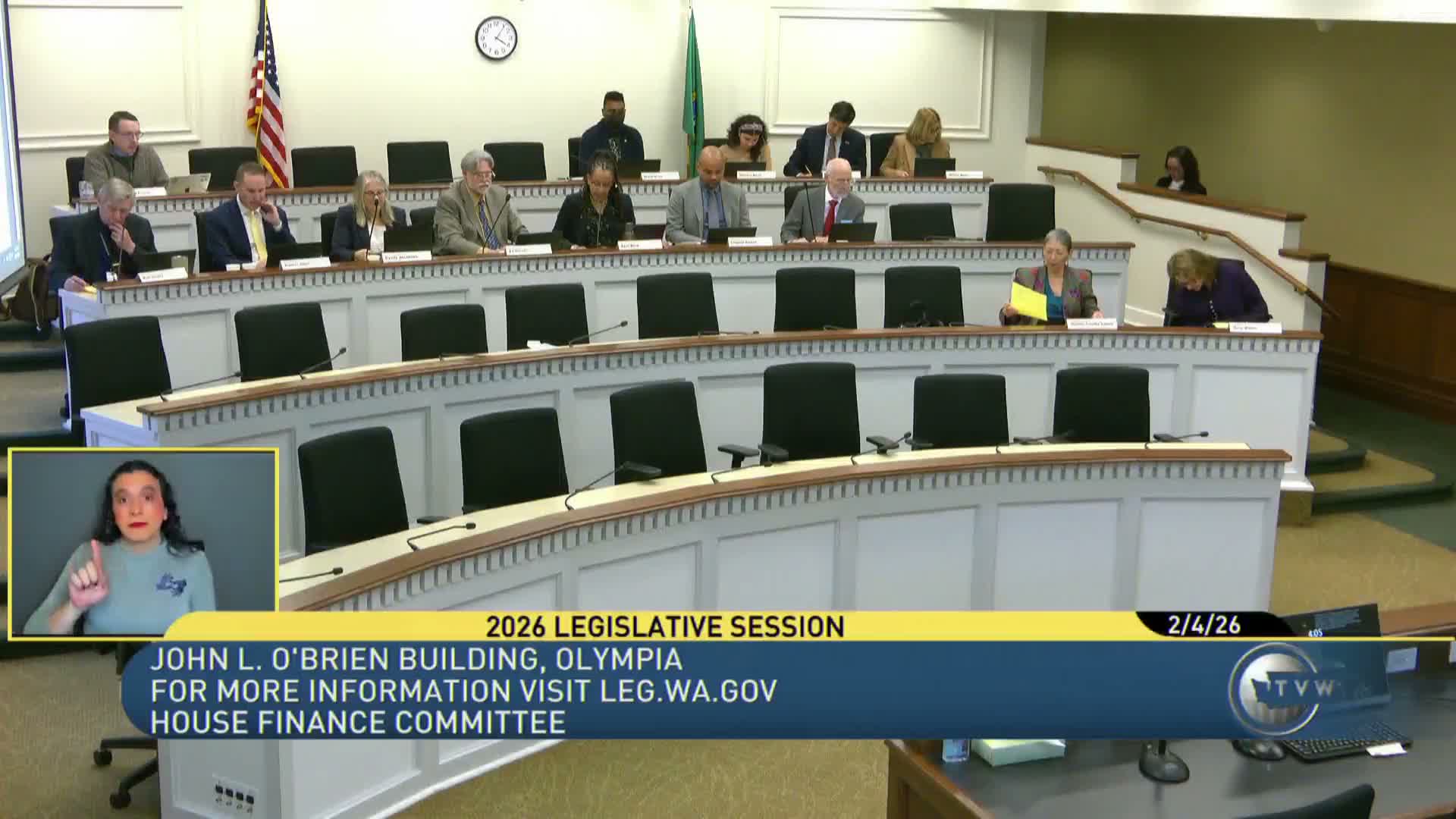
A bill that would exempt certain farm machinery and equipment from Washington’s sales and use tax drew support from producers at a House Finance Committee public hearing on Feb. 4.
House Bill 2,584, explained by staff member John Brzezinski, would create an exemption for qualifying farm equipment sold to eligible farmers, expire on Oct. 1, 2036, and include several eligibility conditions: the buyer must provide an exemption certificate or the seller must record sales data under the streamlined sales-and-use-tax agreement; the equipment must have a sales price of at least $10,000; the farmer generally must have had at least $10,000 in gross sales or harvested product value in the prior tax year unless newly farming; and combined farm income across affiliates must not have exceeded $2,000,000 in the preceding tax year. An eligible farmer could claim the exemption only once per calendar year, and a fiscal note was requested but not yet available, Brzezinski said.
Representative Tom Denn, the bill’s prime sponsor, said the measure is targeted relief for producers facing thin margins, high input costs and challenging commodity markets. “Agriculture producers in the state of Washington have never had it harder,” he said, adding that the exemption would help farmers stay afloat and support related local businesses such as equipment dealers and seed suppliers.
Supporters at the hearing emphasized the potential for the exemption to spur adoption of newer, more fuel‑efficient machinery. Pam Lewison, ag research director at the Washington Policy Center, testified the measure would reduce barriers to investment in equipment fitted with emissions-reduction systems and GPS technology that can lower greenhouse-gas emissions and reduce soil compaction.
A farmer who testified said the exemption could have freed $45,000 for reinvestment on his operation last year and argued that reduced upfront costs would help family farms adopt technology and remain viable.
Not all testimony favored the bill. Paul Jewell, representing the Washington State Association of Counties, said counties depend heavily on local sales tax and opposed local portions of any new exemptions. Jewell offered a conservative estimate that existing sales-tax preferences cost local governments between $300 million and $800 million per biennium in the aggregate and warned additional exemptions would worsen county fiscal sustainability.
The committee closed public testimony and did not take a vote on HB 2,584 at this meeting. Staff had requested a fiscal note; the full revenue impact depends on that forthcoming analysis and whether the exemption would apply to state tax only or also to local sales taxes.