
Bill would require Medicaid network adequacy standards for nursing homes and rehab facilities to ease hospital discharge delays
Get AI-powered insights, summaries, and transcripts
Sign Up Free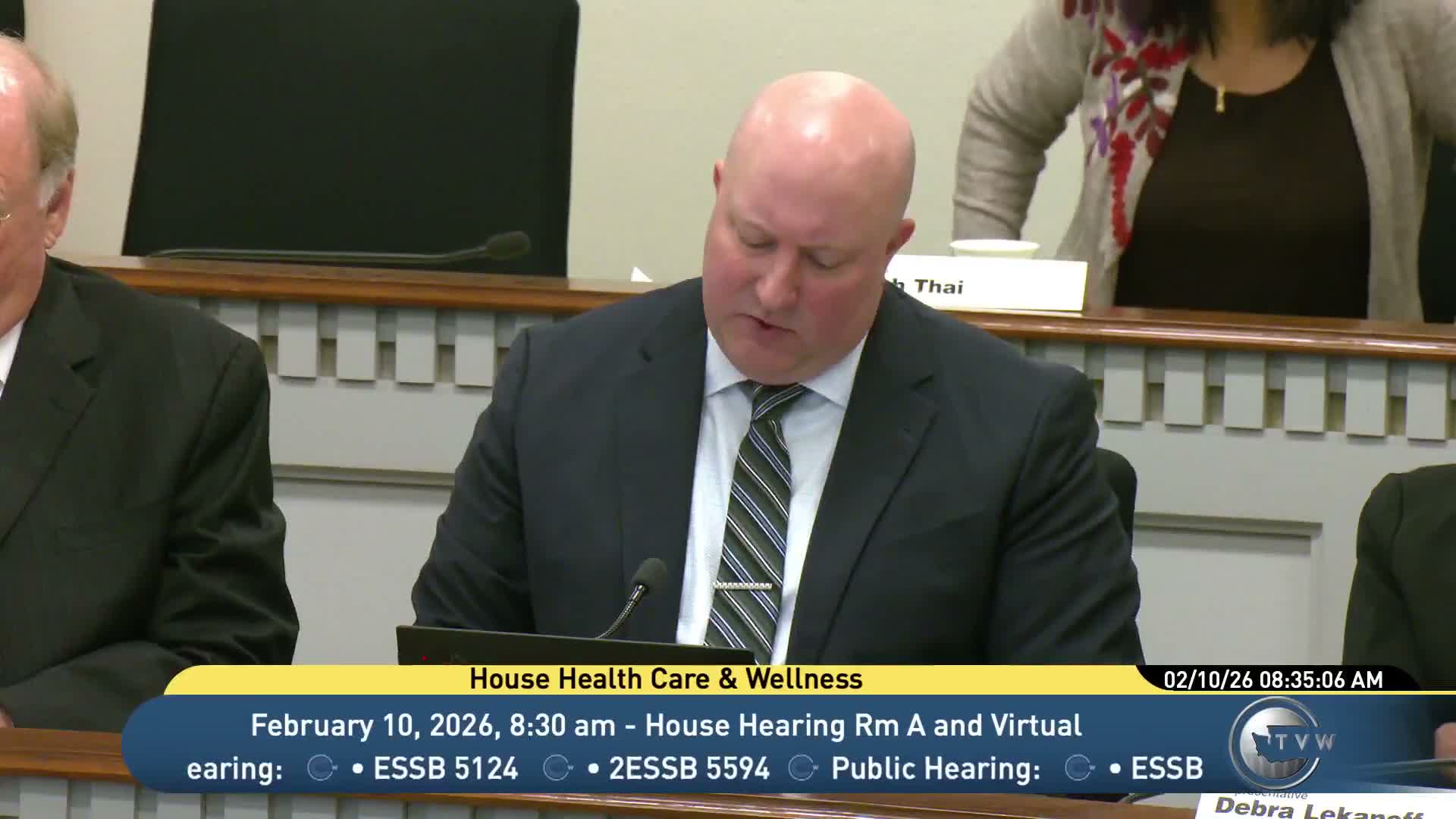
Summary
Senate Bill 5,124 directs the health care authority to adopt network adequacy standards for nursing homes and inpatient rehabilitation facilities (standards due 01/01/2028; MCOs must comply by 07/01/2028). Supporters said it would reduce long hospital stays caused by single‑case agreements, especially in rural areas.
On Feb. 10, the House Health Care and Wellness Committee heard Senate Bill 5,124, which would require the state health care authority to adopt Medicaid network adequacy standards for nursing homes and inpatient rehabilitation facilities. Committee staff said the standards must be adopted by Jan. 1, 2028, and managed care organizations would be required to meet the requirements by July 1, 2028.
Senator Ron Mazzall, sponsor, described the bill as a follow‑up to prior legislation aimed at patients who are difficult to discharge and said it creates a preapproved pathway for placing patients who require continuing care outside the hospital. "This just creates that pathway, preapproved pathway, for those individuals who are difficult to find that continuing care outside of the hospital system," Mazzall said.
Health‑system witnesses described operational impacts from lack of network adequacy. Katie Kolan said predictable placement systems reduce hospital hold times and improve patient outcomes. Dina Hannon, vice president of case management and chief nursing executive for ambulatory nursing at MultiCare Healthcare System, said MultiCare often must negotiate single‑case agreements between insurers and accepting facilities, a process that can add days to a patient's hospital stay, push patients out of their communities and create backlogs in emergency departments.
Chris Blake, committee staff, told members the health care authority must consult stakeholders including hospitals, nursing homes and managed care organizations when developing standards and should consider patient referral patterns and regional service areas when setting geographic adequacy thresholds.
Supporters urged prompt action to reduce delays and preserve hospital capacity; no formal committee vote occurred during the hearing. The committee adjourned after public testimony concluded and will consider next steps in subsequent meetings.