
Washington House passes bill to ban noncompete agreements
Get AI-powered insights, summaries, and transcripts
Subscribe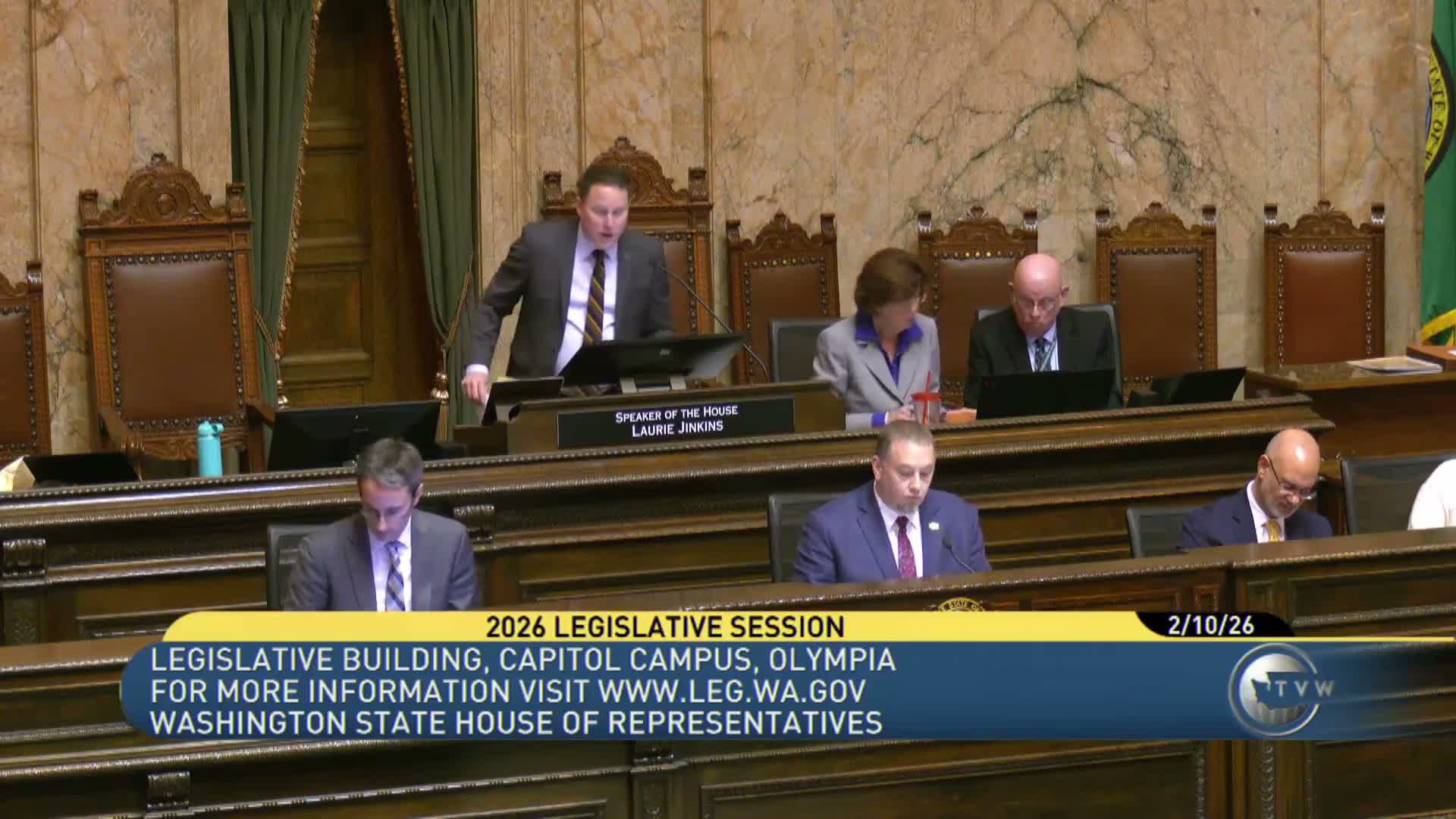
Summary
The Washington State House passed engrossed substitute House Bill 11 55, a measure to ban most noncompete agreements. Lawmakers adopted several clarifying amendments but rejected a proposal to exempt high‑paid senior executives; final House vote was 65‑29 with 4 excused.
The Washington State House passed engrossed substitute House Bill 11 55 on third reading, approving a ban on noncompete agreements in most employment contracts and advancing the measure by a recorded vote of 65 yays, 29 nays and 4 excused.
Supporters said the bill will increase worker mobility and strengthen competition. "This bill will ban noncompete agreements in the state of Washington," Representative Berry said in third‑reading remarks, adding that noncompetes "stifle innovation and entrepreneurship." During debate Berry cited a constituent, "Doctor Lehi, who is a fertility doctor practicing in Seattle," saying a noncompete forced the doctor to commute to Vancouver, B.C., for three years and keeping her away from her children.
Proponents also won several technical changes on the floor. The House adopted amendment 14‑82, described as added intent language clarifying tribal government relationships with workers; amendment 14‑85, which adjusted wording about covered individuals; and amendment 14‑88 to replace the term "customer" with "patient" to remove ambiguity in health‑care contexts. Representative McIntyre urged adoption of some changes, saying they are "very modest" clarifications that help employers notify employees.
Opponents pressed for narrower carve‑outs. Representative McIntyre moved amendment 14‑84 to exempt "senior executives—high earners above $350,000 per year" from the ban. "Exempting employees labeled senior executives... just because you're paid higher doesn't mean you're truly a senior executive," Representative Berry replied, urging a no vote; the amendment failed on a voice vote.
The bill then advanced to third reading after the House suspended the rules. After the recorded roll call, the Speaker declared engrossed substitute House Bill 11 55 passed.
What happens next: The House recorded the passage on the floor; the bill will proceed to the Senate as the legislative process allows.