
House approves tighter standards, new penalties for mass voter-registration challenges
Get AI-powered insights, summaries, and transcripts
Sign Up Free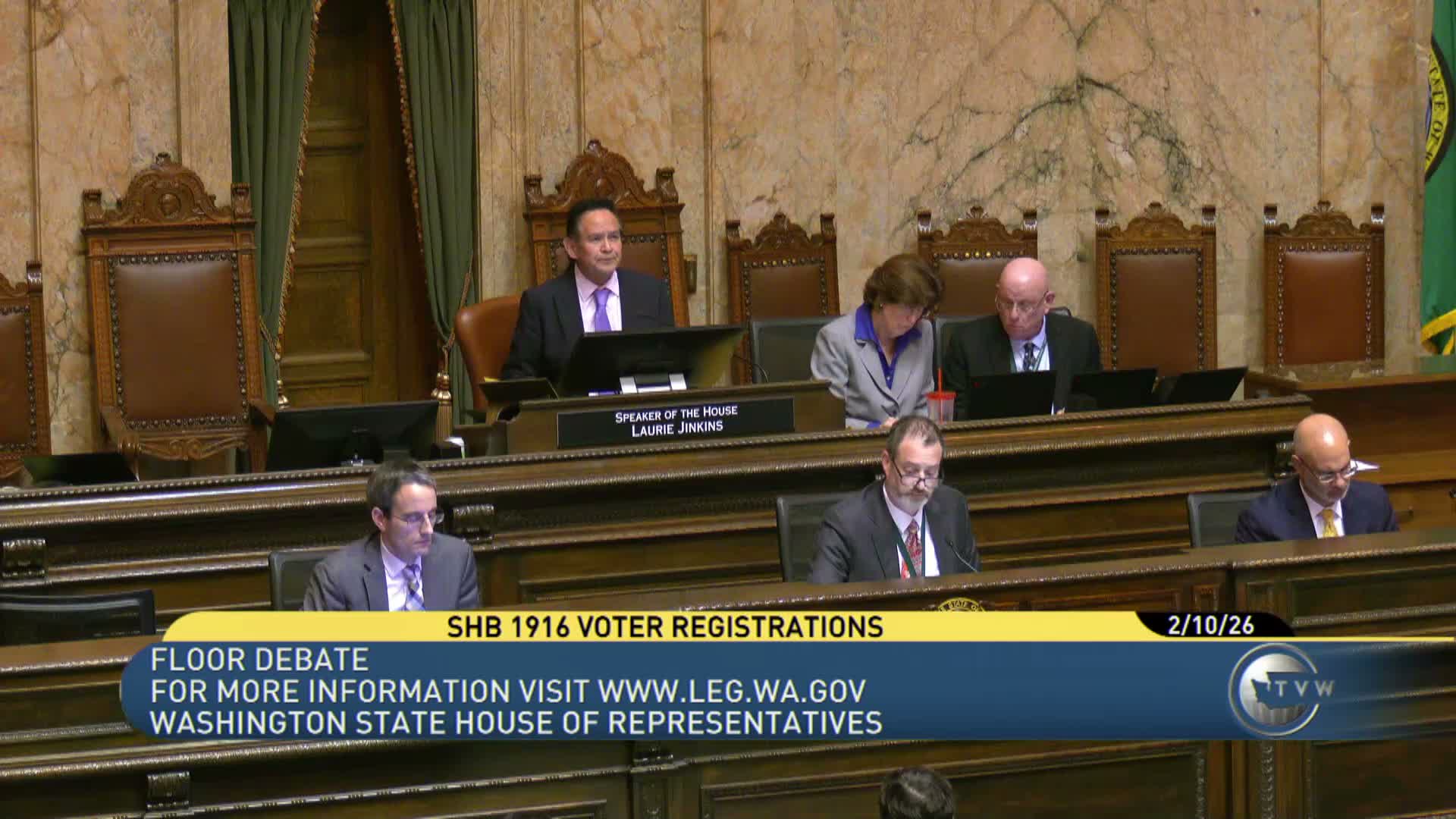
Summary
After extended debate and a string of amendment votes, the House approved Engrossed Substitute House Bill 19 16 to tighten standards for voter-registration challenges, require individualized affidavits and change penalties for frivolous or false challenges. The final roll call was 58–38 with 2 excused.
The House on final passage approved Engrossed Substitute House Bill 19 16, a measure supporters said would bring clarity and accountability to the state’s voter-registration challenge process and opponents warned could raise barriers to lawful citizen challenges.
Representative D'Oleo, the primary floor advocate, said the bill responds to a surge of mass registration challenges based on “flawed data, conspiracy theories, and unreliable technology” and would empower election officials to dismiss meritless claims while imposing accountability for frivolous or false submissions. "The vast majority of these challenges are rejected, but not before they overwhelm election administrators, intimidate voters, and discourage lawful participation," D'Oleo said.
Supporters framed the bill as a tool to protect eligible voters, including newly naturalized citizens, students and people voting from abroad, who they said have been targeted by mass challenges. Representative D'Oleo said the measure raises the standard of proof and requires individualized affidavits and other procedural safeguards.
Opponents and several amendment proponents said the change would make it harder for lawful voters to perform a civic check on registration rolls. Representative Walsh argued the bill raises barriers to citizens who want to ensure voter rolls are accurate and called it "a bad bill," saying it could dilute the ability of lawful voters to hold registration systems to account. Representative Mano and others warned that lowering access for challengers could disproportionately burden smaller, rural counties that rely on outside scrutiny to find errors.
The House considered a long amendment sequence during which members debated whether to reduce criminal penalties from a felony to a gross misdemeanor for knowingly submitting false information on a voter-challenge affidavit, whether challenges must include a factual basis, and whether certain electronic or remote processes should be allowed. Several proposed amendments were defeated while other changes (including a narrower amendment adopted in the debate) were offered and rejected.
After the final roll call the clerk reported 58 yeas, 38 nays and 2 excused, and Engrossed Substitute House Bill 19 16 was declared passed. The transcript shows members speaking both in support and opposition during the amendment process; the House did not record any immediate direction to staff for implementation in the floor debate.
What happens next: Because the House passed the engrossed substitute, the measure will proceed according to regular legislative process (transmittal to the Senate or enrollment steps as required). The transcript does not record any final administrative implementation dates or enactment schedule for this bill.