Senate passes bill updating Office of Homeless Youth programs; key parental-notification amendments fail
Loading...
Summary
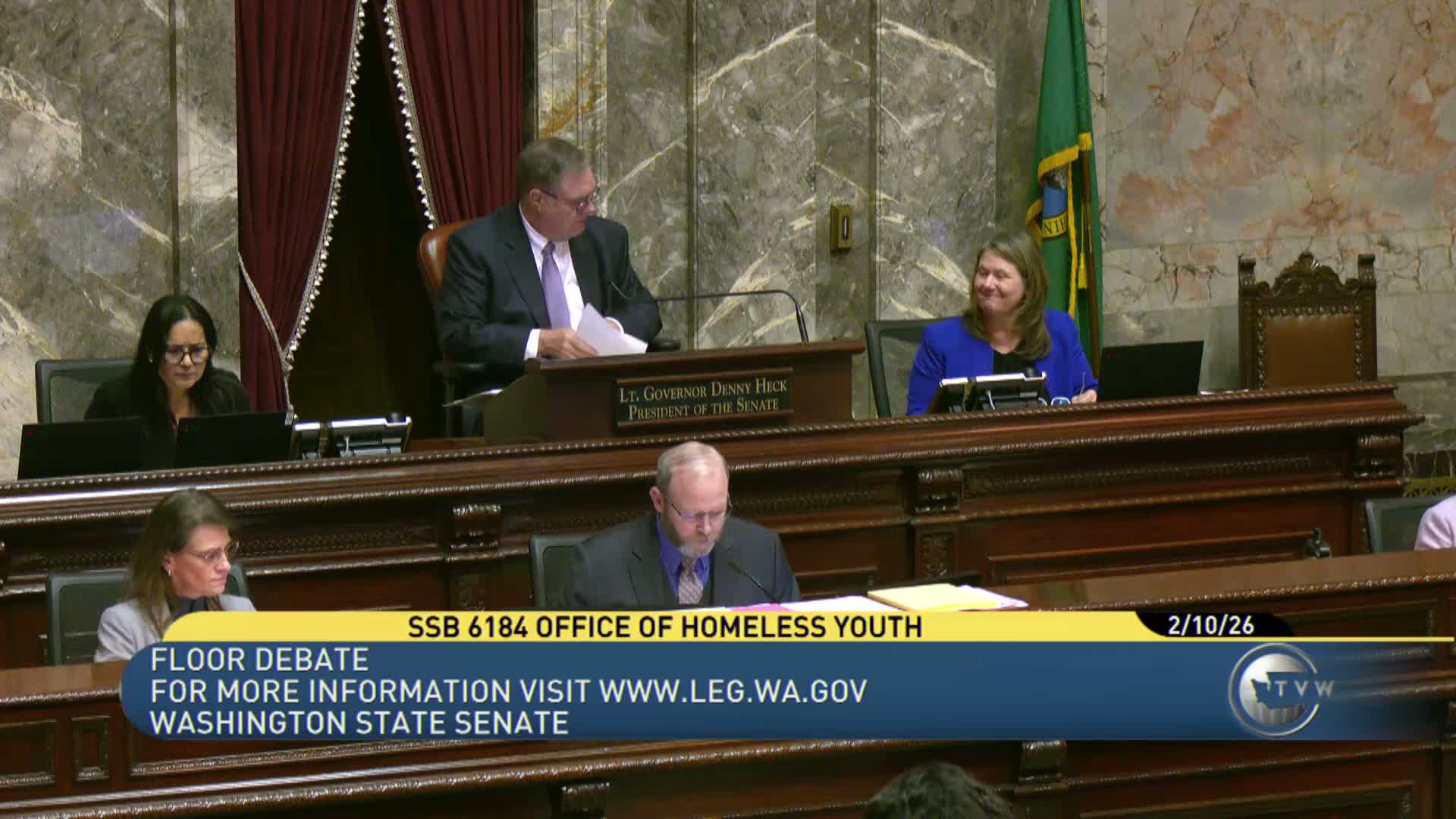
The state senate passed Substitute Senate Bill 6,184 on final passage to update statutes governing the Office of Homeless Youth, expand eligible housing programs and remove a six-county limit. Multiple amendments seeking to move the office to DCYF or change parent-notification rules were debated and rejected; final passage was reported 30–19.
Substitute Senate Bill 6,184, a package of statutory updates for the Office of Homeless Youth (OHY), was approved by the senate on final passage after floor debate Tuesday. Sponsor Senator Wilson Claire said the bill streamlines statutes, expands eligible programs (including transitional housing), removes a six-county limitation and codifies ongoing OHY work to reach more young people across the state.
Supporters argued the bill would improve access to services for housing-insecure youth. "This merely aligns statutes and program practices within the Office of Homeless Youth," Wilson said in her floor remarks, adding the changes will help young people access programs and avoid outcomes such as entry into juvenile or adult correctional systems.
Opponents pressed two main concerns on the floor: whether the office should move from the Department of Commerce to the Department of Children, Youth, and Families (DCYF), and whether facilities should be required to notify parents or law enforcement when a youth is admitted. Senator Christian moved amendment 0567 to transfer OHY to DCYF, arguing DCYF ‘‘has all of the services’’ and urging a yes vote; the amendment was opposed by senators who said OHY staff are already professionals and that DCYF’s focus on dependent youth could exclude some unhoused youth. The amendment failed on a voice vote.
Separate amendments on parent notification also failed. Amendment 0569, which would have changed who is notified and when, prompted senators to cite the existing statutory framework and operational practices: Senator Lias noted DCYF ‘‘notifies the parent and offers reunification services immediately’’ and that notification is already coordinated with law enforcement when appropriate. Senators who urged a yes vote emphasized parents’ right to know that their child is safe. Floor debate repeatedly referenced the statute’s allowance to withhold contact for "compelling reasons," with senators naming abuse, neglect, and access to protected health care as examples of such reasons. A later amendment (0568) that would have required facility administrators to notify law enforcement when a youth is admitted to a Hope Center was likewise rejected after members argued that direct facility notification could put youth at risk of fleeing.
The senate proceeded to third reading and final passage after the rules were suspended. The secretary called the roll for final passage; the floor tally reported 30 ayes and 19 nays, and the president declared the substitute bill passed. The bill’s title will be the title of the act.
What happens next: With final passage on the senate floor, the bill will proceed through the remaining steps required by statute before becoming law. The senate record shows the bill’s statutory changes are intended to expand OHY’s reach and make transitional housing an eligible program, while opponents continue to raise concerns about parental notification and the proper administrative home for the office.