
Senate advances several bills on the floor including survivor benefits, DOT coordination and housing streamlining
Get AI-powered insights, summaries, and transcripts
Subscribe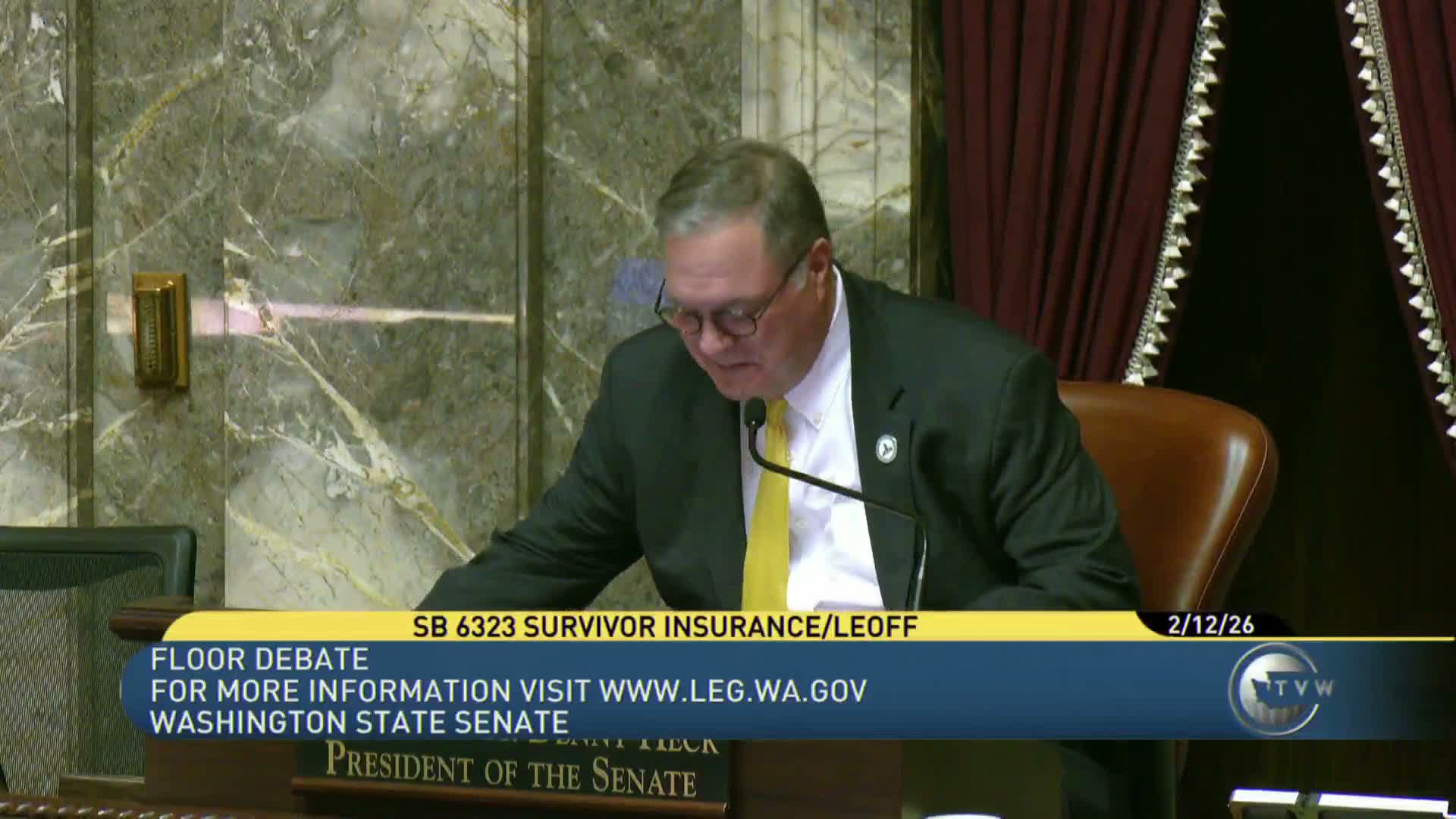
Summary
Alongside major measures, the Senate advanced and passed several procedural and policy bills on Feb. 20: a cleanup to extend medical premium coverage for survivors, a bill to coordinate utility relocations with DOT projects, and legislation to reduce duplicate permitting costs for developers.
During the same floor session the Senate advanced and passed multiple other bills on Feb. 20.
Survivors' medical benefits: Senators moved to advance Senate Bill 6,323 (a cleanup to ensure medical‑insurance premium reimbursements for surviving spouses of officers and firefighters). Senator Holy described the bill as a "clean up for the hospital" to close unintended coverage gaps; Senator Robinson urged support. The Senate recorded the constitutional majority and declared the bill passed on final passage.
Transportation/utility coordination: Second substitute Senate Bill 5,690, described by Senator McEwen and others, clarifies procedures to coordinate utility relocations with major Department of Transportation projects, with the aim of saving local jurisdictions money and better aligning with federal grant timing. The body advanced the bill and declared final passage after roll call.
Housing permitting streamlining: Substitute Senate Bill 5,729 would limit duplicate paid review by municipalities (allowing a city to use either its in‑house or a third‑party engineer/architect but not both unless a dispute exists). Sponsor Senator Gildan said the change should save thousands of dollars on the purchase price of many homes. The bill was advanced and declared passed by the Senate.
Prevailing wage bill: The Senate also passed legislation amending rules about prevailing wages on public works contracts (final passage recorded in the session). Some senators noted concerns about cost escalation and the need to address who absorbs wage changes mid‑contract; sponsors said they will continue negotiations as the bill moves to the other chamber.
Why it matters: These bills address narrower but tangible administrative, financial and public‑safety matters — from ensuring survivor benefits to streamlining review costs and coordinating infrastructure work. Collectively they reflect multiple policy areas the Senate acted on during the single floor session.
Next steps: Each bill was declared passed by the Senate and will proceed through subsequent legislative steps as required.