
Committee hears changes to workers’ compensation provider rules and penalties
Get AI-powered insights, summaries, and transcripts
Subscribe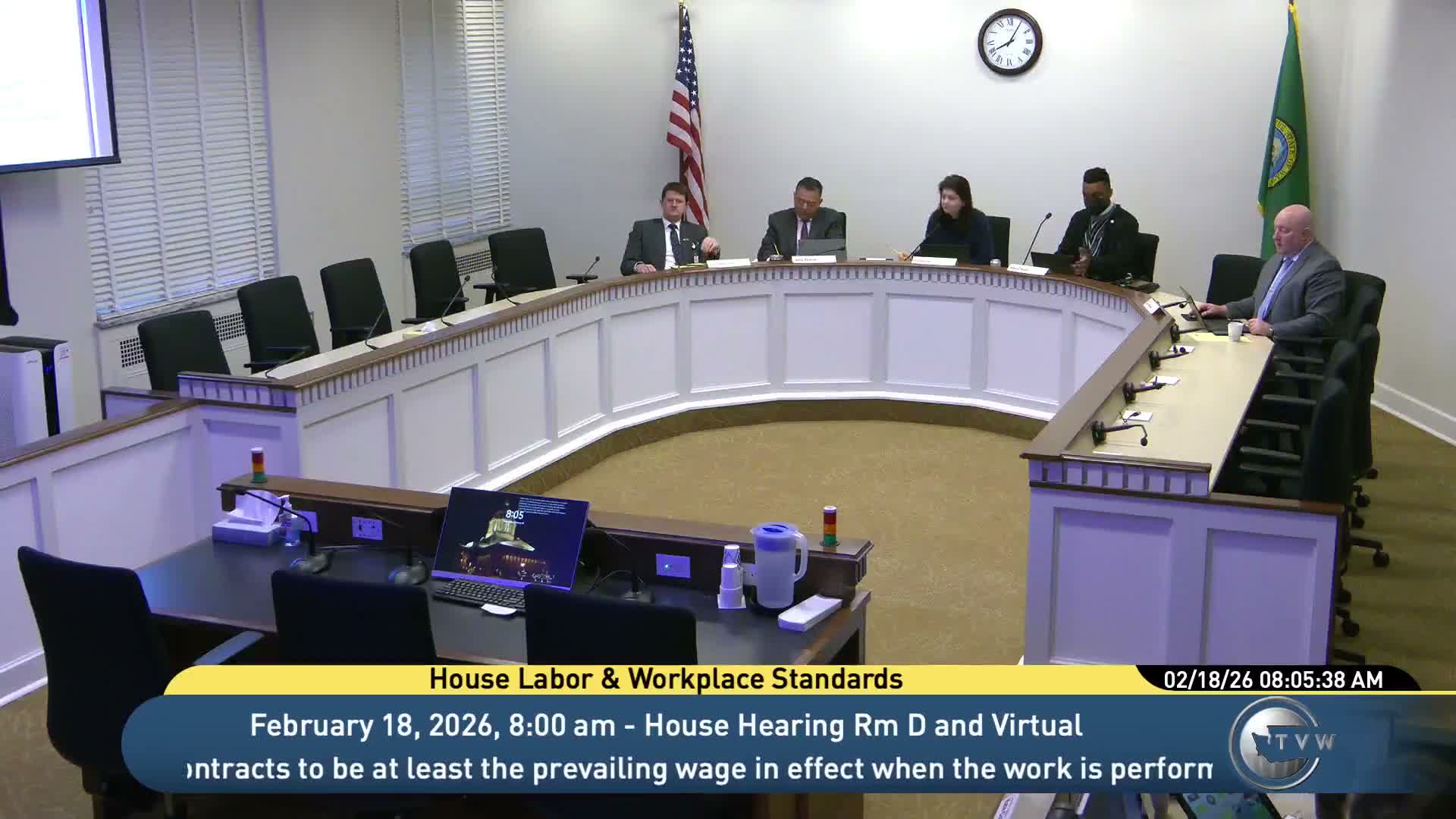
Summary
Engrossed second substitute SB 58-47 would let injured workers seek care outside L&I’s provider network in more circumstances, prohibit employers from coercing workers to see specific providers, and modify penalties and appeals; advocates said it would improve access, businesses urged caution and asked for fiscal updates.
The Senate Labor and Workplace Standards Committee heard testimony on engrossed second substitute SB 58-47 on Feb. 18, a bill that would change how injured workers access medical care under Washington’s Industrial Insurance Act and alter employer penalties for steering treatment.
Staff summarized key provisions: providers in L&I’s medical-provider network generally must follow L&I coverage decisions and guidelines, but the bill allows a provider to deviate from those decisions "when medically appropriate." It would forbid employers from coercing an injured worker to seek treatment from a specific provider and requires L&I to investigate allegations that an employer required a worker to use a particular clinic. The bill expands conditions under which a worker may obtain treatment from an out-of-network provider (for counties with population ≥500,000, no in-network provider within 15 miles; for counties <500,000, within 30 miles). It also clarifies removal and appeal rights for providers leaving the network and modifies penalties for certain violations.
Sen. Saldanha, the prime sponsor, told the committee the bill responds to complaints from injured workers who cannot find network providers or whose local doctors say they do not accept workers’ compensation claims. Proponents—including trial attorneys and union representatives—said the bill would reduce barriers to timely, medically necessary care, allow patients to choose trusted providers and expand network access for rural doctors. David Lauman, an attorney representing injured workers, cited the Supreme Court's Murray decision to argue the bill helps ensure individualized, medically appropriate care.
Business groups opposed or urged caution. Mike Gennis (Building Industry Association of Washington) said the bill is not the solution to shortages of qualified providers and asked for an updated fiscal note; Rose Gunderson (Washington Retail Association) expressed concern that projected increases in average claim duration could worsen and urged more stakeholder work. Tammy Felon of the Department of Labor and Industries said L&I could implement the bill with a small technical amendment but noted there are costs and an outstanding fiscal note; she suggested additional claims managers could mitigate benefit impacts.
The committee closed the public hearing on the bill; no formal action was recorded in the transcript. If advanced, the bill could be amended further and would require fiscal analysis to quantify program costs and savings.