Get Full Government Meeting Transcripts, Videos, & Alerts Forever!
Get email alerts on the Water Finances topic
No spam. Unsubscribe anytime.
St. Louis water director warns system "not sustainable," cites 399 breaks in 2025 and $14M in past-due bills
Summary
Water Division Director Neeraj Patel told aldermen the city's system—sized for about 1 million people but serving fewer than 300,000—faces rising emergency repairs, staffing pressures and more than 16,000 delinquent accounts totaling roughly $14 million; a rate-sufficiency study is due in March.
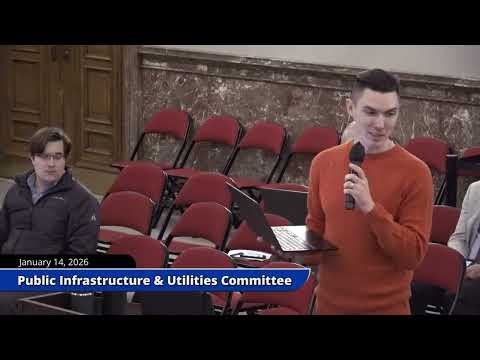
Neeraj Patel, director of public utilities for St. Louis City, told the Public Infrastructure and Utilities Committee on Jan. 14 that the city's water system is strained by aging assets, rising costs and lagging revenues. "We are in a condition that is not sustainable," Patel said, citing 399 main breaks in 2025 — the highest in seven years — and an average localized repair cost of about $13,000.
Patel said the system was originally sized for roughly 1,000,000 people but now serves fewer than 300,000, a mismatch that forces the per-customer burden to rise. He described the division's asset footprint — two treatment plants (Chain of Rocks and Howard Bend), about 1,300 miles of mains, 15,500 fire hydrants and tens of thousands of valves — and said the utility has identified 63 priority main-replacement projects that would replace roughly 16.5 miles of pipe at an average project cost of about $450,000 and roughly $1.7 million per mile.
On finances, Patel said the division drew down its contingent/reserve fund from roughly $35–38 million to about $26 million across recent years and that rate increases in 2023 and 2024 came "too late" to close the gap. He said the division currently charges about $2.62 per CCF after a recent cost-of-living adjustment, compared with roughly $7.76 per CCF for Missouri American Water in St. Louis County and more than $6 per CCF in Kansas City.
Patel also described collection challenges: more than 16,000 delinquent accounts representing about $14 million owed. He outlined a $1 million ARPA-funded customer assistance program administered by United Way that has helped more than 400 applicants — typically with awards up to $500 and a required repayment plan — and said the division has begun targeted shutoffs outside tornado-impacted areas after providing notice and outreach. "We're notifying residents ahead of time with letters, with door hangers, notifying them about the assistance programs... That is our last resort," Patel said.
Consumer advocate Sandra Padgett said the Consumers Council supports public engagement but urged a formal, public rate-review procedure before any future increases. "Residents of the City Of St. Louis deserve transparency and a deliberative, orderly process when it comes to decisions that affect their household budgets," Padgett said. Patel told the committee the division has kicked off a rate-sufficiency study, expects it to be complete in March, and committed to return to the committee with results and recommendations.
The committee discussed funding options including SRF and WIFIA loans, ARPA funds and possible bond financing. Several aldermen encouraged pursuing debt to finance large-scale renewal projects while preserving affordability for residents. Patel said the division is pursuing a mix of funding sources and will prioritize projects that reduce emergency repair costs and improve reliability.