
Consumers Council and residents urge city action as data‑center plans and SB4 raise rate concerns
Get AI-powered insights, summaries, and transcripts
Subscribe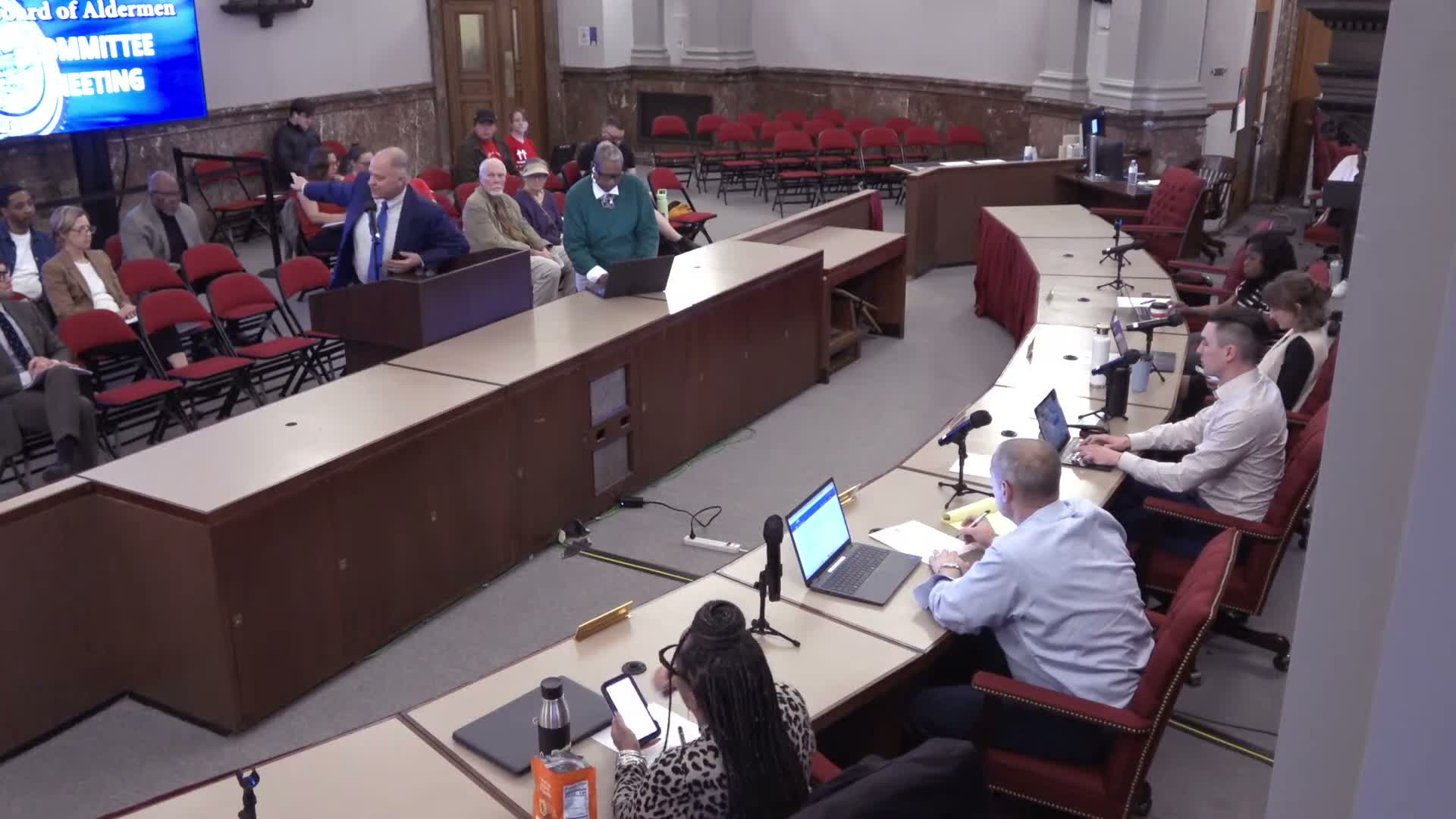
Summary
Consumer advocates and multiple St. Louis residents told the committee that Missouri’s large‑load tariff and recent regulatory changes leave ratepayers exposed to costs for new generation and transmission; presenters urged community benefit agreements and stronger collateral and contract terms.
John Kaufman of the Consumers Council of Missouri told a City of St. Louis committee that consumer protections in the recently enacted Senate Bill 4 and the large‑load tariff leave gaps for residential customers and recommended the city pursue community benefit agreements to offset impacts on low‑ and moderate‑income households. "We believe there is a nexus between the large load tariffs, the data centers that are coming, the power plants that will be needed to serve them, and the possible impact on the rest of the customers," Kaufman said.
Kaufman highlighted earlier regulatory practices that shifted construction costs to ratepayers and warned of outcomes seen in other states, saying the collateral and contract lengths in the tariff are insufficient: "Under this large load tariff as approved by the commission, it only requires two years of utility payments to be put down as collateral … We think it should be more like 10 years." He argued the difference matters because generation is a decades‑long asset while customers’ commercial entities can have short, volatile lifecycles.
Members of the public echoed those worries in two‑minute testimonies. Dan Pate (Ward 6) said the large‑load tariff "does not eliminate the risk that residents could end up paying for infrastructure or generation built to serve these loads" and warned that credit instruments can be unsecured in a bankruptcy. Sylvia Cuney and Abigail Gunther stressed that many Missourians live paycheck to paycheck and that even modest percentage increases in bills are unaffordable; Gunther said residents were "not satisfied with the large load tariffs." Ryan Diebel called data centers a benefit to "the ultra wealthy" while warning of pollution, noise and economic harm to working people.
A technical comment from Elise Schaffer of Missouri Environment offered comparative levelized cost ranges to inform planning (as stated at the hearing: solar $20–$78/MWh; coal $70–$157/MWh; new gas $149–$251/MWh). An online resident near Ameren’s Labadie plant asked whether planned natural‑gas projects and IRP additions were driven by data‑center demand and warned ratepayers could ultimately shoulder those costs.
Why it matters: committee members said they do not control state utility law but can use local tools—zoning, planning rules, and community benefit agreements—to try to mitigate cost and equity impacts. The meeting did not adopt new local policy; committee members encouraged public engagement and further work by planning staff.
What’s next: planning division staff continue drafting data‑center regulations and the committee asked Ameren to follow up with better localized data on recent rate changes and the utility’s capacity planning.