Get Full Government Meeting Transcripts, Videos, & Alerts Forever!
Get email alerts on the Tenant Privacy Smart Access topic
No spam. Unsubscribe anytime.
Committee hears bill to give tenants non‑biometric alternatives to smart locks
Summary
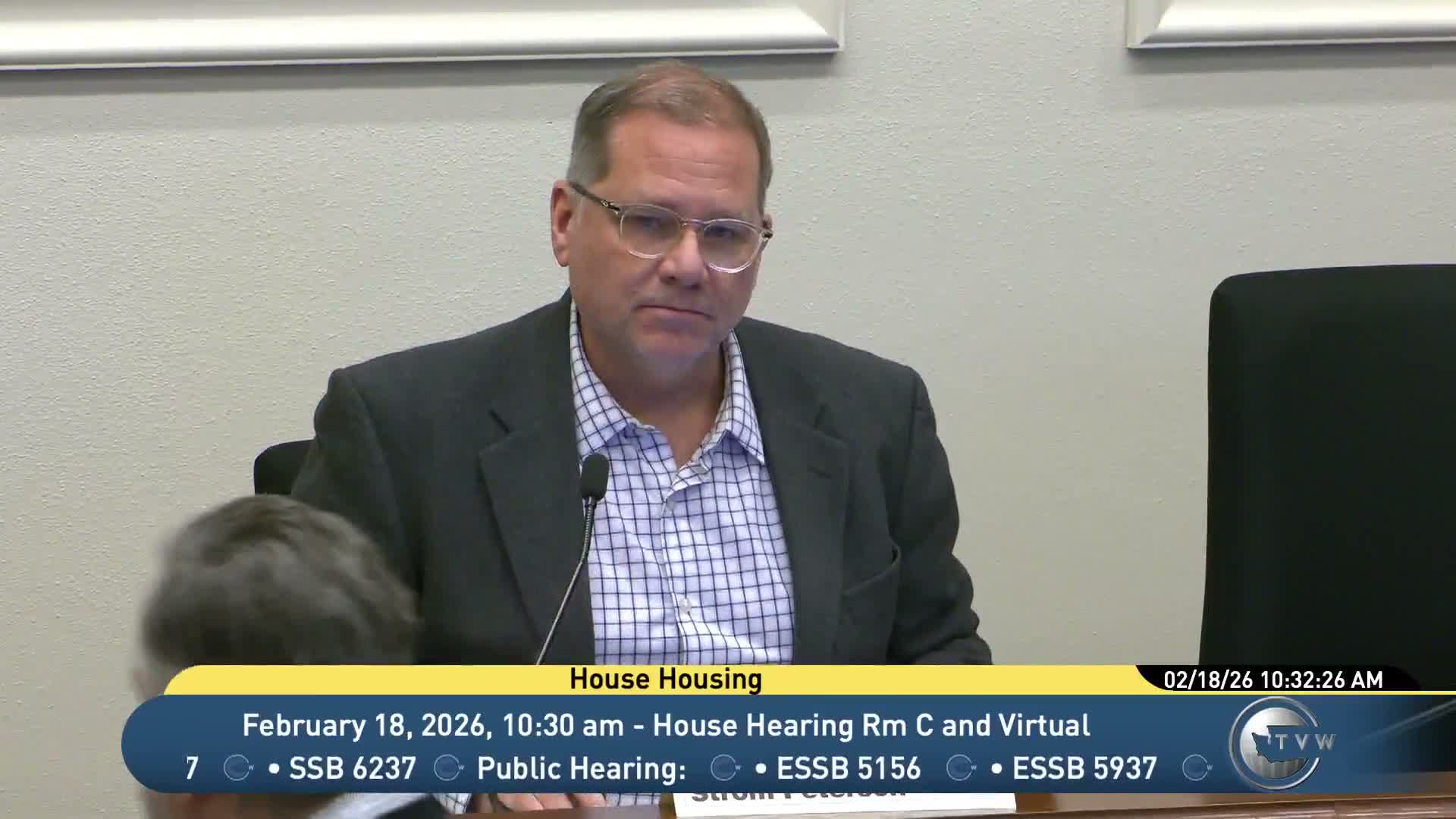
The House Housing Committee on Feb. 18 heard ESSB 5,937, which would require landlords to provide tenants non‑biometric alternatives to smart access systems on request and add privacy‑policy disclosures; stakeholders described the bill as a negotiated, neutral compromise with a delayed 01/01/2027 effective date.
The House Housing Committee heard testimony Feb. 18 on Engrossed Second Substitute Senate Bill 5,937, which would require landlords of properties covered by the Residential Landlord‑Tenant Act to offer tenants alternative non‑biometric access on request and to make smart‑access privacy policies available.
Audrey Vacek, staff to the committee, told members the bill defines “smart access system” to include RFID cards, mobile phone applications and biometric identifiers and excludes entry methods that rely only on manually entered keypads. She said landlords in a smart access building would be required to provide alternative keys — examples listed in the bill include key fobs, key cards or physical keys — if a tenant requests an option that does not use biometric data or a mobile app, and to make a privacy policy available in writing when a lease is signed or within five days of installation. The staff summary said the bill’s effective date is Jan. 1, 2027.
Sponsor Senator Jamie Peterson (43rd District) framed the bill around a constituent case in which a landlord required a tenant to download an app to enter her unit and, the tenant contended, collected data about her movements. “If you have a request from a tenant, you have to provide a different way that isn't going to track their movement or their biometric information,” Peterson said, describing the measure as a stakeholder‑driven effort to protect privacy while minimizing burden on housing providers.
A tenant, Maddie Studhoft, testified that her landlord installed smart locks last October, required an app for access to both the building and her individual unit, and that the app and system allowed tracking of entries and exits and connected to other phone data. “I was supposed to download an app to be able to access my unit, which was a big change,” Studhoft said, adding she found the policy invasive and that she supported a requirement that tenants be allowed physical keys or cards instead.
Christel Perkey of the Washington Multifamily Housing Association said the association is neutral on the engrossed substitute and that recent amendments made compliance easier. Perkey noted two changes in the substitute: allowing a direct link to a vendor’s privacy policy in place of reprinting long documents and a five‑day window to provide required privacy information after move‑in or installation. She said operational exceptions for maintenance, emergency entry and other operational uses remain in the text.
Representative Dufo asked whether keypad‑only access would trigger disclosure requirements; witnesses and staff clarified the bill’s definition excludes simple keypad systems that do not collect biometric data and that the vendor‑link option is intended to reduce lease paperwork.
The committee closed the hearing on ESSB 5,937 with no final action recorded. The bill’s sponsor and supporters said the delayed effective date is intended to give housing providers and vendors time to implement alternatives and provide the required privacy information.
The committee adjourned the ESSB 5,937 hearing without a vote; next steps were not scheduled during the session record.