Get Full Government Meeting Transcripts, Videos, & Alerts Forever!
Get email alerts on the Early Learning Licensing topic
No spam. Unsubscribe anytime.
Committee hears bill exempting school‑based ECAP and Head Start from DCYF childcare licensing
Summary
Supporters told the committee HB 23‑17 removes duplicative licensing requirements for school‑day ECAP and Head Start classrooms located on public school or community college property, arguing it speeds service availability and reduces inequities for nonprofit providers; witnesses gave operational examples of months‑long licensing delays.
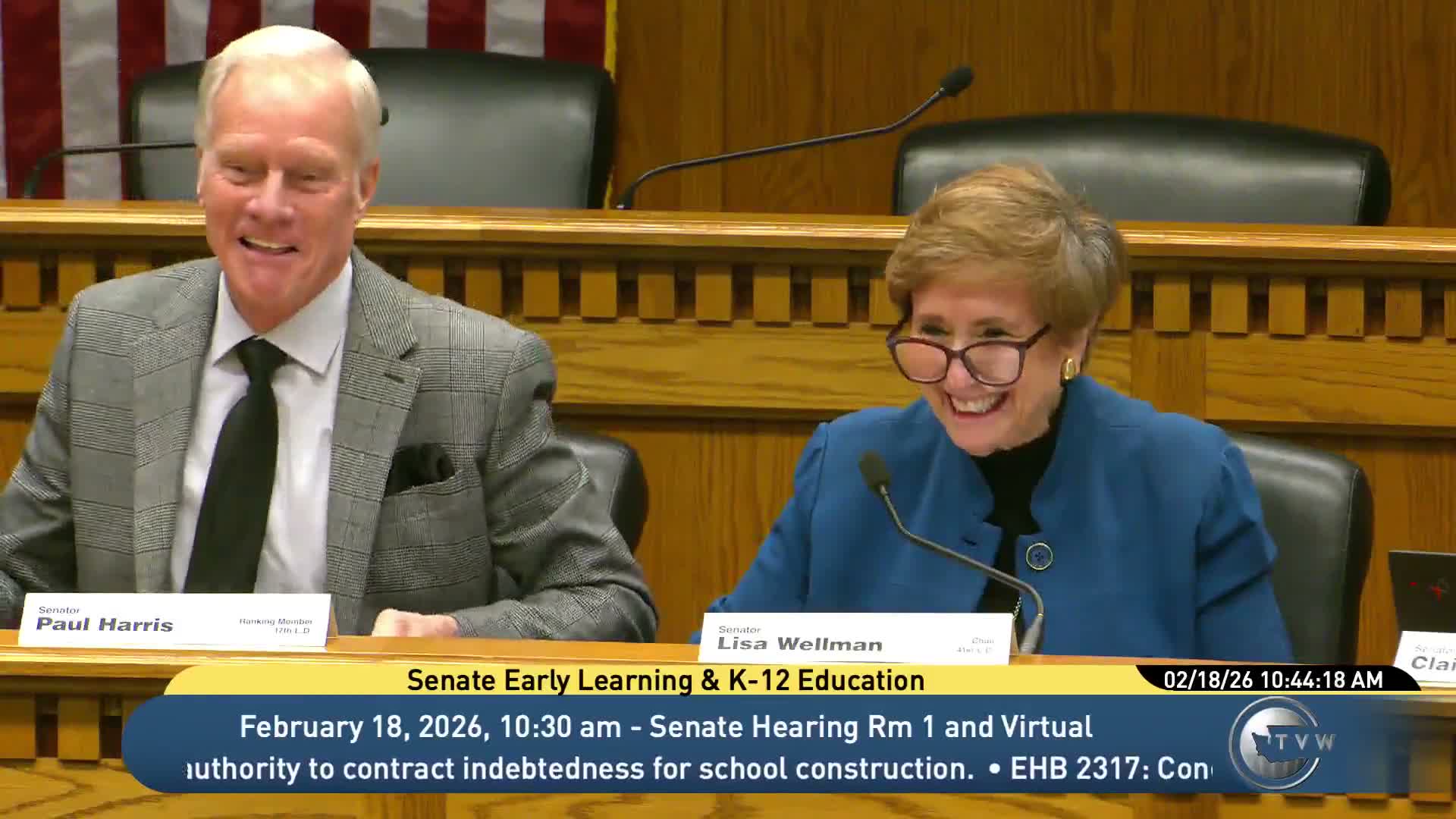
Engrossed House Bill 23‑17 would exempt school‑day ECAP programs and Head Start classrooms located on the premises of public school buildings or community and technical colleges from Washington’s DCYF childcare licensing requirements, supporters told the Senate education committee.
Eili Cotto, committee staff, said the bill defines those school‑based ECAP and Head Start programs as not an "agency" for childcare licensing purposes when they operate in school or college facilities. DCYF’s fiscal note on the original bill indicated no fiscal impact.
Representative Carolyn Eslick, the sponsor, said permitting duplication — multiple inspections and licensing processes — is a barrier to expanding childcare and ECAP slots and that "we're just gonna eliminate that" redundancy for ECAP and Head Start programs on school property. Testimony from Katie Warren of the Washington State Association of Head Start and ECAP and Christine Wilson of the Opportunity Council gave concrete examples where nonprofits were required to fully license classrooms already used on school property, sometimes delaying services for months and reducing capacity.
Supporters said the exemption would reduce inequities (nonprofits sink funds to meet full licensing requirements that schools operating the same services do not face), speed placement of ECAP slots, and allow expansion tied to state funding opportunities. Committee members asked questions about playground safety and whether the exemption applies to franchised or external providers; witnesses and members clarified the bill applies to school‑day ECAP and Head Start specifically and does not eliminate existing safety requirements.
The committee took no formal vote at the hearing; testimony closed and the bill was placed for further consideration.