Get Full Government Meeting Transcripts, Videos, & Alerts Forever!
Get email alerts on the Education topic
No spam. Unsubscribe anytime.
Senate committee amends SB 19 to broaden reporting, change math-plan deadlines and table intervention-cap amendment
Summary
The Senate Education Committee adopted technical and policy amendments to Senate Bill 19—expanding EMIS reporting to K–12, clarifying when schools must file math-improvement plans and repealing a mandate on automatic acceleration into Algebra I—while tabling a proposal to narrow required intervention services.
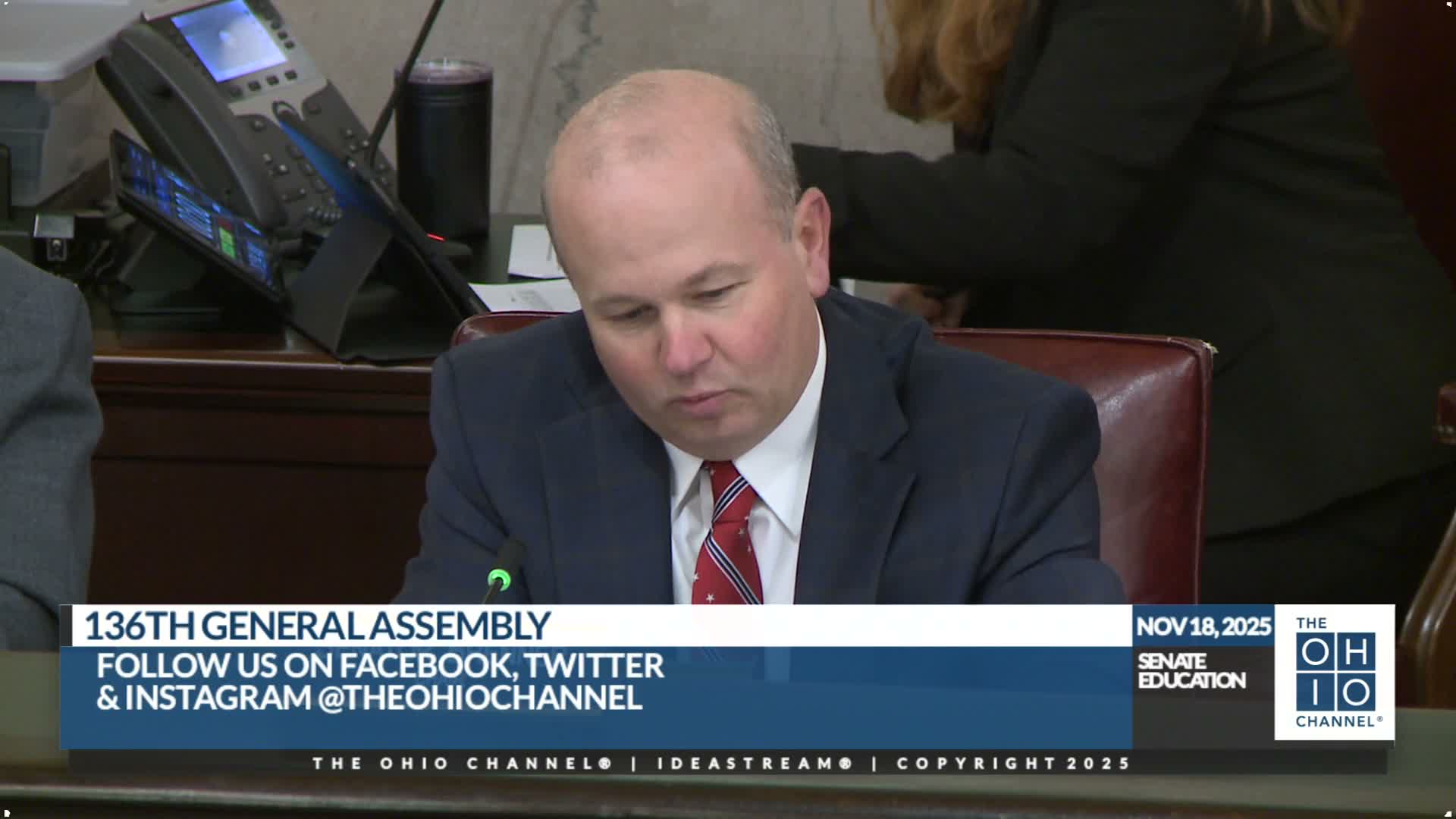
The Senate Education Committee on the record amended Senate Bill 19 to make several technical and substantive changes to state math policy and reporting requirements.
Vice Chair Blessing moved a series of amendments that the committee adopted without objection, including an LSC technical correction to cross-references, AM 13 94 to change the window for schools to create math improvement and monitoring plans to 60 days after the qualifying exam, and AM 13 88 to expand EMIS reporting of math curriculum and instructional-material data from grades K–5 to K–12. The committee also approved AM 14 67-1, which repeals an existing requirement that districts automatically enroll seventh graders who score “accomplished” or “advanced” into eighth-grade Algebra I starting in the 2026–27 school year (with a parental opt-out), and requires that students who demonstrate accomplished or advanced performance in grades 3–6 be offered an advanced-learning opportunity the following year.
Ranking Member Ingram offered AM 14 44 to narrow the qualifying criteria for required academic intervention services so that schools focus resources on students who most clearly need help. Chair Brenner argued for broader intervention coverage, saying students who score poorly on diagnostics should receive help. Vice Chair Blessing moved to table Ingram’s amendment; the motion to table was taken and the amendment was tabled, and the bill proceeded as amended.
Committee discussion flagged resource concerns and differing views on targeting interventions versus blanket coverage. The committee passed the bill as amended and instructed clerical follow-up (rolls to be signed).
The committee did not take a separate roll-recorded vote on each technical amendment because several were adopted by unanimous consent; the transcript records a recorded roll call for the tabling motion and later indicates the amended bill passed. Next steps: the bill will proceed under the committee’s adoption as amended.