Get Full Government Meeting Transcripts, Videos, & Alerts Forever!
Get email alerts on the Career Navigation topic
No spam. Unsubscribe anytime.
Bill and partnership presentation promote aptitude assessments and localized career navigation
Summary
Senate Bill 328 would require middle‑school career exploration, a personalized academic/career plan by the end of eighth grade, and a state ROI reporting initiative; the committee also heard a presentation from the Greater Springfield Partnership about a Clark County program using YouScience aptitude assessments, youth science navigators and employer events.
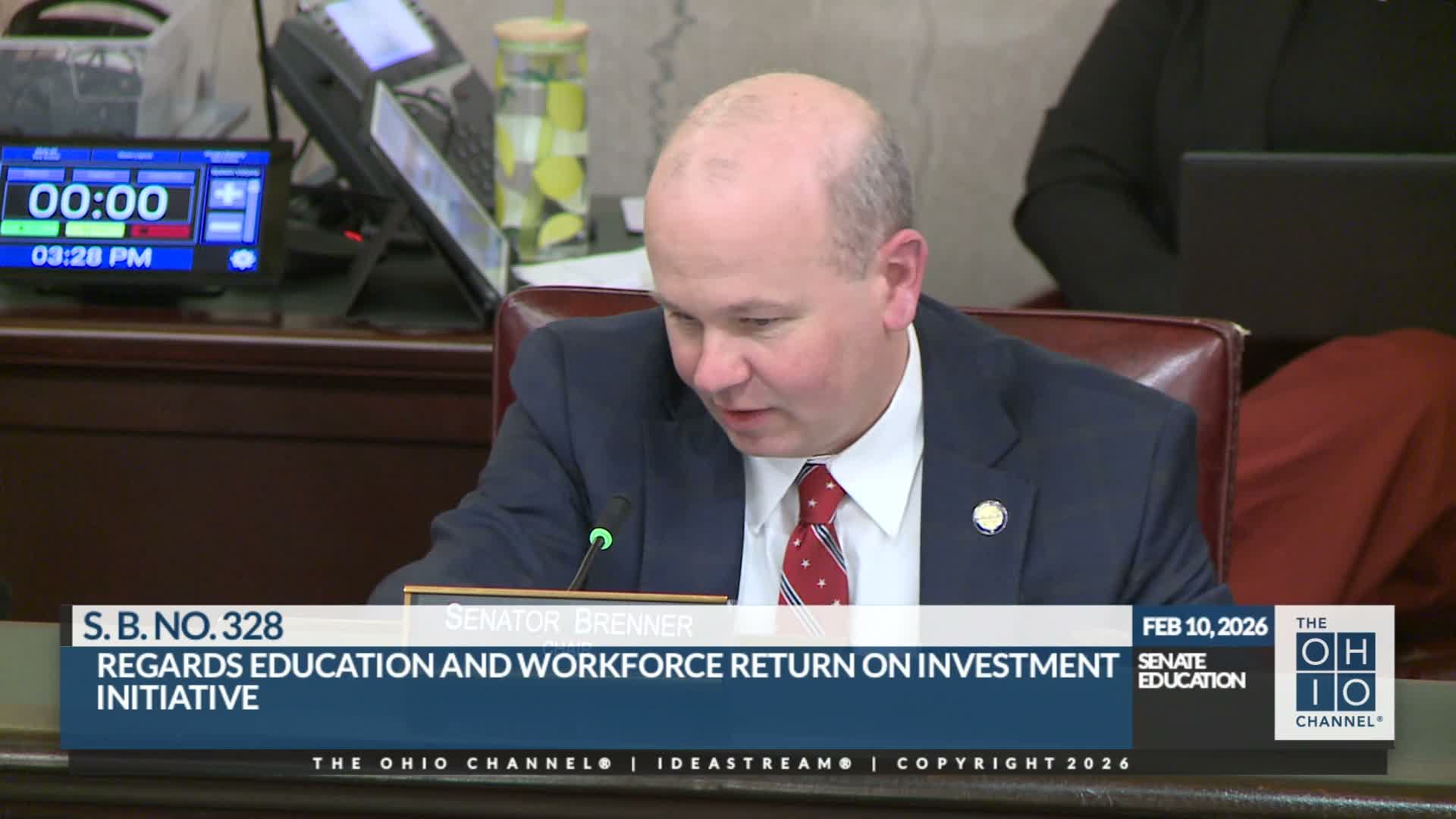
Senate Bill 328, sponsored by Senator Kahler, would expand career exploration and planning by requiring a half‑credit career exploration unit between grades six and eight, an academic and career plan completed by the end of eighth grade, and a state return‑on‑investment initiative to publish reports tying education outcomes to workforce data.
After the bill's sponsor described the policy goals, Horton Hobbs of the Greater Springfield Partnership presented the organization's Clark County program as a working model. Hobbs described a locally funded deployment of YouScience aptitude assessments, an eighth‑grade career exploration event that brings students to a one‑day session with about 60 employers, and a network of youth science navigators who meet students one‑on‑one across grades to review results and coach planning.
Hobbs said the program has delivered over 4,200 assessments and reached every public and private high school within Clark County; navigators are embedded in schools (pilot in two high schools) and the program links to a job portal (clarkcounty.jobs) powered by OhioMeansJobs. Committee members asked about vendor selection, business engagement levels and how the navigator role relates to the school guidance counselor; Hobbs said the state should not pick vendors but local partnerships can fund services, navigators do not replace guidance counselors and business engagement varies across the 60 employers engaged at job fairs.
Next steps: The committee concluded the testimony and sponsors and presenters said they would continue working with districts and stakeholders to refine implementation details and vendor‑selection guardrails.