
Providers and Unions Urge Committee to Reject Bill Narrowing Childcare Bargaining Rights
Get AI-powered insights, summaries, and transcripts
Subscribe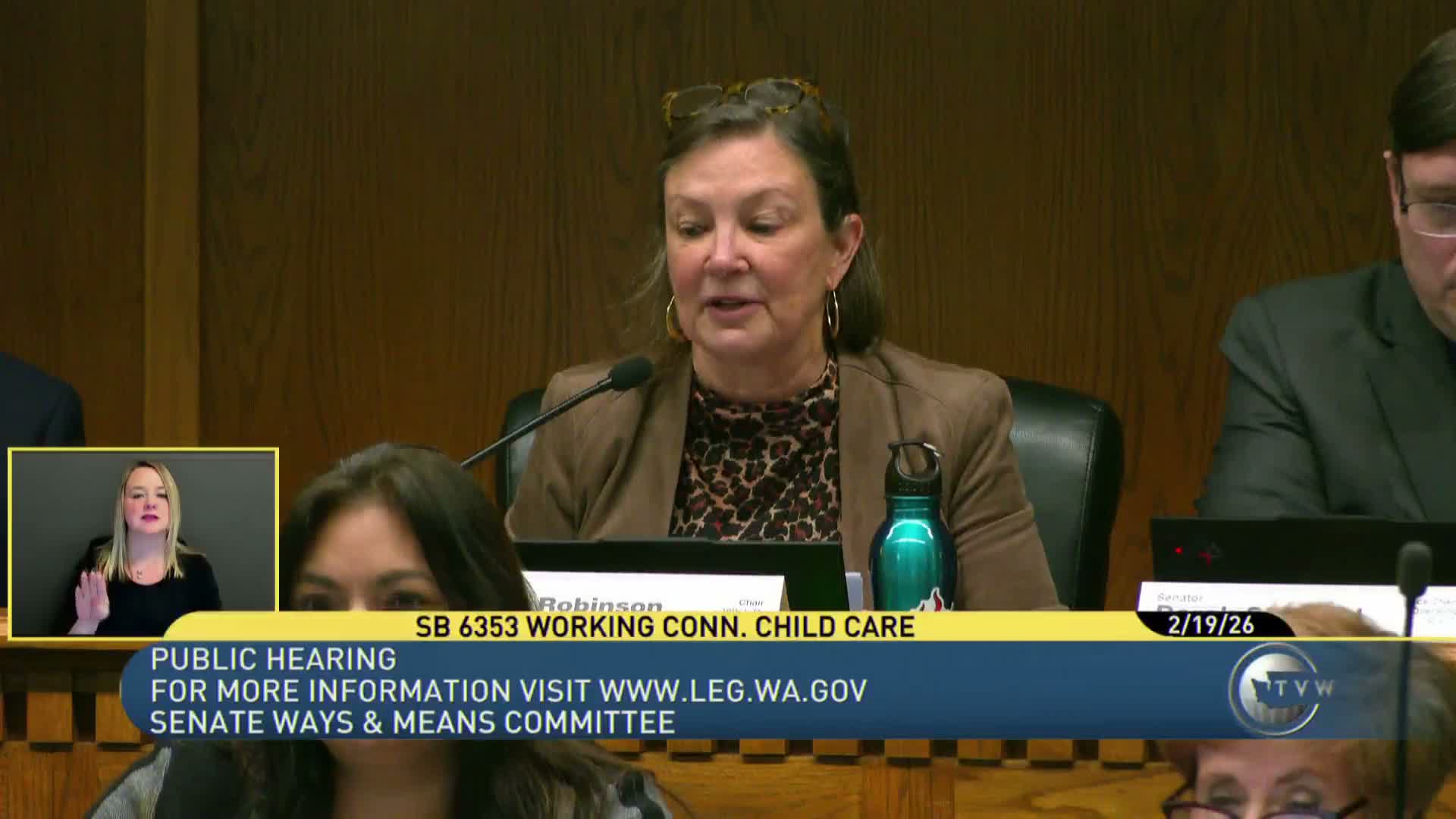
Summary
SB 6353 would narrow the scope of collective bargaining for childcare providers and change WCCC payment rules. The committee heard hours of opposition from providers, union leaders and caregivers who said the changes would cut at least $2,200 per month from many providers and destabilize childcare access.
Senate Bill 6353 (as presented in committee) would make multiple changes to the Working Connections Child Care (WCCC) program and related provider compensation and bargaining scope. Committee staff described provisions that would eliminate planned income‑eligibility expansions, change payment rates and the way providers are reimbursed, and narrow the items eligible for collective bargaining on economic compensation.
The bill drew sustained, organized opposition. Dozens of childcare providers, SEIU and other union representatives, and caregivers testified that narrowing bargaining scope and reducing compensation would reduce providers’ incomes by at least $2,200 per month, force staffing cuts, reduce available slots (especially infant slots), and destabilize rural and small providers. Testimony included first‑hand accounts from long‑time providers, union officers, and parent advocates who framed collective bargaining as the structural protection that stabilizes the workforce and assures quality care.
Committee staff summarized several technical changes in the substitute language: it would freeze income eligibility at 60% of state median income (reversing planned expansions), set provider rates at the 70th rather than 80th percentile of market (starting July 2027), narrow eligibility for enhanced rate regions, and modify attendance‑based reimbursement (including reimbursement rules for up to 15 days of attendance within a month). Staff offered fiscal estimates for potential savings but noted the fiscal note was not yet available at the time of the hearing.
Speakers urged the committee to protect collective bargaining rights and reject the bill. The committee concluded the public hearing on SB 6353 after extensive testimony.