Committee Hears Competing Views on Bill to Tap Nonprofit Insurer Surplus for Premium Aid
Loading...
Summary
The Senate Ways and Means Committee heard testimony on SB 5808, which would define 'excess surplus' for nonprofit health carriers and require a 10% payment of that excess to the Office of the Insurance Commissioner to fund Cascade Care premium assistance. Advocates said the bill would help affordability; insurers warned it could undermine reserves and competitiveness.
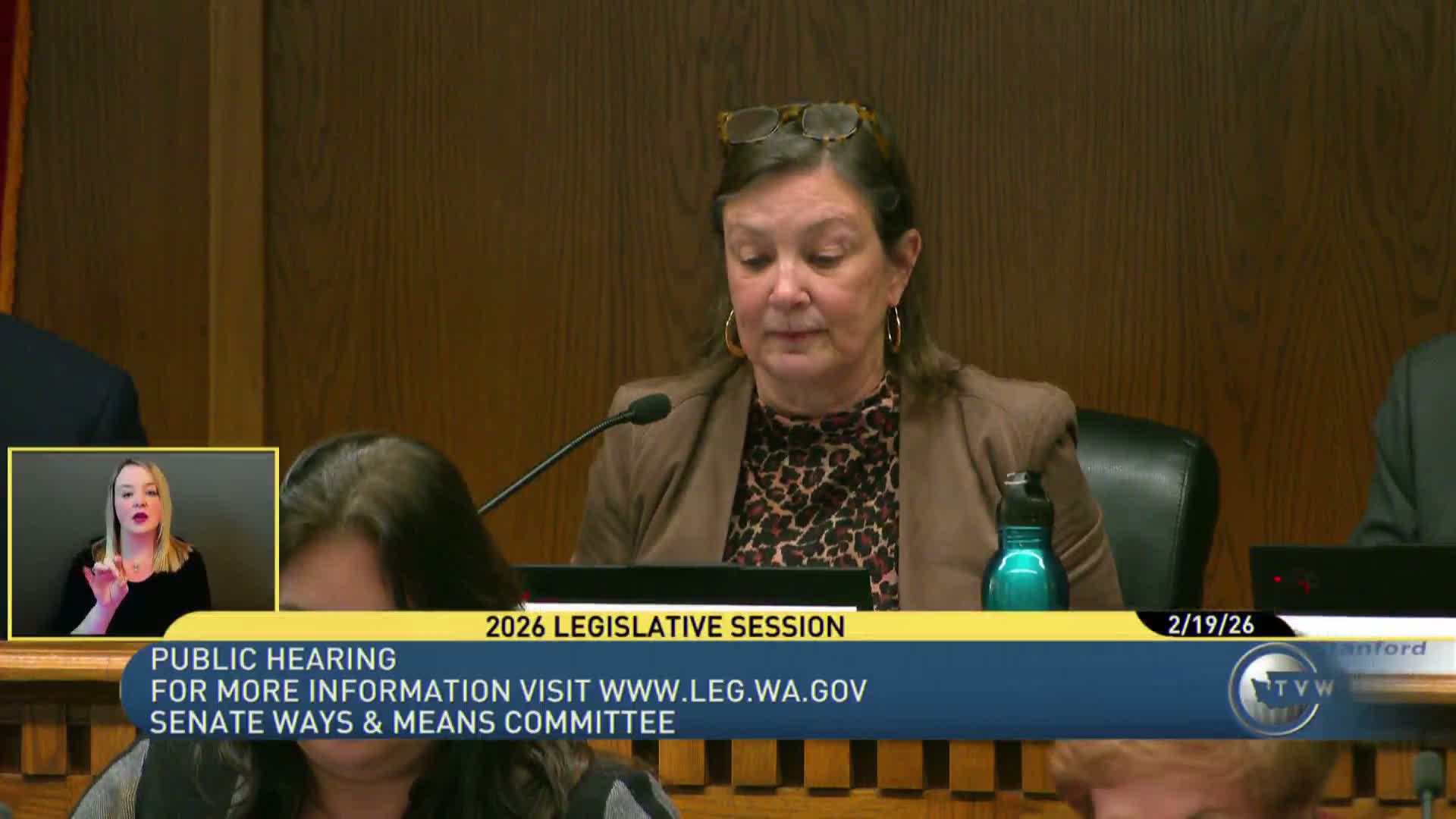
Senate Ways and Means held a public hearing on SB 5808 on Feb. 19, 2025. Committee staff described a proposed substitute that would define excess surplus for nonprofit health carriers as any surplus above 100 times the statutory minimum net worth and require carriers to pay 10% of that excess to the Office of the Insurance Commissioner (OIC) for deposit into the state health care affordability account to fund the Cascade Care premium assistance program.
Supporters told the committee the obligation is a reasonable step to help Washingtonians keep coverage. Emily Bryce of Northwest Health Law Advocates said carriers hold surpluses far beyond what is needed to pay claims and noted decades‑old OIC findings on high surplus levels; Sam Hatzenbuehler of the Economic Opportunity Institute cited OIC data showing large cumulative increases in carrier surpluses and argued redirecting a small portion could meaningfully expand premium assistance.
Insurers and integrated health systems opposed the measure. David Foster of the Association of Washington Health Plans and representatives from Kaiser Permanente, Regence (Regents Blue Shield), and Premera Blue Cross said nonprofit carriers operate under different financial constraints, lack access to outside capital, and rely on reserves for solvency, capital projects and crisis response. Premera said it paid $76 million to the general fund in 2025 and credited reserves with enabling pandemic relief and advanced payments to providers.
Committee staff said the fiscal impacts are indeterminate but cited an estimate that the change could increase deposits to the state health care affordability account by about $330 million one time in 2027, and noted OIC implementation costs of roughly $165,000. Several witnesses suggested amendments ranging from a lower surplus threshold to a higher penalty percentage and an expansion to for‑profit carriers; legislators did not adopt amendments during the public hearing. The committee closed the public hearing on SB 5808 and moved to other agenda items.
SB 5808 remains under committee consideration; the next procedural step, if taken, would be formal amendment and a committee vote.