Get Full Government Meeting Transcripts, Videos, & Alerts Forever!
Get email alerts on the Truancy topic
No spam. Unsubscribe anytime.
Judges and diocesan leaders back truancy reforms and reporting changes in broad education bill
Summary
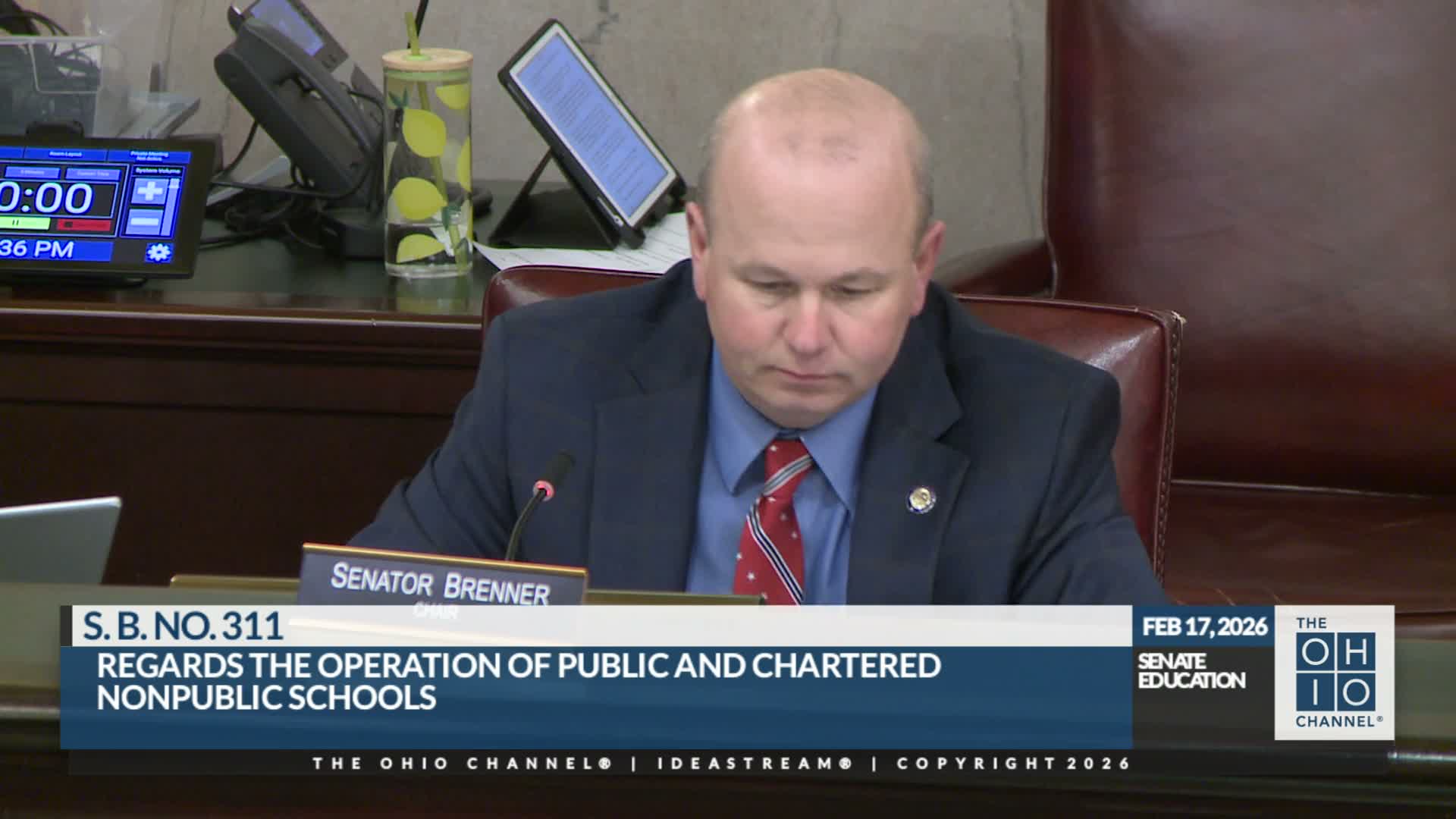
Testimony for SB 311 emphasized truancy as a leading indicator of delinquency and proposed discretionary juvenile‑court jurisdiction for habitual truants and expanded reporting to diocesan education offices for unlicensed staff; proponents urged diversion-first approaches.
Judge Teresa Delic of the Mahoning County Juvenile Court and other proponents told the Senate Education Committee that parts of Senate Bill 311 address truancy and improve juvenile‑court and school coordination.
Judge Delic said truancy is a "lead indicator of delinquency" and described an early‑warning system her court deployed in 2008 that reduced formal delinquency filings. She supported provisions in SB 311 allowing juvenile courts discretionary jurisdiction to monitor students adjudicated as habitual truants into the subsequent school year for attendance oversight, and a statutory clarification to the contributing‑to‑delinquency offense so prosecutors may bring appropriate charges when warranted.
Delic emphasized the proposal is not intended to increase adjudications broadly, and she said diversion and early‑warning systems remain the preferred route for most students. "We're not looking to have students adjudicated… This provision we're asking for is not to adjudicate them so they do not get an official filing against them," she said, describing discretionary use for repeat cases.
Tom Radakin and Troy McIntosh also testified on SB 311 components: Radakin described a separate provision allowing diocesan education offices to be simultaneously notified of arrests and convictions of unlicensed staff (closing a reporting gap created when RAP‑Back was expanded), and McIntosh urged allowing chartered nonpublic schools to bid on unused public facilities when community schools decline, while acknowledging safeguards should prevent speculative flipping.
Committee members pressed for details on who would administer monitoring if schools cannot afford truancy officers and raised concerns about potential unintended criminalization; proponents reiterated a preference for early‑warning and diversion and offered to work with the committee on safeguards. The committee closed the proponent testimony with no vote.