Get Full Government Meeting Transcripts, Videos, & Alerts Forever!
Get email alerts on the Education topic
No spam. Unsubscribe anytime.
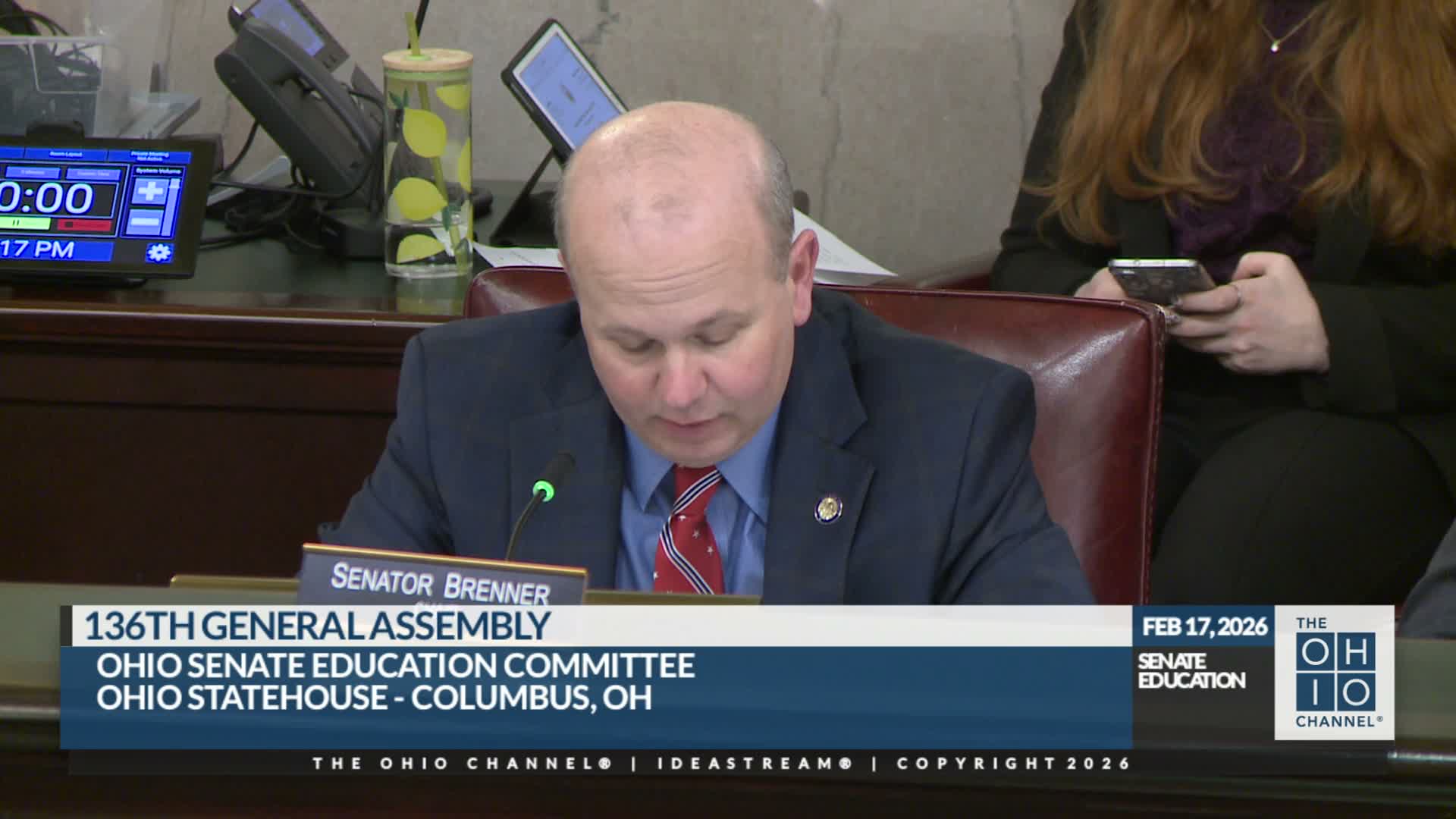
Committee hears bill to cut outdated educator rules, streamline reporting and adjust report‑card measures
Summary
Sponsors said House Bill 455 removes antiquated educator requirements, reduces annual reporting burdens and revises state report‑card measures including early‑literacy metrics; members asked about special education impacts and transportation pilots.
Representatives Manning and Byrd presented House Bill 455 to the Senate Education Committee as a broad modernization of Ohio's educator code intended to reduce administrative burden and let teachers focus on instruction.
"Our number one priority for this bill was to ultimately relieve the workload for Ohio's educators in order for them to get back to what's really important," Representative Manning said, describing provisions that eliminate certain annual DPIA reporting requirements and require the Department of Education to develop a uniform annual reporting mechanism and publish expenditure data by October 31 each year.
Manning and Byrd emphasized other changes, including modifications to the state report card calculation — notably a change to how third‑grade early‑literacy performance is measured and an adjustment that would exclude students with disabilities who defer diplomas until age 22 from harming a school's graduation percentage.
Senators asked implementation questions: Senator Huffman raised a question about a Montgomery County pupil transportation pilot and whether routes must remain within district boundaries; Ranking Member Ingram expressed concern that treating deferred special‑education students as graduates should not allow districts to cut services. Sponsors said they would follow up with technical answers and reiterated that federal special‑education rules and services must continue despite accounting changes.
The committee concluded the first hearing with no vote; sponsors said they hope to pass the bill to benefit districts and students in future sessions.