
Senate committee hears sponsor testimony on Student Wellness Act to allow ‘mental health days’ as excused absences
Get AI-powered insights, summaries, and transcripts
Sign Up Free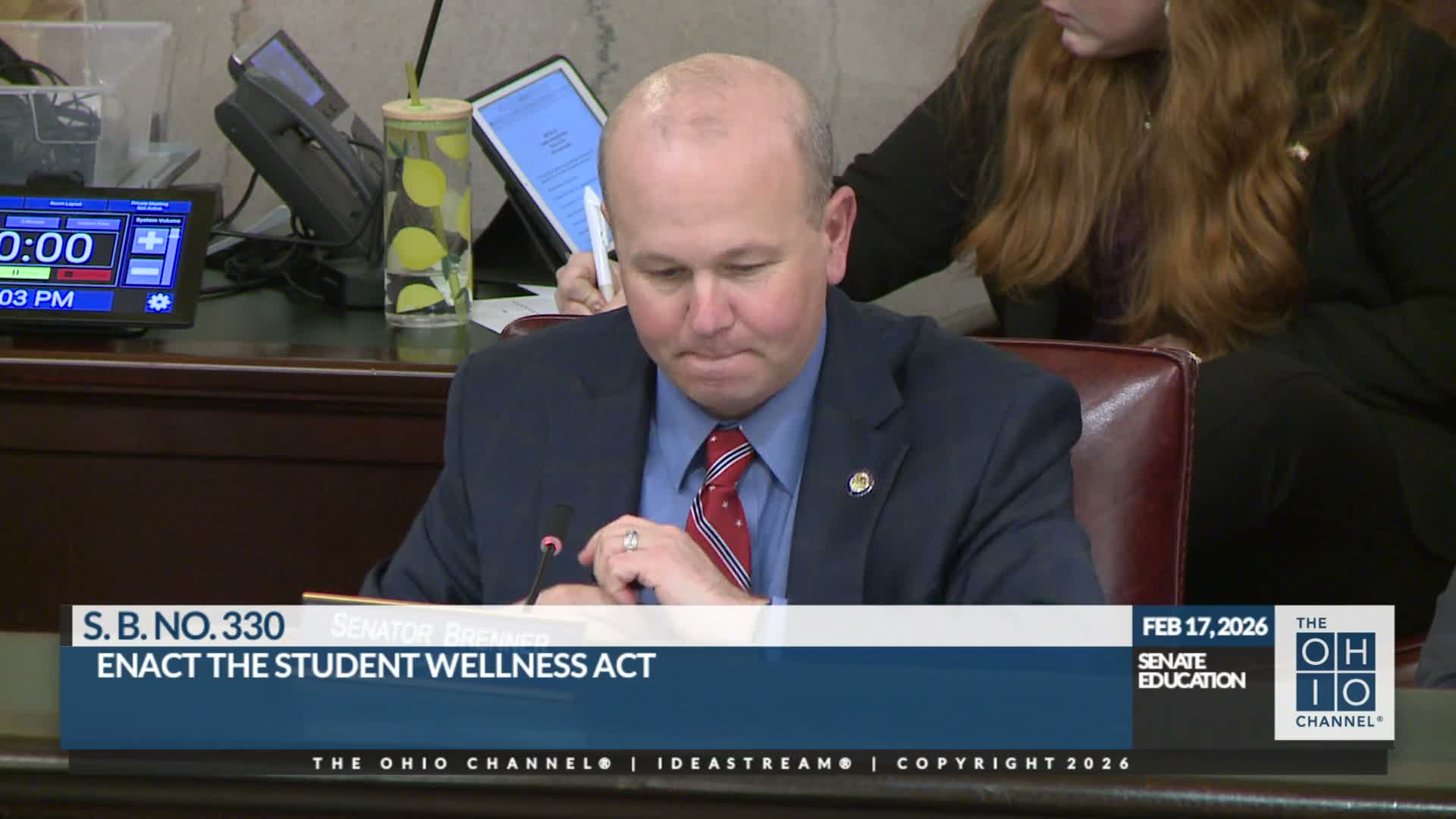
Summary
Sponsor told the Senate Education Committee the permissive Student Wellness Act would let local districts define and count limited mental‑health days as excused absences and require referral pathways; members pressed for state guidance and implementation details.
Sponsor testimony and committee questions focused on whether Ohio school districts should be allowed to count designated mental‑health days as excused absences.
Senator Blackshear presented sponsor testimony on Senate Bill 330, the Student Wellness Act, saying the permissive measure would let local districts define what qualifies as a "mental health day," cap the number of such days per school year, and set procedures for referring students to school health or support services. "The overarching goal behind this policy is to let students know that their mental health is important and to empower them to seek out support," the sponsor said.
The sponsor described the bill as optional for districts, stressing it does not mandate participation and acknowledging some districts may lack the resources to implement the policy. To underscore the need, the sponsor cited federal data: "According to the CDC, among U.S. high school students in 2023, 40 percent reported persistent feelings of sadness or hopelessness," and "20 percent reported seriously considering attempting suicide in the past year." The sponsor said districts that adopt the policy could connect students to counseling and other resources.
Ranking Member Ingram asked whether the bill is intended to change existing absenteeism policies or simply allow districts to incorporate mental‑health days into their current rules. Ingram pressed whether districts would count excused and unexcused absences differently and whether the Department of Education could provide a model definition. The sponsor replied the bill is permissive and that districts would define qualifying criteria locally; the sponsor also said they could look into state guidance or boilerplate language for districts to adopt.
Committee members also discussed rare cases where a student might stay home for a mental‑health day and the need to ensure help is available rather than simply excusing absences. The chair closed the committee's first hearing on SB 330 with no vote or amendment offered; the bill will proceed through the committee process.
The committee did not take formal action; the hearing concluded with members asking staff and sponsors to follow up on possible model language and implementation considerations.