Metrolink and Caltrain point to ridership gains but warn of looming operating shortfalls
Loading...
Summary
Metrolink and Caltrain described ridership recovery efforts—student passes, electrification and fare pilots—but warned both face structural operating deficits that could force service reductions absent new stable revenue; Metrolink highlighted dependence on county subsidies and vandalism threats to reliability.
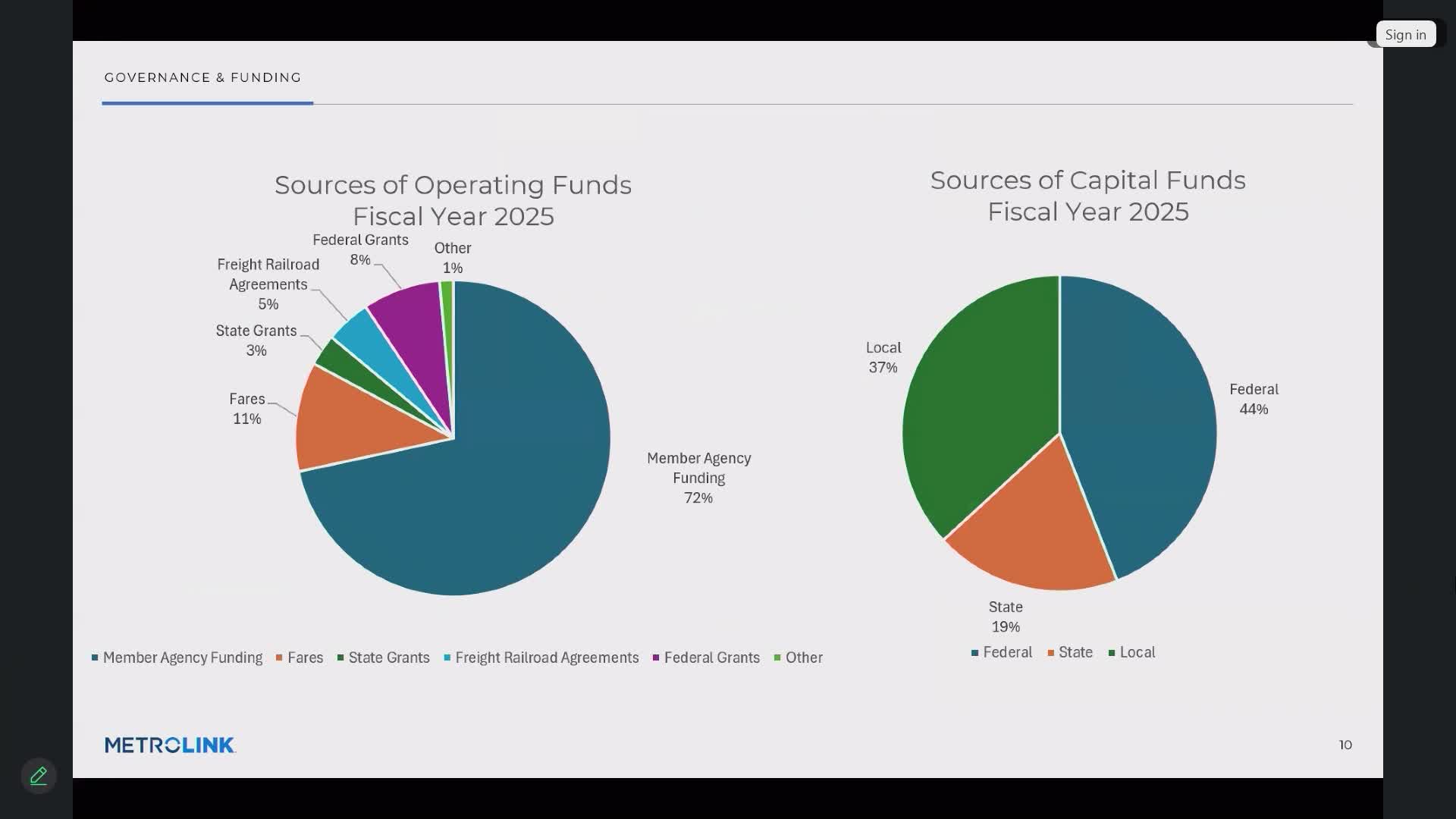
Metrolink and Caltrain officials told the Senate subcommittee they have restored services and seen ridership gains but are confronting structural operating shortfalls that could lead to cuts. Darren Kettle, Metrolink’s chief executive, said the agency has shifted to a more all‑day schedule and used targeted fare programs — including a student pass supported by state grants — to boost ridership, but cautioned the system faces a “fiscal cliff” because member county contributions now make up roughly 70–75% of operating revenue while farebox recovery has fallen.
“Member agencies are the ones that influence our ability to take action,” Kettle said, describing Metrolink’s dependence on five county transportation agencies for operating support and noting that one county has already put the agency on notice about future contributions. He said Metrolink’s ability to monetize assets is limited because it owns little real estate or parking and much corridor property or station assets are owned by member agencies or other jurisdictions.
Kettle also flagged operational reliability threats outside Metrolink’s direct control, including freight dispatch conflicts (BNSF and Union Pacific rights of way), copper‑wire theft and other vandalism that can take signal boxes offline and cause multi‑hour outages. He said Metrolink has made improvements with a new operations contractor and aims for 95% on‑time performance; the system was hovering near 94% in January–February.
Jason Baker, Caltrain’s director of government and community affairs, said Caltrain’s completed electrification (launched Sep. 2024) has driven a 57% year‑over‑year ridership increase and has brought weekday and weekend gains, putting the service at roughly 60% of pre‑pandemic ridership. But Baker said Caltrain still faces a projected structural operating deficit of about $75 million per year over the next decade and is preparing an April workshop to consider hard choices if stable operating funds are not identified. He estimated Caltrain would need roughly $12 million to support six scheduled FIFA World Cup matches in the region due primarily to safety and overtime costs.
Both agencies described experimentation with non‑fare revenue — short‑term day passes, reconfigured monthly passes, advertising, transit‑oriented development and energy‑value capture from regenerative braking — as part of a broader effort to diversify revenue, but they cautioned those actions alone will not close large structural gaps.
The subcommittee asked Metrolink and Caltrain to engage with county partners and the Legislature to identify dedicated operating revenue options and to report back with more specific proposals and timelines.