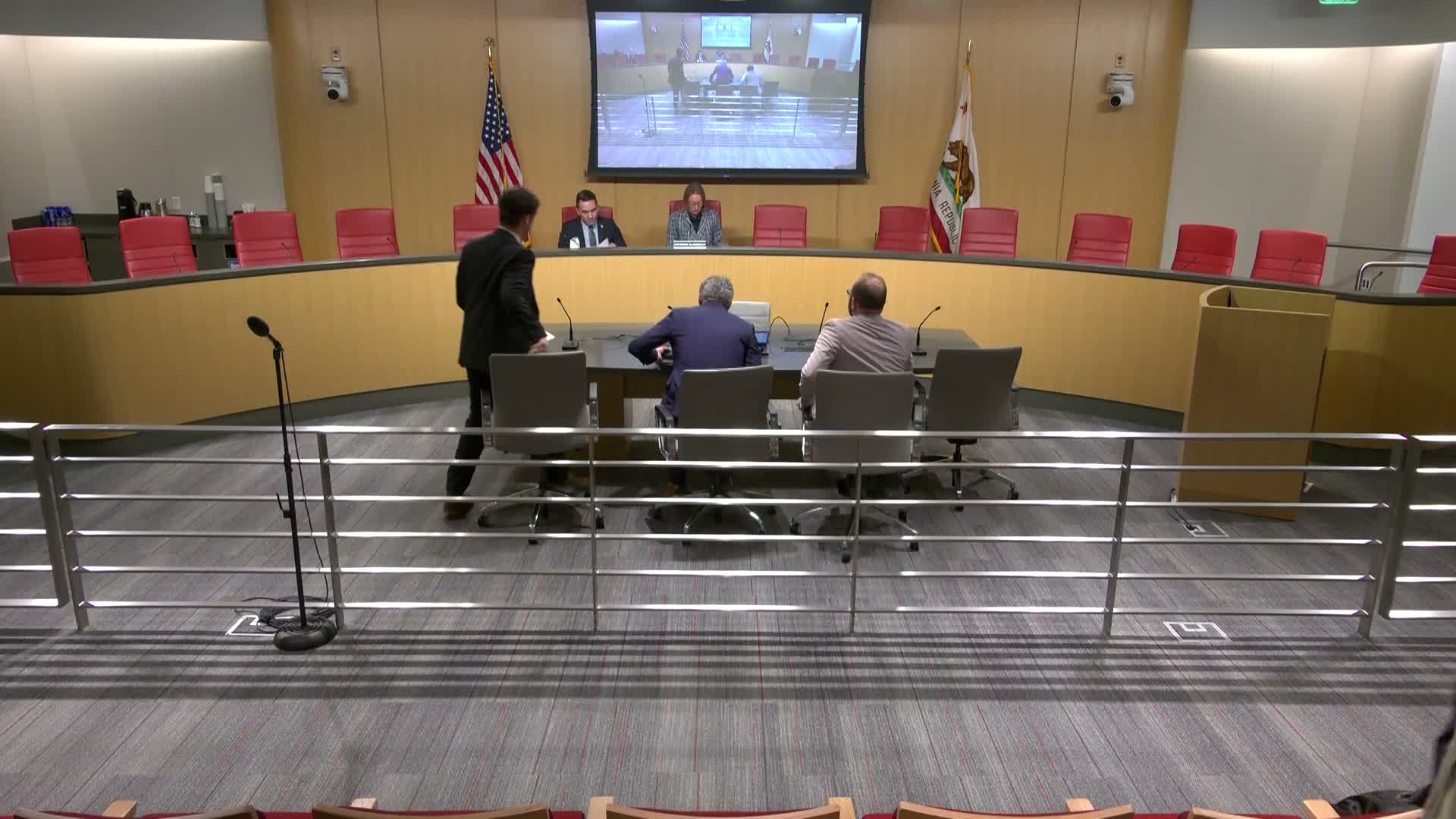
Senate subcommittee presses state rail agencies as SB 1098 report remains unfinished
Loading...
Summary
Senators pressed CalSTA and Caltrans about an overdue SB 1098 report and systemic underperformance on the Los Angeles–San Diego rail corridor, while state officials described millions in recent investments, a new project planning database (CRIS) and steps to scope San Clemente coastal resiliency work.
The Senate subcommittee on the Los Angeles corridor held an informational hearing pressing state agencies for clear plans after the SB 1098 report failed to arrive on schedule and key performance metrics continue to lag. Chair Blake Spear opened the hearing saying the overdue SB 1098 deliverable left the corridor “at a crossroads” and demanded answers on accountability, project delivery and funding.
Hunter Owens, senior adviser for transit, mobility data and performance at the California State Transportation Agency (CalSTA), told the panel the agency has advanced significant emergency and transformational investments, pointing to an October 2024 award of $125 million in Transit and Intercity Rail Capital Program (TIRCP) funds for emergency resiliency work in San Clemente that leveraged $80 million in Trade Corridor Enhancement Program (TCEP) dollars and roughly $100 million in federal CRISI support. Owens said CalSTA has compiled a baseline of corridor conditions, inventoried resiliency projects and developed a database of planned and active capital projects, and that the Los Angeles Working Group required by SB 1098 would convene on Feb. 19 to begin developing recommendations.
Caltrans Division of Rail Chief Kyle Graedinger described a newly created California rail infrastructure system (CRIS), a planning and project‑tracking tool intended to translate a loosely prioritized $100 billion list of candidate projects into service outcomes and deliverable packages. “We can then put those projects into a service model and say, do we need $100 billion of projects? Do we need $50 billion?” Graedinger said, framing CRIS as a way to prioritize work that drives ridership and reliability.
On governance, Graedinger confirmed a recent Caltrans reorganization that will create a deputy director for rail and transit to elevate transit needs within the department’s executive structure and increase accountability. The chair and several senators questioned whether past planning has produced many costly studies that are not advancing to construction and asked how the state should prioritize projects such as the Del Mar tunnel and other corridor sidings.
The committee also pressed agencies on the state’s zero‑emission strategy. Graedinger said Caltrans is procuring 10 hydrogen fuel‑cell multiple‑unit trains to provide longer‑range zero‑emission service where electrification is not presently feasible, and that the administration is working with the Governor’s Office of Business and Economic Development and private vendors to attract green hydrogen supply. He said recent industry conversations suggest producers aim to push prices toward parity with diesel — “under $10 per kilogram” — later this decade, though he emphasized the timeline depends on private sector commitments.
On coastal resiliency, agency witnesses said they are aligning scope with the Orange County Transportation Authority (OCTA) and other local partners to launch a long‑term San Clemente study within roughly a year to meet Coastal Commission expectations. Exact Coastal Commission milestone dates were not available on the record.
Chair Blake Spear closed the session by reiterating the subcommittee’s urgency: “As time passes, so too does our ability to respond,” and he urged clearer accountability and faster progress on deliverables, including the outstanding SB 1098 report.